
The Quiet Transfer of Power
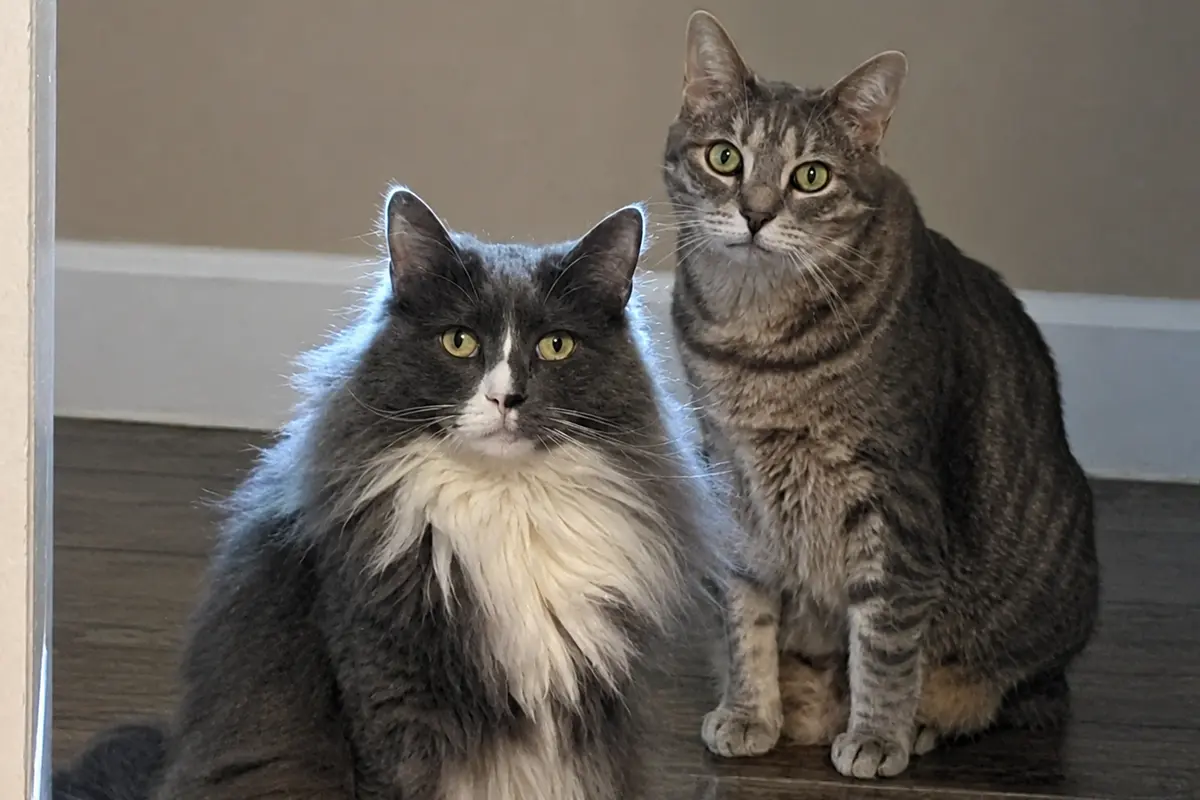
On paper, I own the house with my wife, Stephanie. Frankie and Ele have never formally disputed this. They have simply behaved as though the arrangement does not apply to them. Their takeover was so gradual that neither of us can say exactly when it began. There was no dramatic seizure of power, only a series of small concessions: a chair surrendered, a door left open, a pillow no longer entirely ours. Each adjustment seemed harmless. Taken together, they amounted to a quiet transfer of authority.
Eventually, every cat household reaches the moment when its humans realize they may not be the owners so much as the staff.
Stephanie and I clean the house. We know where most of the shutoff valves are. We notice when the air filters need replacing. None of this seems to impress Frankie or Ele.
They have never signed a mortgage document, paid a utility bill, or worried about property taxes. Still, they move through the house with the calm assurance of senior management. Frankie patrols the premises. Ele appears where she wishes and leaves when the meeting has lost her interest. Together, they give the impression that the house is not so much owned by humans as temporarily administered by them.
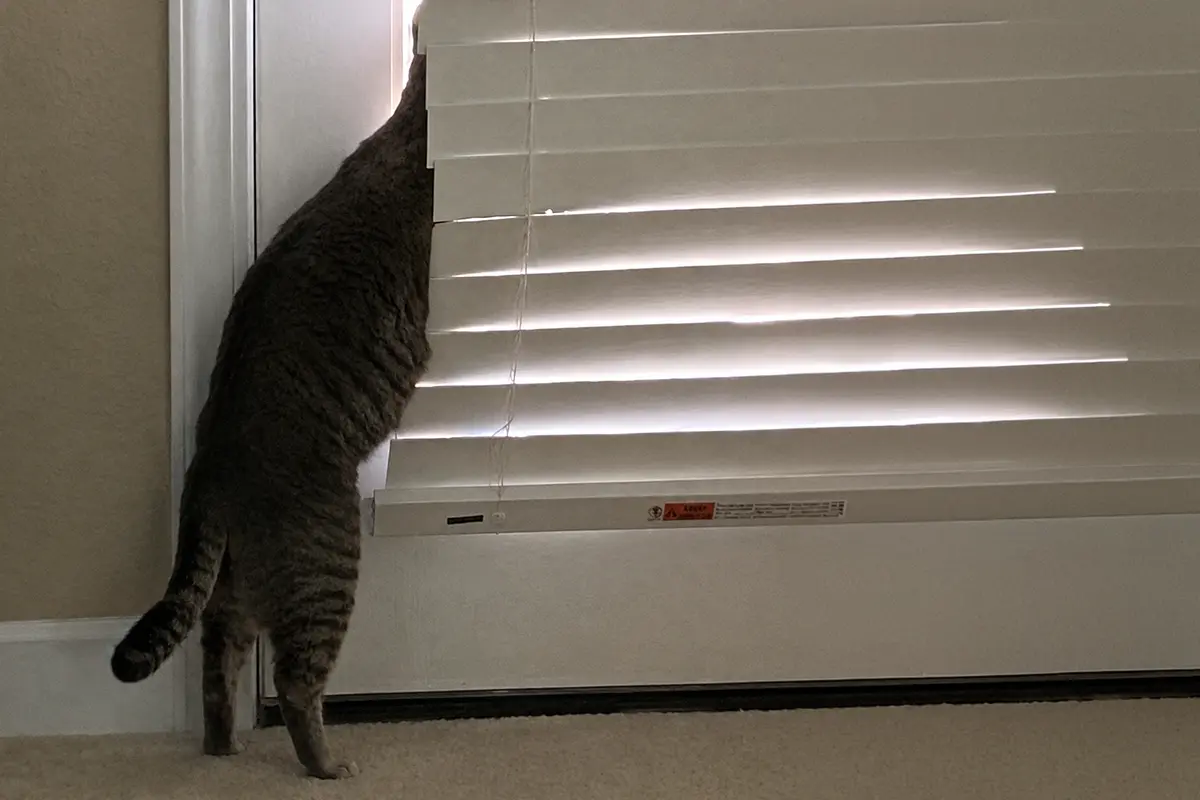
Cats do not need paperwork. They use the space, watch it, sleep in it, and leave hair on nearly every surface. They occupy a house so completely that no one remembers granting them permission, and somehow the rest of us begin accepting the arrangement.
Possession Is the Whole Law
Humans think ownership is established by signatures, payments, and property lines. Cats appear to use a simpler standard. If they occupy it, sleep on it, or shed on it, the matter is settled.
A chair becomes theirs because they sit in it. A window ledge becomes theirs because they have claimed the view. A bed becomes theirs because they have chosen the exact center of it at the least convenient possible hour. Possession is not nine-tenths of the law. For a cat, possession is the whole law.
The Inspection Department
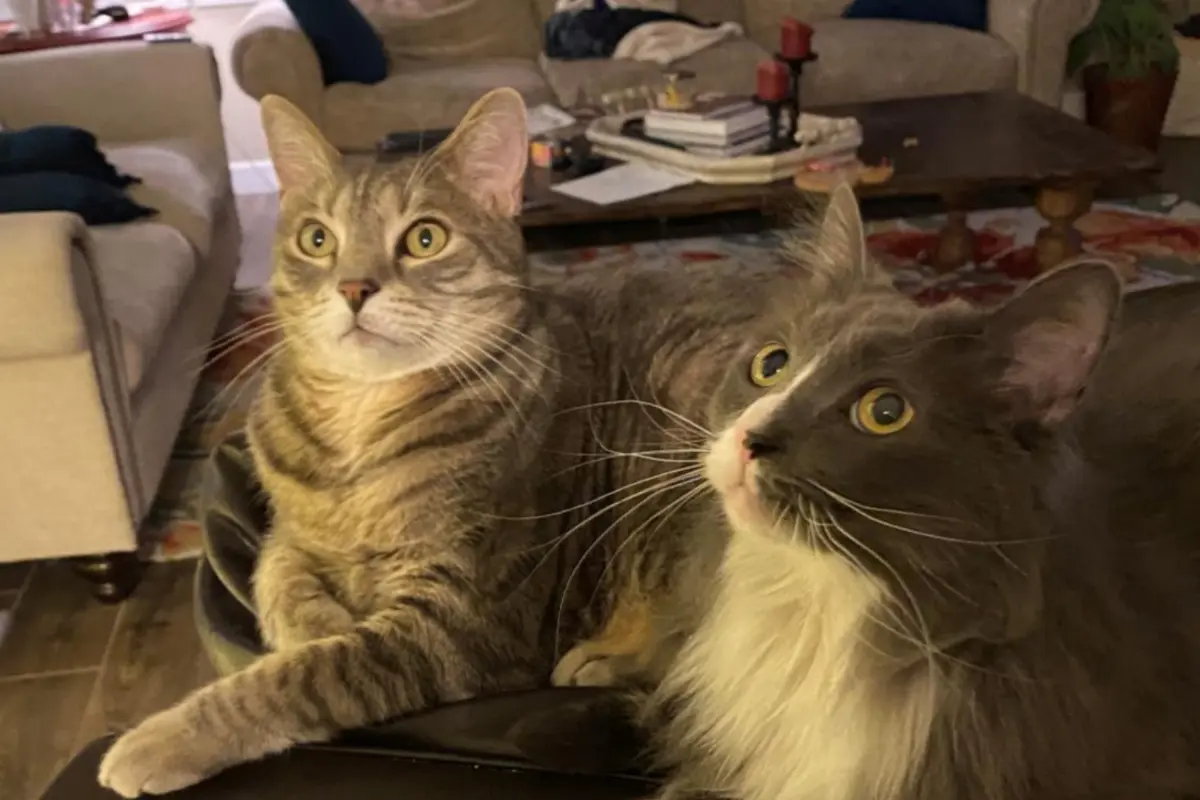
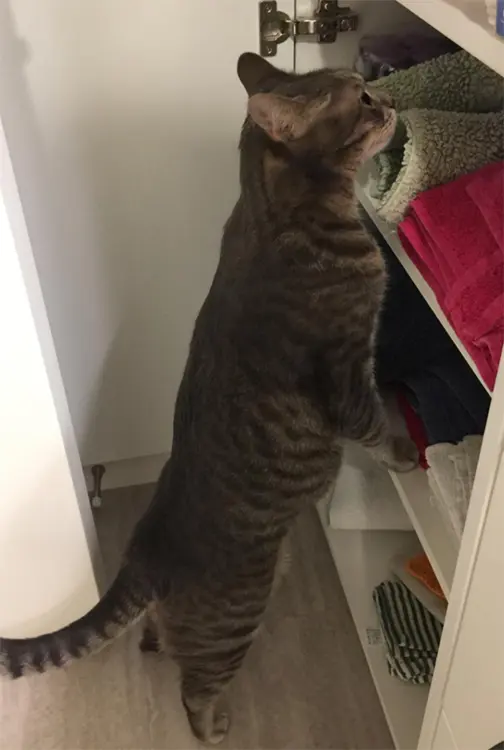
This explains a great deal about life with Frankie and Ele. If I place a box on the floor, it must be inspected. If I open a closet, it must be entered. When we bring home groceries, the bags must be audited. None of this appears optional. The house has changed, and management has been alerted.
The funny part is that their supervision does not always require action. Often, neither cat wants the box, the closet, or the grocery bag. They simply need to know what has entered their domain.
A new object cannot simply appear in the house unexamined. Frankie may walk around it once, sniff one corner, and then look away as if the whole thing was barely worth his time. Ele may approach more slowly, give it a careful inspection, and then decide that whatever we brought home has permission to remain. This can take ten seconds. Apparently, ten seconds is enough.
There is a kind of royal efficiency in this. They supervise because supervision is part of the job, and no house can be safely left entirely to humans.
We move furniture without consultation. We close doors for reasons no cat has approved. We place objects on counters and then act surprised when they are reviewed at close range. From a cat’s point of view, our judgment is inconsistent at best.
The Problem of Closed Doors
This may be why cats take closed doors so personally. A closed door is not merely a physical barrier. It is a challenge to jurisdiction.
Somewhere in the house, a space has been placed beyond inspection. Whether the room is useful does not matter. The issue is whether access has been denied.
Once the door opens, the urgency often disappears. Frankie did not necessarily want to go in. Ele did not necessarily want whatever was behind the door. They wanted the option restored. An open door confirms that the house is back in proper order.
Strategic Surfaces
Territory also explains the mysterious importance of surfaces. Humans see a table, a desk, a bed, or a freshly folded pile of laundry. A cat sees a position that must be evaluated.
Height matters. Visibility matters. Warmth matters. The ability to shed directly onto clean fabric may also matter, though science has not yet fully explained this.
Frankie’s favorite places are not always the most comfortable ones. They are often the places with the best view of human activity. If I sit down to read, he may choose a nearby spot where he can monitor the situation. A freshly folded blanket requires weight testing, while a piece of paper, laptop, or book becomes more important than the entire surface beneath it. Given an entire room of soft places to sleep, he will sometimes stretch out directly on the computer cables, as if inconvenience to both cat and human confirms that he chose correctly.
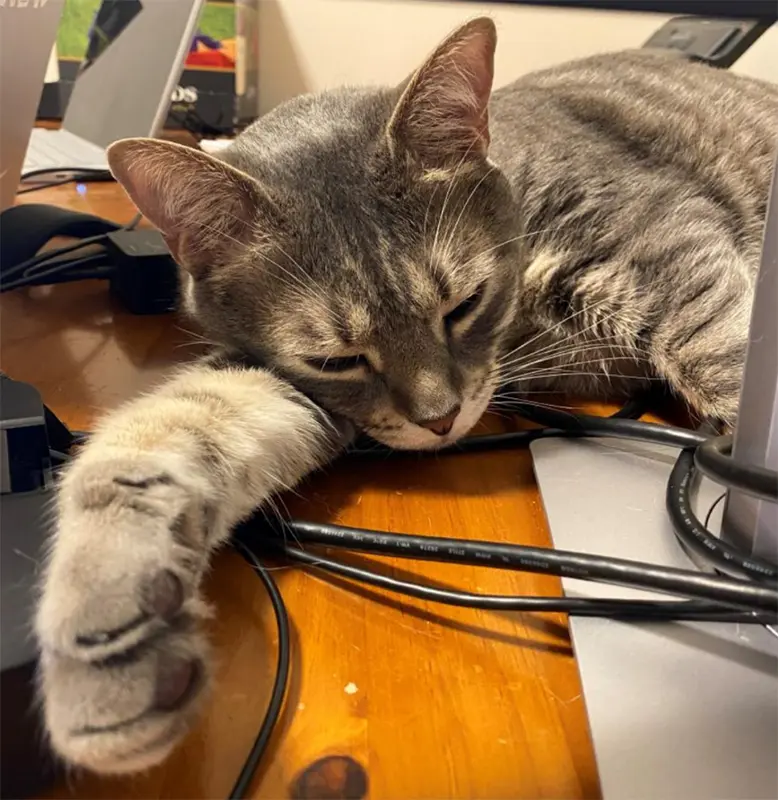
Ele has her own standards, which may or may not be disclosed to the rest of the household. She can make a room feel inspected simply by entering it, pausing, and deciding whether it deserves her continued presence.
Even asleep, Ele somehow remains in charge of the room.
Belonging Without Apology
There is something oddly admirable about this. Cats do not ask whether they belong. They assume it.
They do not wait for permission to occupy the best chair, examine a newly opened drawer, or judge human decisions from across the room. They do not seem to wonder whether they are in the way. They do not apologize for taking up space. Their place in the household is not a question they are still trying to answer.
Humans are more complicated. Stephanie and I can care for a house for years and still find ourselves explaining the clutter when someone comes over. We apologize for the stack of mail, the blanket on the chair, the cat toys on the floor, as if a lived-in house needs a defense.
Frankie and Ele do none of this. They enter a room as if simply showing up settles the matter. They do not make the house perfect. They make it occupied, claimed, and alive.
Maybe that is why their confidence is so appealing. They belong without making a case for themselves.
A Tiny Monarchy with Naps
A cat turns a house into a governed space, but not in a harsh way. More like a tiny monarchy with naps.
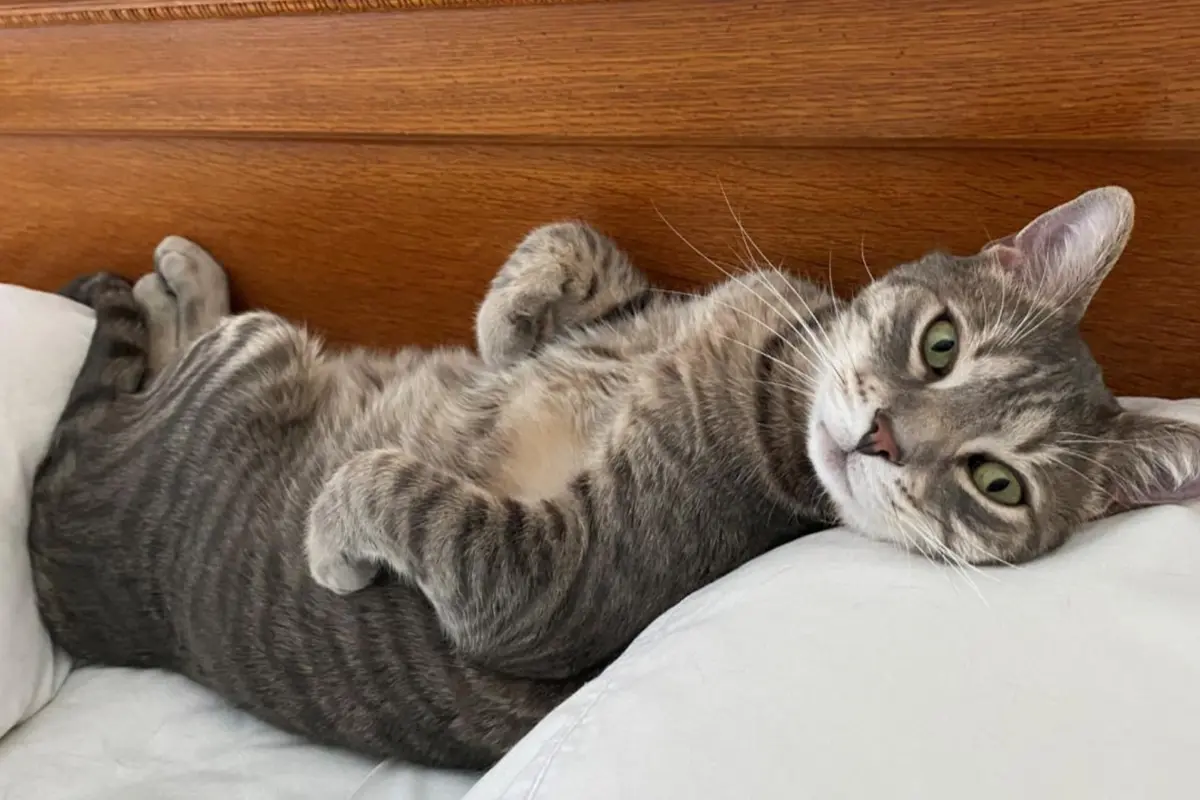
There are rules, though they are not written down. Food must arrive on schedule. Doors should remain available. Boxes must be inspected. Laps are public infrastructure. Any object placed on the floor becomes subject to review.
Frankie enforces these rules with persistence. Ele enforces them more quietly, which somehow makes her verdicts feel even less negotiable. One cat petitions. The other simply appears, and the room adjusts.
The arrangement is not equal, but it is strangely peaceful. Stephanie and I provide the shelter, food, furniture, electricity, and most of the labor. Frankie and Ele provide judgment, atmosphere, and the unmistakable impression that everything would fall apart without them.
The Better Claim
Maybe cats believe they own the house because, in the ways that matter most to them, they do.
Not legally or financially, and not in any way a title company would recognize. But a house with cats slowly begins to organize itself around their movements, preferences, moods, and rituals. We learn where not to sit, which blanket is no longer entirely ours, and why a closed door will eventually become a problem.
Frankie and Ele never announce their claim. They establish it every day, moving through each room as if its order depends on them.
Stephanie and I may own the house on paper. But Frankie and Ele have been making their counterclaim for years, and if I’m honest, they have been winning the argument.