
For a while, I thought we might have ghosts.
A cabinet I knew I had closed would be standing open again. No sound. No warning. Just an open door in a quiet hallway. The explanation, as it turned out, was less supernatural and more familiar. The haunting had whiskers.
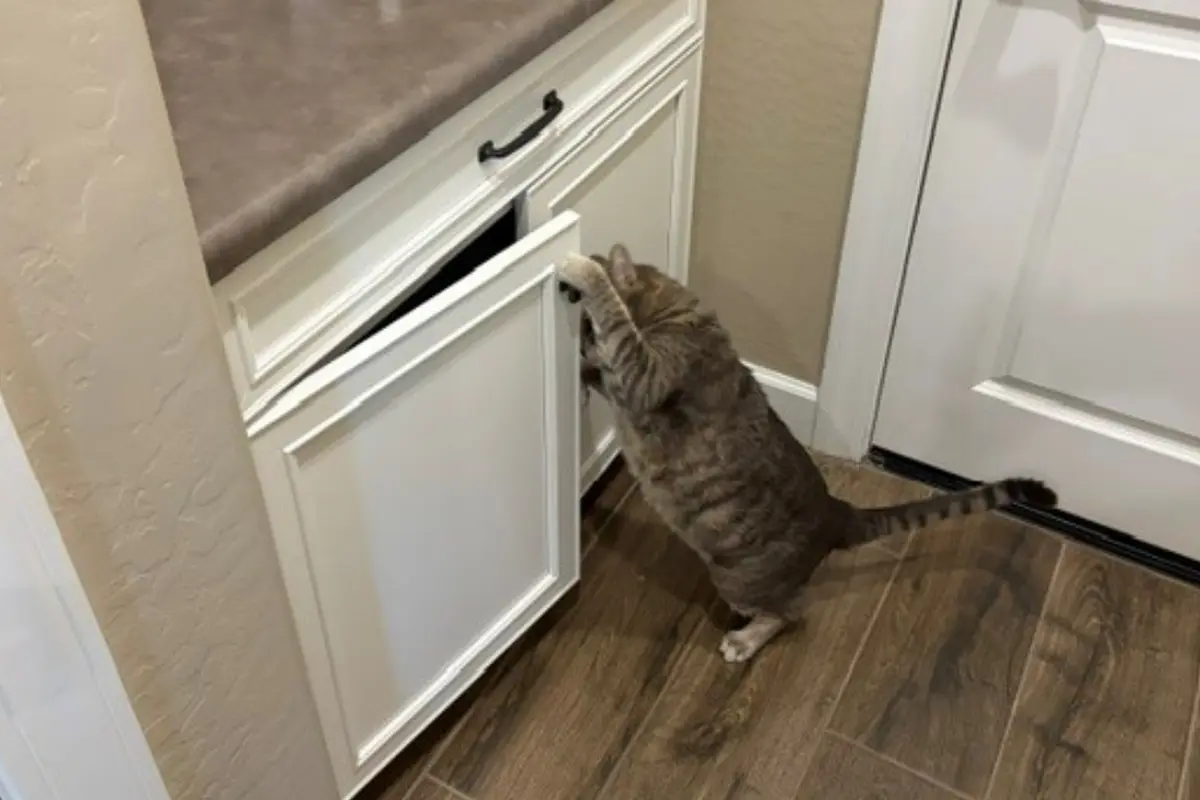
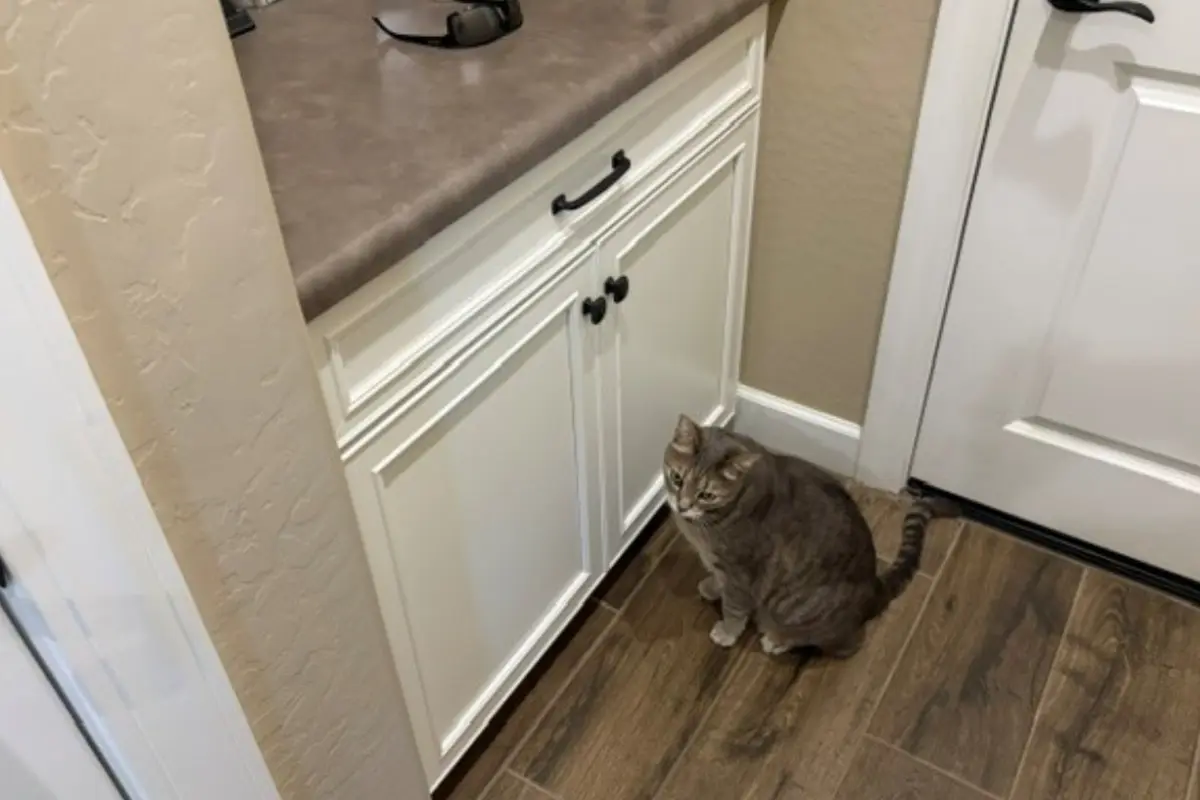
My cat Frankie has no real interest in this cabinet, except for the fact that it is closed.
At first, he will sit in front of it and wait. Not scratching, not making noise. Just sitting there, looking at the door as if something important is happening on the other side. Nothing is. It’s just a collection of miscellaneous items he has already ignored dozens of times.
Eventually, after a mini meowstorm, he’s had enough and takes matters into his own paws. He gets the door open, gives the cabinet the briefest inspection imaginable, and then leaves. No treasure found. No mission completed. Just an open door.
This happens more than once. It happens often enough that I stop assuming there must be something new inside the cabinet. The cabinet hasn’t changed. Frankie knows that. And yet the closed door keeps calling him back.
It is not only this cabinet, either. A bedroom door, a closet door, a bathroom door, even a barely closed pantry door can take on sudden importance. The space behind it may be ordinary, familiar, and completely uninteresting once opened. But while it is closed, it becomes a question.
At some point, it starts to feel less like curiosity and more like a test. A few minutes after I close the door, he is back in the same spot, staring at it as if I have failed to understand a very basic rule of the house. There is a version of this where I’m the one being trained. Fool me once, shame on you. Fool me twice, I’m opening the door again.
I used to think he wanted something in the cabinet. That would make sense. Want leads to action; action leads to a result. That’s how most behavior works, at least from our point of view.
But after a while, that explanation starts to fall apart.
It Should Have a Reason
Want explains most situations. Animals move toward things they want and away from things they don’t. If Frankie is sitting there, waiting, there should be a reason for it.
So, I tried to narrow it down. Maybe there was something specific he was interested in. A smell. A sound. Something I wasn’t noticing.
But every time the door opened, the cabinet lost its importance almost immediately. Whatever had seemed urgent a moment earlier seemed to vanish as soon as access was granted.
It doesn’t quite look like curiosity either. Curiosity usually has some follow-through. Frankie’s interest seems to disappear the instant the cabinet becomes available.
You could say it’s habit. He has learned that sitting by the door gets a response. That part is true. I get up. The door opens. Frankie has once again successfully operated the human. But habit usually leads to something. Food. Attention. A favorite spot. In this case, the only result seems to be that the door is no longer closed.
Another possibility is that he changes his mind. That would explain it once or twice. It doesn’t explain why the ritual keeps repeating with such confidence.
Each explanation works for about ten seconds. Then Frankie ruins it by doing the same thing again.
At some point, I realized the problem might not be Frankie. It might be me, standing there like a fool, trying to turn a cabinet door into a research project.
Why It Might Happen
There are reasonable explanations for this kind of behavior. Cats are drawn to closed spaces because they limit access. A closed door changes a familiar environment. It introduces something unknown, even if nothing has actually changed on the other side.
Cat behaviorists often explain this in practical terms: curiosity, territory, access, and control. A closed door changes the cat’s sense of the house. It blocks a space the cat may not even want to use, but still seems to want available.
That last part may be closer than it first sounds. A closed door changes the cat’s sense of the house. Sometimes Frankie can force it open himself. Other times, sitting in front of it produces a response. I get up. The door opens. Either way, the reliable outcome is the same: the closed thing becomes open.
There’s also the possibility that it’s simple curiosity, brief and easily satisfied.
All of that makes sense. None of it quite fits.
If any one explanation fully worked, the pattern would probably change at some point. But it doesn’t.
Instead, the pattern stays stubbornly intact.
The Door Is the Point
After a while, it becomes harder to believe that the cabinet itself has anything to do with it. Nothing inside changes, and nothing about his reaction suggests that it ever mattered in the first place. Everything stays where it was. The shelves stay the same. Whatever could have been interesting about that space has already been inspected and dismissed many times over. And yet the behavior continues.
What does change, every time, is the door. Closed, it becomes a problem. Open, it stops being one. The interest doesn’t move inside. It simply ends.
That shift is easy to miss because we tend to assume that access is tied to purpose. If something is opened, it must be opened for a reason. A room is meant to be entered. A space is meant to be used. We expect the action to lead somewhere, to produce a result that justifies it.
But nothing about this interaction follows that pattern. The opening of the door appears to complete the event rather than begin one.
It starts to look less like a failed attempt to get into a space and more like a small ritual with its own logic. The door is not a means to something else. It is the entire point of the exchange.
From that perspective, the behavior stops looking inconsistent. Frankie has done exactly what he set out to do. It only feels strange because we keep expecting something to follow.
Maybe that is why the scene is funny. Frankie is not confused by the lack of a next step. I am. He accepts the completed moment and moves on, while I stand there trying to build a theory around it.
Access Without Use
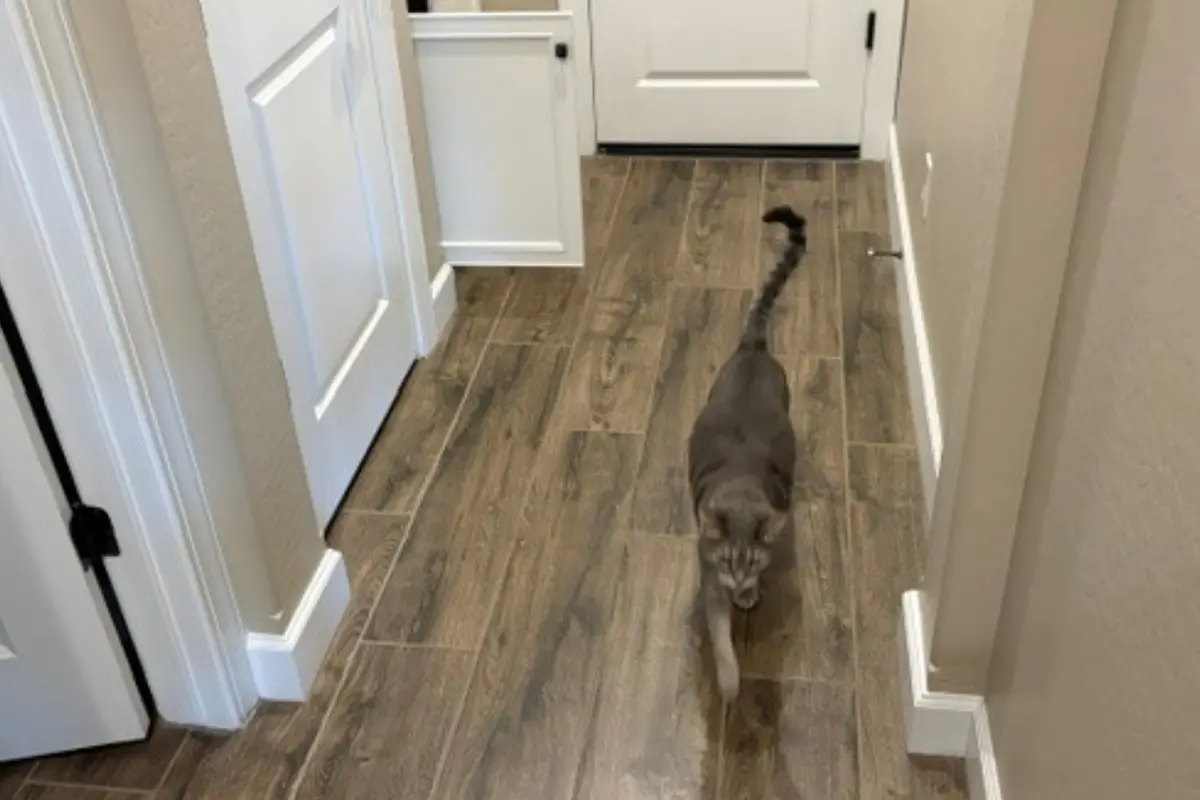
The part that’s hard to accept is that the door can matter on its own. Not as a way to get somewhere, but just as something that shouldn’t be closed.
Once that possibility is there, it’s hard not to notice how often we do something similar, just in slightly more complicated ways. We check the refrigerator without being hungry. We look at our phones without needing anything. We revisit familiar places online just to confirm that they are still there.
There is a strange comfort in proving that something is still available. The refrigerator may hold nothing we want, but opening it settles the question. The phone may have no new message, but checking it removes the itch of wondering. The cabinet may contain nothing Frankie cares about, but an open door is no longer a closed one.
Most of the time, we explain it away. We tell ourselves there was a reason, even if it was a small one. But sometimes the action itself is the relief. We did not need the thing inside the refrigerator, the phone, or the cabinet. We just needed the small tension of not checking to go away.
The difference is that we’re not comfortable leaving it at that. We want a story that makes the action seem sensible. If one isn’t there, we usually invent one.
The cat doesn’t seem to bother with any of that. The door was closed. Now it isn’t. That’s enough.