
When Dan Rimada contacted Cats Magazine about his book, Bodega Cats of New York, he hardly needed to persuade me to take a look. A book that pairs photographs with the stories of 60 cats across New York City? Yes, please.
I love photographing cats myself, although I sadly don’t get to do it nearly as often as I used to. Perhaps that’s one reason this project means so much to me. A photograph gives us a moment to stop and really see a cat. A story lets us stay a little longer and learn who they are.
And cats deserve more books. More photographs, more stories, more people paying attention. There are so many cats whose lives we know nothing about, even when we pass them every day. Some live with families; some become familiar faces in shops and neighborhoods. Each has a story beyond the quick glimpse we get while walking past.
It started with a cat named Luna
Bodega Cats of New York began in 2020, when Luna, a cat in a Fort Greene bodega, kept Dan at the counter longer than his shopping required. He started sharing phone photos, and soon other people were sending him pictures of the cats in their own neighborhood stores. By 2022, he was visiting bodegas specifically to meet the cats and hear their stories.
Today, Dan writes those stories, while photographer Gulce Kilkis makes the portraits. They have visited stores across all five boroughs, speaking with owners and getting to know the animals who share their working days. Their book brings together 60 cats, 150 photographs and 240 pages; it is due out in November 2026 from Epic Ink, an imprint of Quarto.
I particularly like that the project began with a simple question: Who is this cat? Ask around a store and you may hear where the cat sleeps, who feeds them, how they arrived and which customers look for them each morning. Without someone taking the time to ask, those details could disappear when a shop closes or a neighborhood changes. Bodega Cats of New York is also building a free public archive of bodega cats, planned to open in 2027
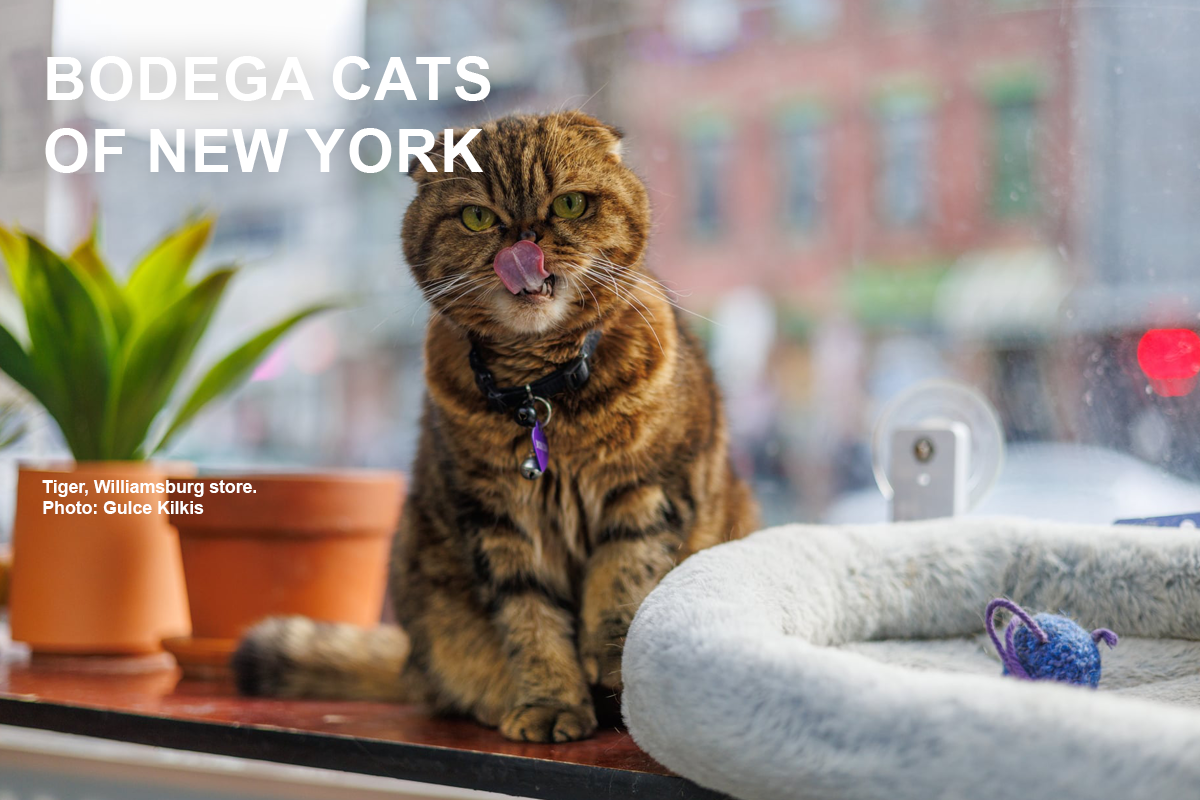
Meet the cats behind the counters
Some cats are excellent at the jobs their humans gave them. Others have found quite different ways to make themselves essential. What they share is a place in the daily life of a shop: among the people who work there, the customers who visit and the neighborhood outside the door.
That combination of photographs and stories is what draws me in. I can admire a beautiful cat portrait all day, but I also want to know what happened just before the shutter clicked. Who is this cat? How did they arrive? What do the people around them know that a passerby never would?
Let me introduce you to a few of the personalities I met in the book.
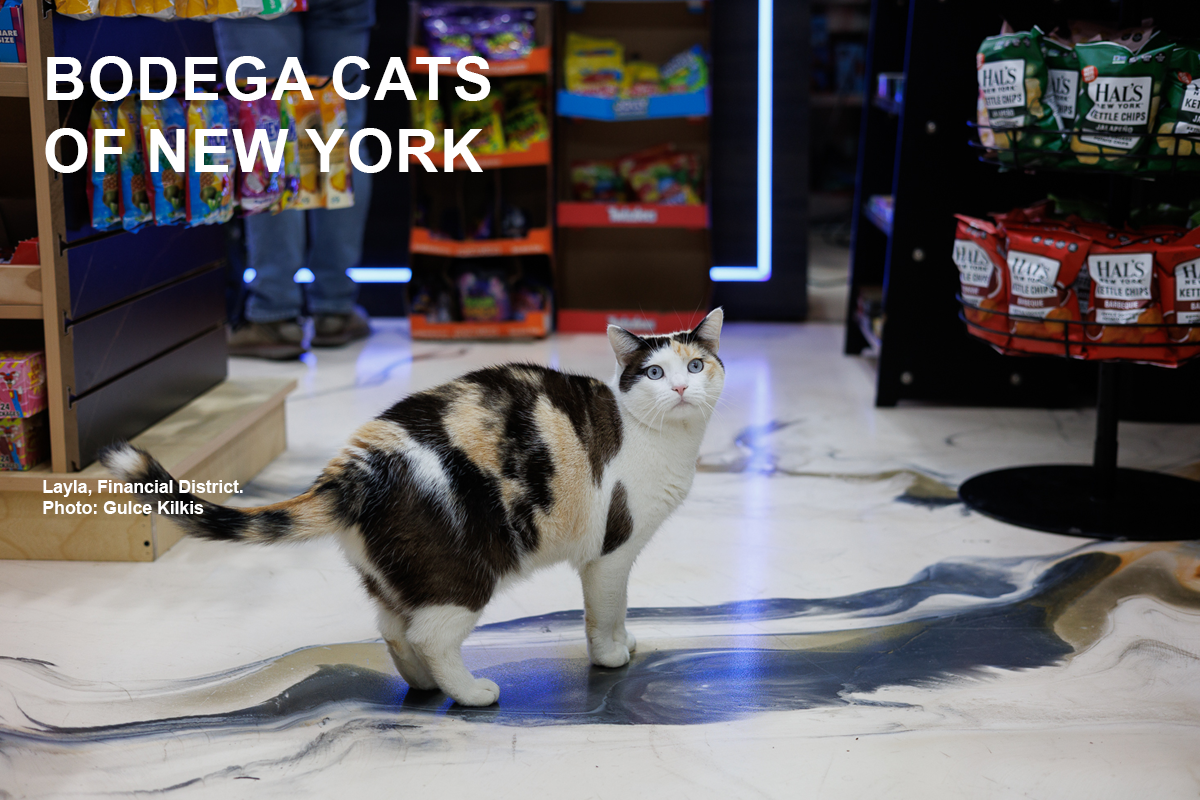
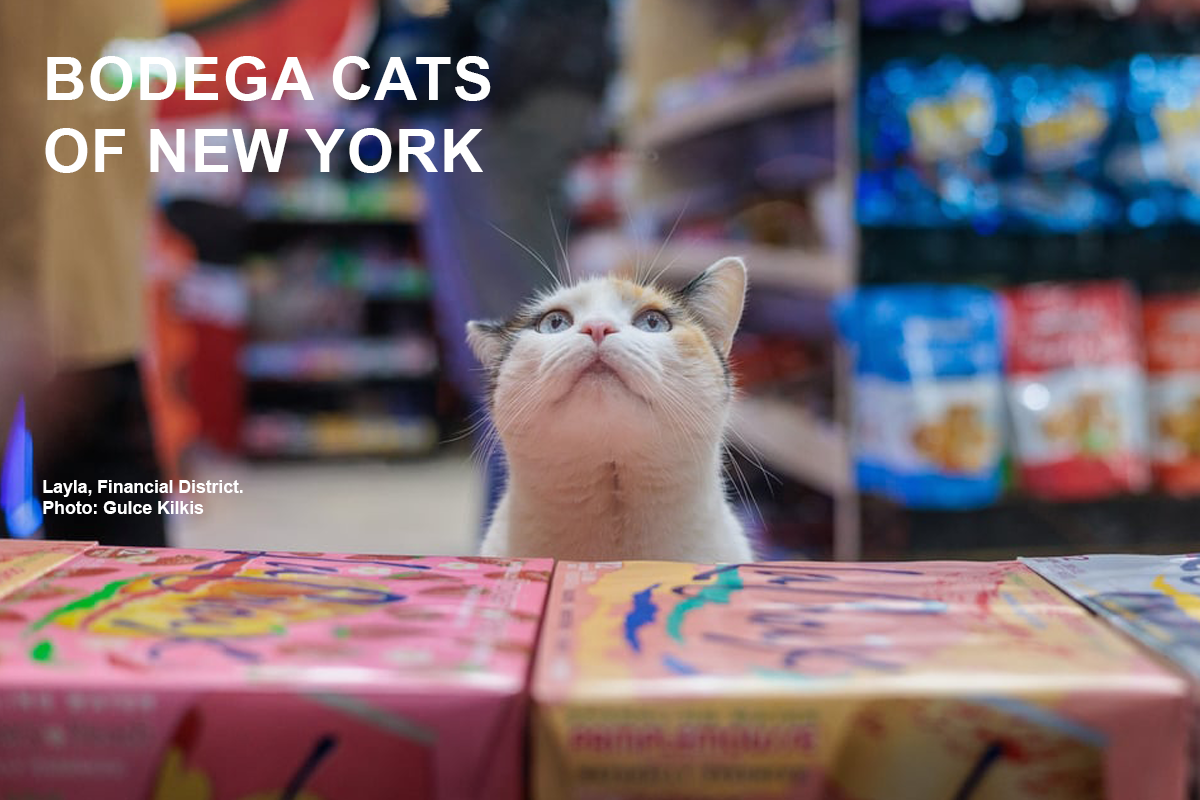
Layla came first
Layla is a blue-eyed calico from a bodega in Manhattan’s Financial District. When she arrived, there was work waiting for her. The shop had been closed for four years, and its basement was overrun with mice.
Layla got to work. Within three days, the mouse problem was solved.
That would already be enough for a good story. But Layla’s influence reached beyond the basement. When a contractor asked the shop owner what color tiles he wanted for the floor, the owner pointed at his cat.
Now customers ask: Was the cat chosen to match the floor, or was the floor chosen to match the cat?
Layla came first.
I love that detail. Layla arrived to solve a practical problem, then became such a part of the place that the floor itself took its cue from her. Anyone who has lived with a cat may recognize how these things happen. You think you are making the decisions. The cat has other ideas.
And Layla has plenty of company in this book:
- Chanel, in Brooklyn’s Clinton Hill, wakes for deliveries and takes her position at the door before the boxes come in.
- Zuco, in Astoria, taps on the upstairs door with his paw when he decides it is time to come down to the shop.
- Klara, a talkative tortoiseshell in Bay Ridge, comments on the customers, announces deliveries and inspects the first box.
- Mishu, in Manhattan’s Yorkville, welcomes people on her own terms while making her boundaries with dogs perfectly clear.
Four cats, four ways of running a store. And I’ve barely begun.
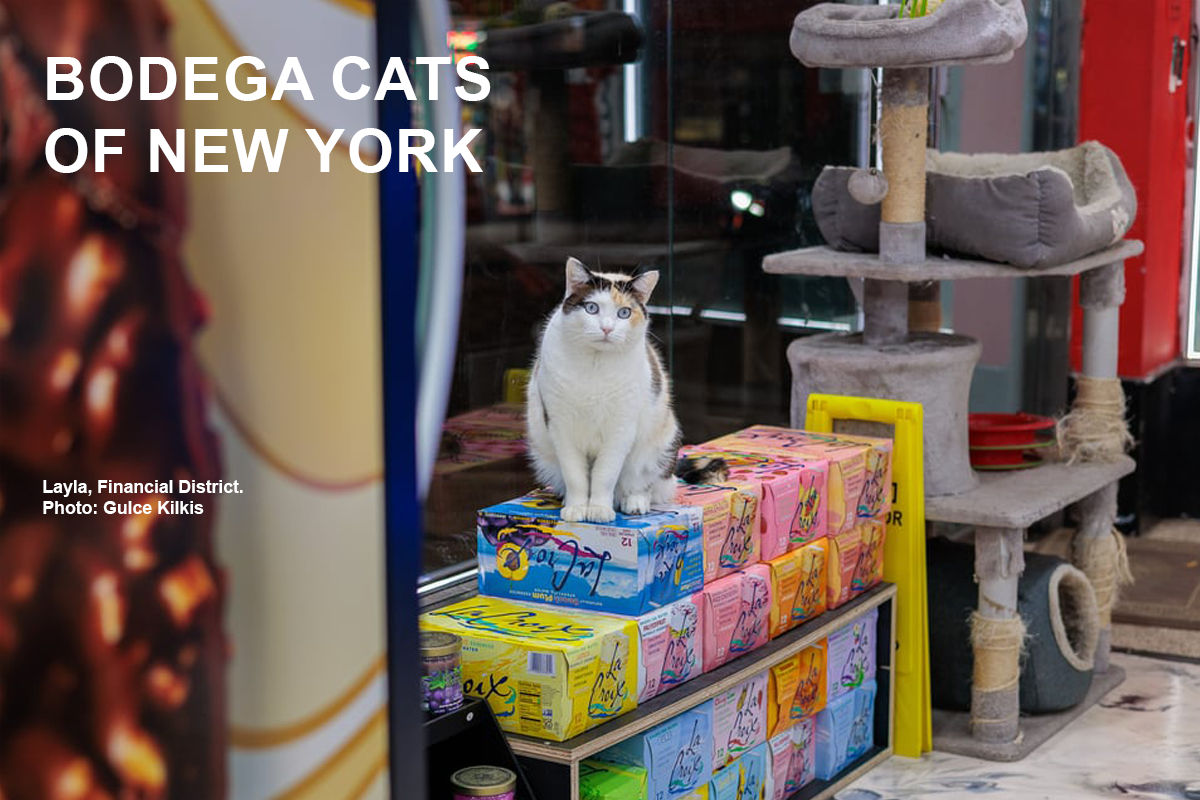
Their stories have reached beyond the bodegas
There is a serious question behind the delightful portraits. Cats in New York stores that sell food remain prohibited under state rules, even though many bodega owners keep them as companions and to help with mice. The question is how to protect the cats’ welfare and keep stores clean while acknowledging the animals already living there.
Bodega Cats of New York launched a petition in 2025 that has gathered more than 14,000 signatures. Proposed city and state bills are now in committee; neither has passed. The city proposal concerns local enforcement and voluntary vaccination and spay/neuter programs. The state proposal would establish care standards, including veterinary care, food, water, clean conditions and areas for cats away from food preparation and storage.
The project’s advocacy work also extends beyond legislation. A fundraiser it helped organize distributed $7,435.24 to four New York rescue groups, and it has helped bring supplies such as litter boxes and beds into participating stores. Dan’s team is clear that it is not itself a rescue organization: rescue groups and veterinarians do the hands-on care.
I’m glad the project makes room for that complexity. Loving the photographs does not mean assuming every cat’s circumstances are perfect. Paying attention to these animals should also mean asking whether they are safe, healthy and cared for.
The cat world is paying attention
The book has already received a warm welcome. Publishers Weekly praised Gulce’s photographs and Dan’s lively portraits of the cats. Amateur Photographer admired both the photography and the way the book connects these animals to neighborhood life, welfare and the uncertainty surrounding their place in food stores. The wider project and its campaign have also drawn coverage from outlets including NPR, AFP and NHK.
As a photographer, I understand why the pictures catch people’s eyes first. But what makes me want to keep turning the pages is the chance to spend a little time with each cat as an individual. Layla is not simply “a bodega cat.” She is the cat whose work ended a mouse problem and whose colors ended up on the floor. Chanel, Zuco, Klara and Mishu have their own routines and opinions too.
A book for cat people – and future cat people
I would give Bodega Cats of New York to someone who already adores cats, of course. But I’d also give it to someone who doesn’t know much about them yet. Stories like Layla’s offer such a lovely way to begin paying attention.
It’s a book for people who love New York, for anyone who appreciates photography with a story behind it, and for readers who know that even a familiar cat can still surprise us. With gift-giving season coming, I’ll certainly be keeping it in mind. I’m very glad Dan reached out and gave us the chance to introduce the project to Cats Magazine readers.
We need cats. Whether they think they need us is a question you’ll have to take up with them.
Long live cats!
Discover and preorder Bodega Cats of New York
Book by Dan Rimada. Photographs by Gulce Kilkis / Bodega Cats of New York.