
What They Saw—and What We Still Get Wrong
by David W. Falls
Table of Contents
The ancient Egyptians understood something about cats that many modern humans still resist: a cat does not need to be managed in order to belong.
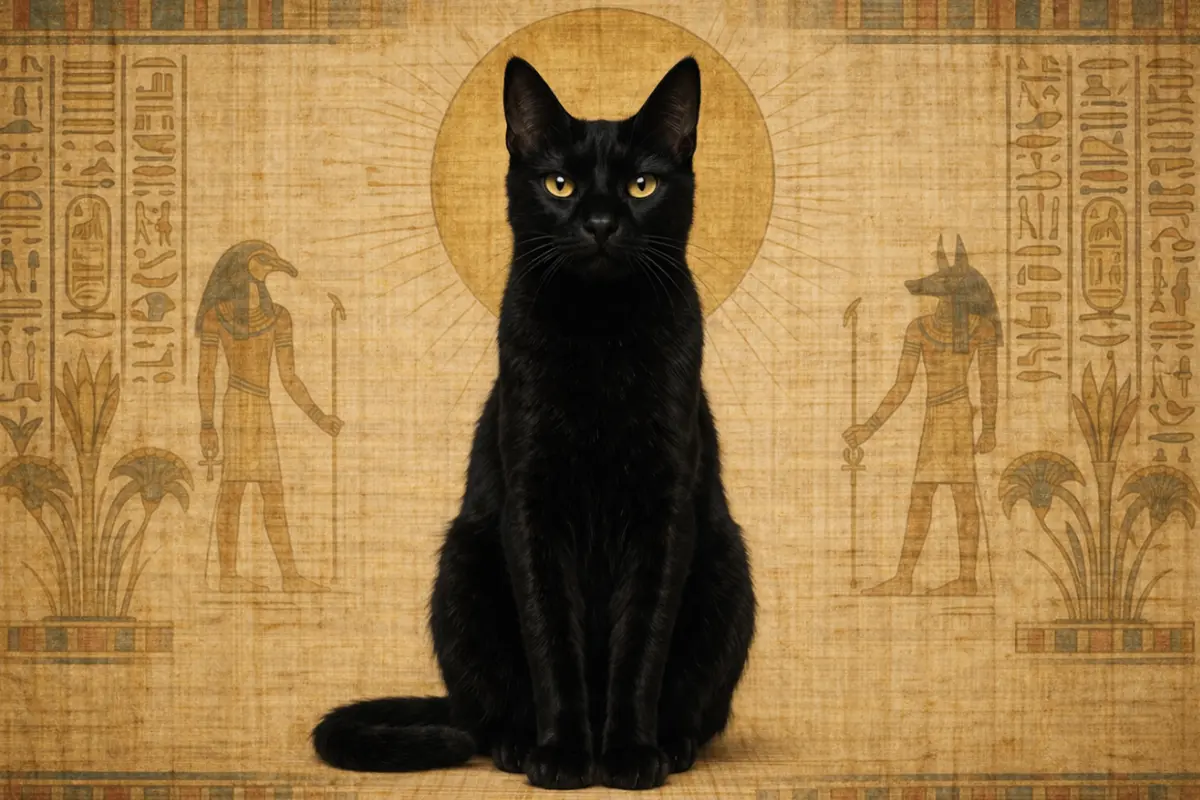
Cats were linked to the goddess Bastet, protected by law, and shown in art as calm, composed, and self-possessed. They appeared in homes and temples not merely as useful animals, but as beings with a presence of their own.
People shaved their eyebrows as a sign of mourning when a cat died. Cats were mummified and buried, sometimes in large numbers. Temples maintained spaces where they could move freely. These were not isolated customs. They reflected how seriously cats were taken in daily life.
That wasn’t accidental. A cat moves through a space without being directed, as if belonging there were never in question.
Today, that same behavior is easy to dismiss. Cats live closely with us. They sleep on furniture, ignore instructions, and show little interest in what we want. This arrangement appears to suit them.
This isn’t new. It hasn’t changed. A cat doesn’t adjust to what we expect simply because humans are present. It acts according to its own priorities.
Cats live closely with humans, but they don’t fall into our systems of control. They accept care without requiring permission to exist. The better question is whether the ancient Egyptians noticed something we still see every day.
Independence Without Separation
Cats live alongside humans, but they do not organize their behavior around us. A dog looks for direction and responds to it. A cat notices the request and decides whether it matters. Often, it does not. That difference is constant. It is the kind of behavior ancient observers would have recognized immediately.
This shows up in small, repeated ways. A cat may come when called, but only under certain conditions, most of which remain unknown to us. It may leave in the middle of an interaction without hesitation. It may choose a place to sit that blocks what a person is doing, then remain there without concern, as if occupying that spot were the whole point. None of this is random. It happens because the cat chose it. What looks like disruption is actually a decision.
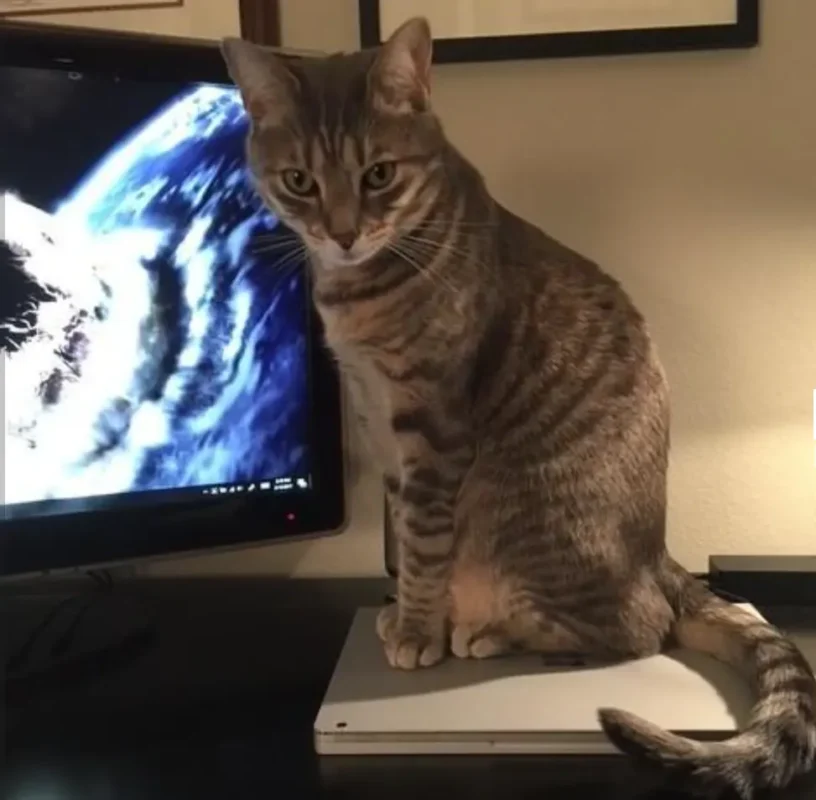
This can create the impression of distance, but the cat is not separate. It stays in the same space, returns to the same people, and keeps familiar routines. It accepts food, attention, and shelter. What it does not accept is control as the price of being present. That is what makes the behavior so easy to recognize in my cat Frankie.
Those observers didn’t have modern terms for behavior, but they could see what stayed consistent. An animal that remains present without taking direction stands out. It behaves as if its place in the room does not need to be negotiated. The Egyptians saw this and treated it as meaningful.
A simple example makes the difference clear. A dog will often remain where it is placed or return when called. A cat may leave the room entirely, then reappear later without explanation. It is not tied to instruction. It is tied to preference. This is the kind of behavior that would not have gone unnoticed in ancient Egypt.
The cat is doing what it chose to do in that moment. That distinction is easy to miss, but it determines how the interaction unfolds.
Presence Without Obligation
Frankie will sit next to me for long stretches of time without any clear reason. He settles in beside me while I watch TV or read and remains there without asking for attention. He does not expect anything in return. He is simply there. For Frankie, that seems to be enough.
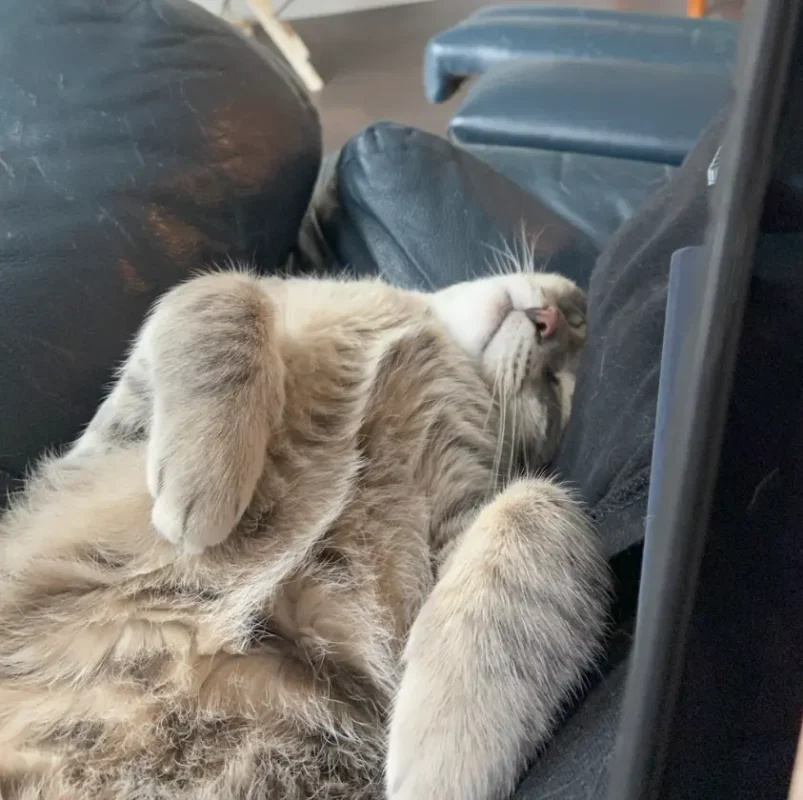
At other times, the same situation produces a different result. I sit down, and he leaves. I reach out, and he moves just out of range. Not far enough to leave. Just far enough to make the distance his decision. Nothing about the setting has changed, but his response has. With a cat, that is often the whole explanation.
There are also moments where the choice is more deliberate. Frankie will sit close, then shift just far enough that contact requires effort. If I move, he adjusts. If I stop, he settles again. The distance is not accidental. It is maintained.
Selective Attention
Cats do not treat everything they notice as equally important. They decide what matters and ignore the rest.
A cat can hear its name and choose not to react. It can watch a person speak, follow their movement, and still decide not to engage. This is often interpreted as indifference, but the behavior is more precise than that.
The difference becomes obvious at feeding time. A cat that ignored its name minutes earlier will respond immediately to the sound of a container opening. The same animal that appeared disengaged is suddenly attentive and direct. Nothing about its ability to respond has changed. Only its level of interest has. Frankie has mastered this distinction, especially when my voice is competing with the sound of dinner.
The same behavior shows up in smaller ways. A cat may ignore repeated attempts at interaction, then initiate contact moments later. It may sit just out of reach, watching, then close the distance without warning. It may leave, then return as if nothing happened, and expect you to agree.
This can feel unpredictable, but it isn’t random. The cat is not failing to respond. It is refusing to treat every signal as a command.
There is a clarity in this behavior. When a cat chooses contact, it is direct. When it withdraws, it does so without hesitation.
From a human point of view, this can feel dismissive. From the cat’s point of view, it simply reflects its priorities. Most of what humans demand does not qualify as important. Even the things we think require an immediate response may not interest the cat at all.
Misreading the Behavior
The issue is not how cats behave. It is how we read what they do.
A lack of response is taken as indifference. A delayed response is seen as inconsistency. When a cat leaves in the middle of interaction, it is often read as rejection rather than a shift in focus.
These reactions assume that attention should be continuous and that once contact begins, it should continue. That assumption comes from how humans relate to one another, and from how other animals respond to direction. I know this from experience. I have tried to have many conversations with Frankie, most of which he treats as background noise.
Cats do not operate that way. Ancient Egyptians did not expect them to.
When a cat disengages, it is not ending a relationship. It is simply finished with that moment.
The distinction is easy to miss because the behavior does not match how we think interaction should work. A cat may leave, then return minutes later and settle nearby without any sign that something was interrupted.
What appears inconsistent is not. The behavior is stable. Our interpretation is not. Cats are not hard to understand because they are unknowable. They are hard to understand because we keep reading them through the wrong expectations.
Ancient observers did not try to make the cat fit their assumptions. They adjusted their view to match what they were seeing.
What They Noticed
The Egyptians did not need modern explanations for animal behavior. They paid attention. They lived closely with cats and saw something we still see now: an animal that stays present without giving up control.
That difference is easy to miss. Cats are part of everyday life, and their behavior feels familiar enough that we stop looking closely.
Cats haven’t changed. They still move through our homes with the same quiet certainty. They’ll be near us, but they won’t organize themselves around us.
Ancient observers did not treat that as incidental. They treated it as meaningful.
We often do the opposite. We look for obedience and miss the steadiness in front of us.
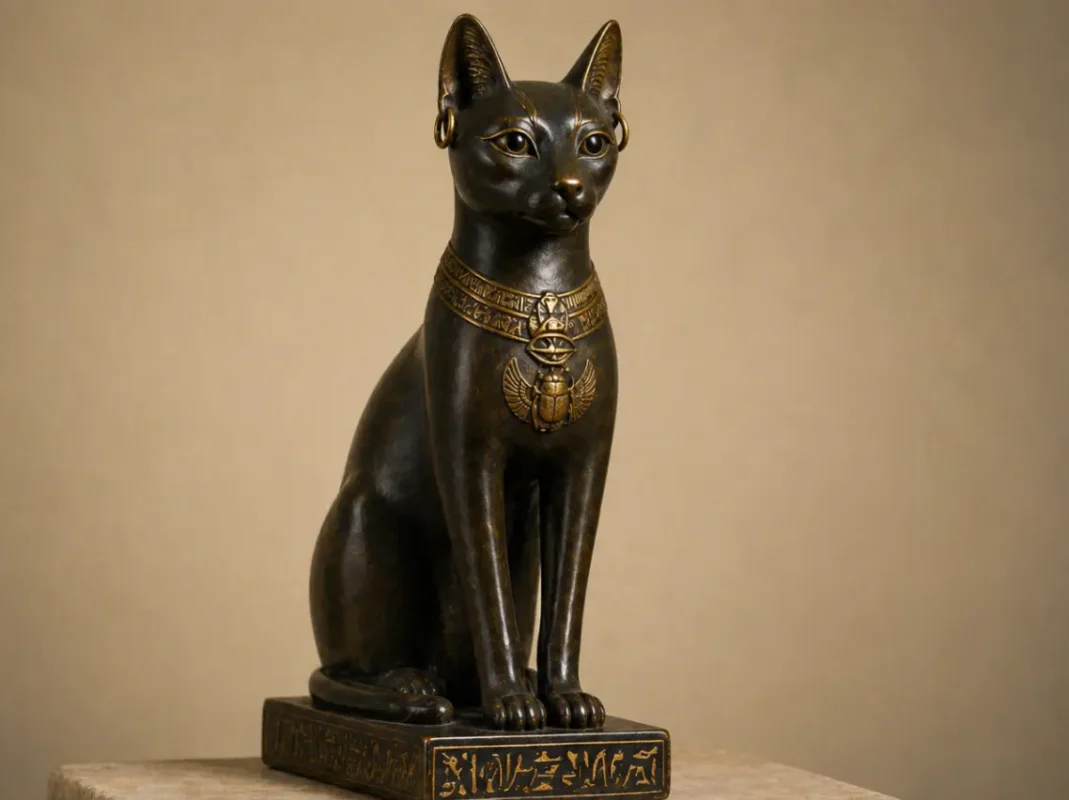
Cats have not become different animals. Our expectations have. We stopped adjusting to what we saw and started demanding something else.
The Egyptians didn’t make that mistake.