
Table of Contents
Stainless Steel Cat Litter Box: The Upgrade Cat Parents Deserve
I never thought I would become emotionally invested in litter box technology. Yet here we are.
After years of washing plastic trays, replacing scratched boxes, and muttering dramatic speeches while cleaning leaked cat pee off the floor, I have reached a new level of wisdom: the future may be stainless steel.
And honestly? It is about time.
My cat Tito recently decided that normal peeing was too mainstream. Instead of the classic squat, he now occasionally lifts his backside like he’s unveiling a sculpture and sends the stream suspiciously upward. Sometimes Myratz joins the trend, as if they are competing in an event called Who Can Pee Higher 2026.
If this sounds familiar, you may understand why I’m researching the best stainless steel cat litter box options.
Why Stainless Steel Is Better Than Plastic
Plastic litter boxes have ruled homes for years. They are cheap, common, and everywhere. But after living with cats for a while, their flaws become obvious.
1. Stainless Steel Does Not Hold Odors Like Plastic
Plastic absorbs smells over time. Even when you scrub it, old odors can linger in scratches and tiny surface pores.
Stainless steel is non-porous, which means smells are less likely to stick around. That alone is enough to make many cat parents curious.
If your litter box smells suspicious five minutes after cleaning, the material may be part of the problem.
2. Easier to Clean
Anyone who has ever chipped dried litter concrete from a plastic tray knows the struggle.
Stainless steel surfaces are smoother, so waste and litter are less likely to cling dramatically for attention.
That means:
- faster daily scooping
- easier deep cleaning
- less scrubbing rage
- more peace in the household
A rare luxury.
3. More Durable
Plastic eventually cracks, scratches, warps, or becomes permanently ugly.
Stainless steel can last much longer with proper care. It may cost more upfront, but replacing fewer boxes over time can make sense financially.
Which is excellent news, because I recently spent enough at the vet to enter my own “financial recovery era.”
4. Better for High Peeing Cats
Now we reach the real issue.
Some cats pee low and politely. Others aim like they are writing their name on the wall.
High-sided and enclosed stainless steel models are finally addressing a problem many cat parents know too well: urine escaping over the edge.
This is not glamorous. This is not poetic. But it is real.
And when manufacturers started adding words like leak-proof, I paid attention immediately.
Why Do Some Cats Pee High?
Before blaming the litter box, it helps to know this behavior can happen for several reasons:
- standing posture preference
- marking behavior
- tension between cats
- habit
- discomfort with box size or shape
- medical issues (always worth checking with a vet if behavior changes suddenly)
In my home, Tito seems to have embraced innovation of vertical peeing, and Myratz occasionally copies him like a mischievous rival.
Three Stainless Steel Litter Boxes I’m Considering
After serious research (and emotionally processing prices), these three made my shortlist.
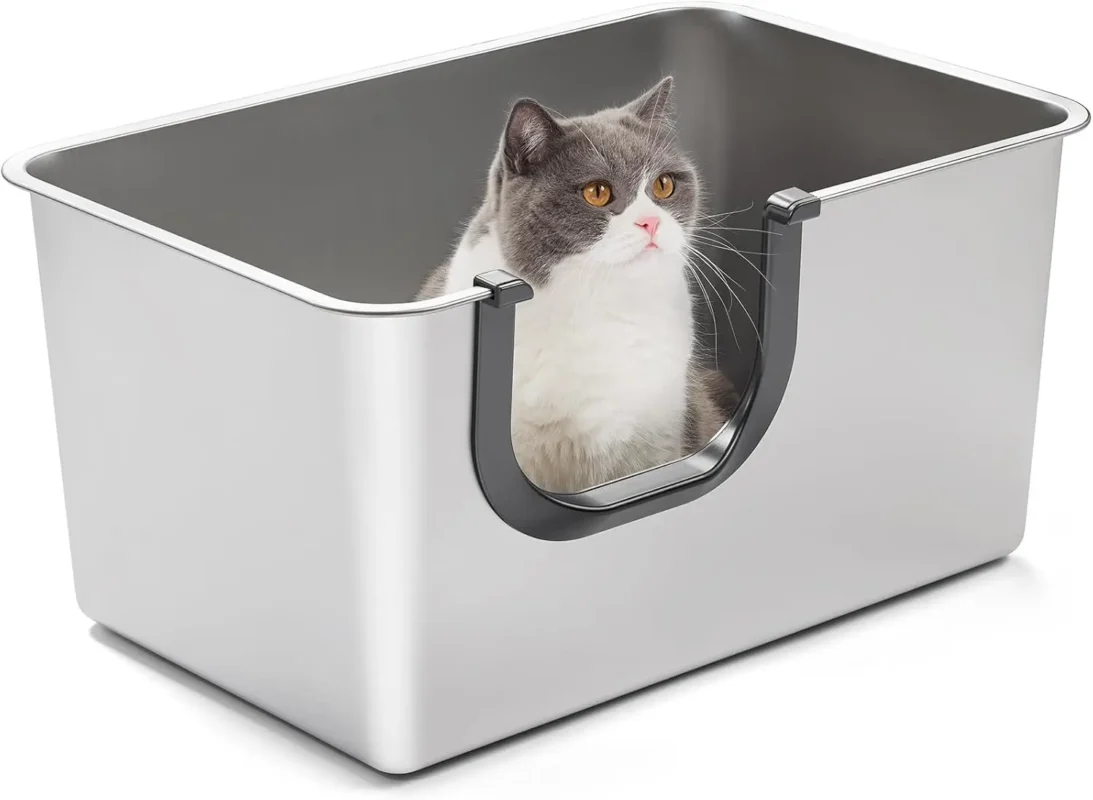
1. Open Stainless Steel Litter Box (No Roof)
Why I Like It
Cats often prefer open boxes because they feel safer and can see their surroundings. Many behavior experts note that some cats dislike enclosed spaces.
Possible Downside
If Tito and Myratz continue their vertical ambitions, lower walls may not be enough.
This model is great for cats who dislike lids, but less ideal for Olympic-level elevation.
Best for: cats who hate covered boxes, easy access, simple cleaning.
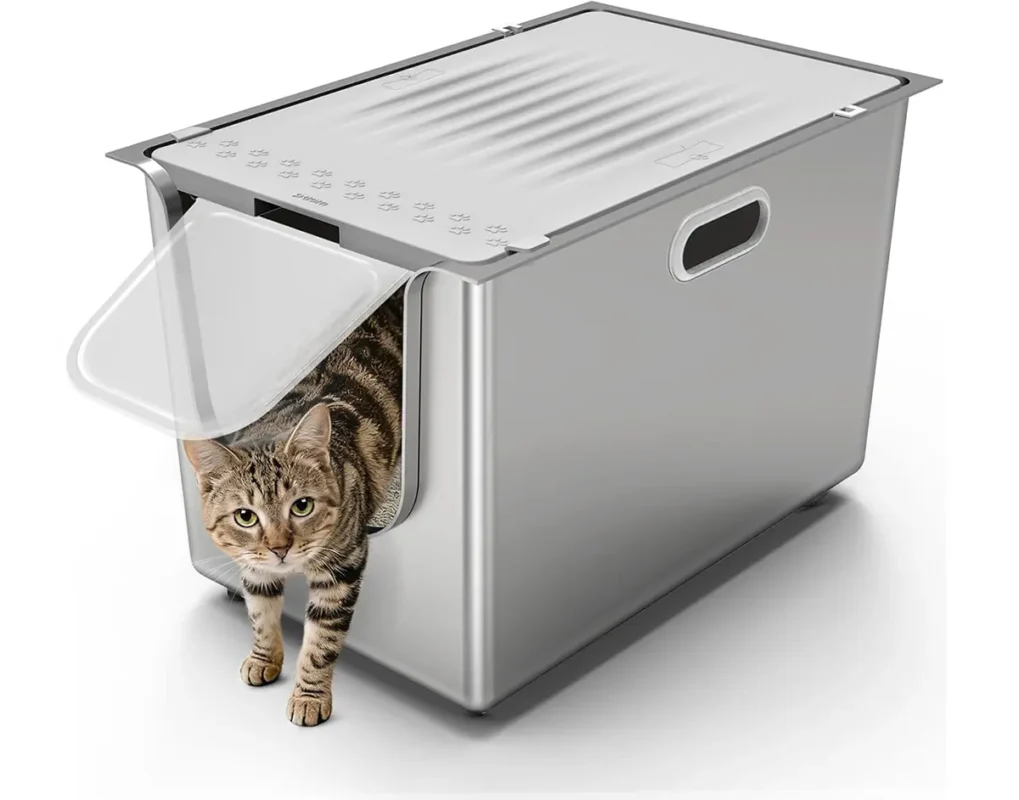
2. Covered Stainless Steel Box with High Sides
Why I Like It
The high sides and enclosed design could help contain adventurous streams.
Possible Downside
My concern is width. Tito sometimes likes standing with both front paws outside the box like he’s supervising construction work. If space feels tight, that may be an issue.
Best for: average-sized cats who need higher walls and better containment.
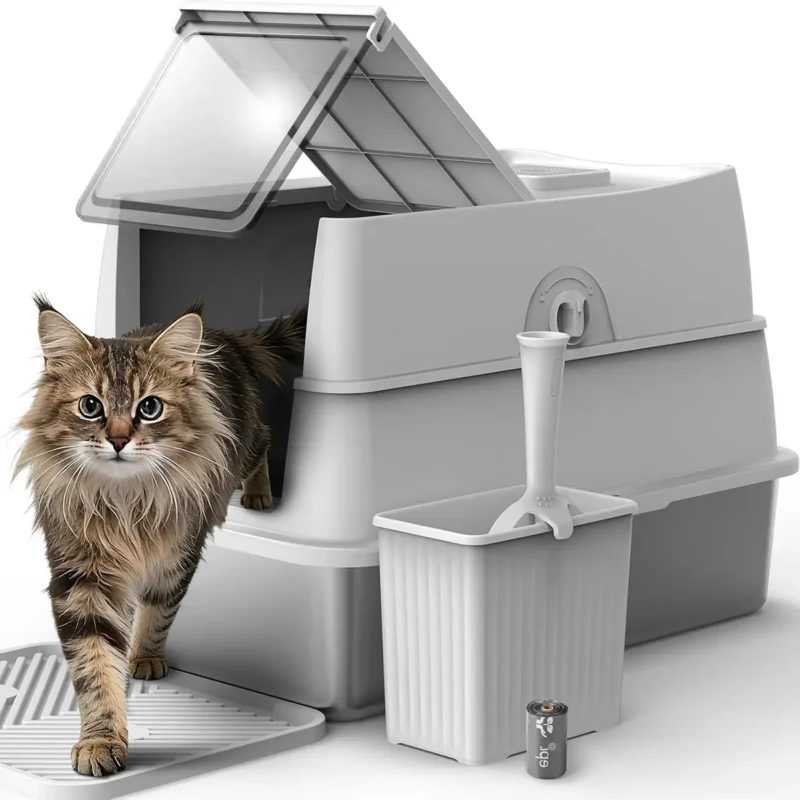
3. Leak-Proof Enclosed Stainless Steel Box
Why It May Win
The phrase leak-proof speaks directly to my soul.
After years of cleaning cat toilet boxes and floors occasionally, I appreciate a product designed by someone who has clearly met a cat before.
If the seals are good and the size works, this could be the smartest long-term option.
Best for: cats who pee high, messy households, humans tired of mopping.
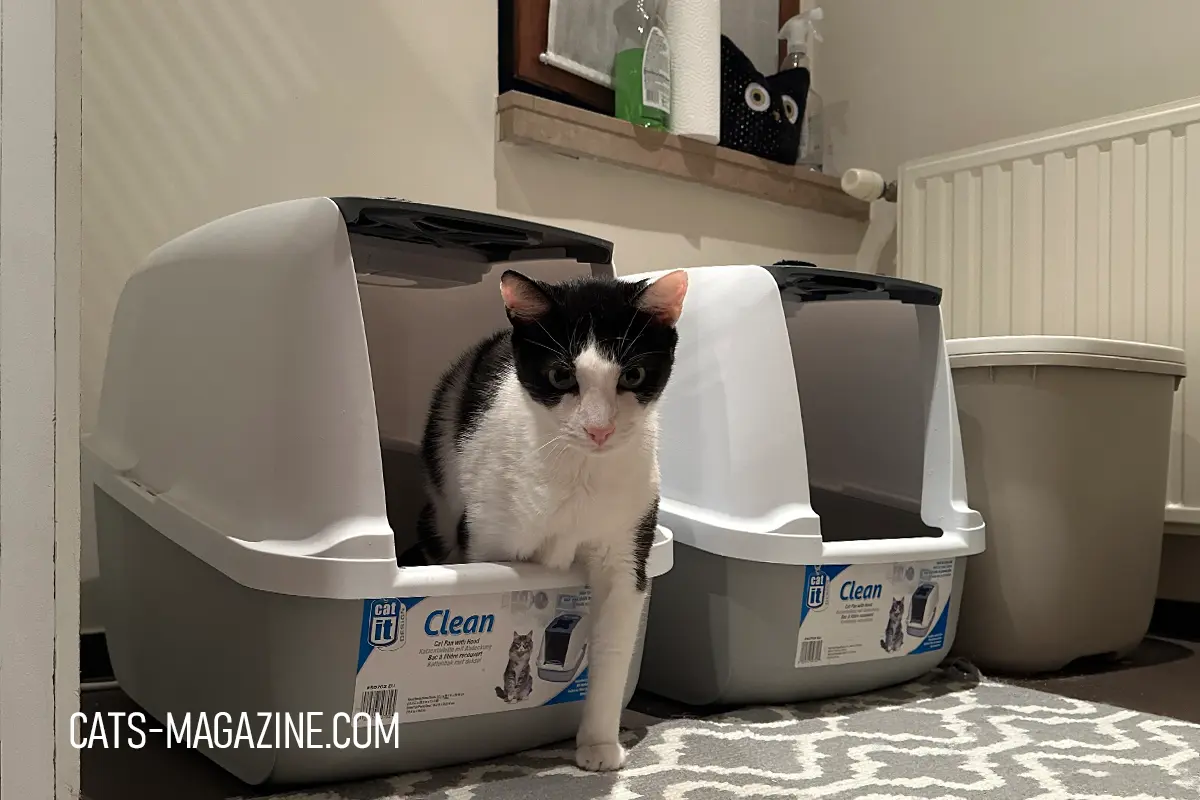
A Very Important Note About Models #2 and #3: The Flappy Door Problem
There is one detail that still worries me about litter box models #2 and #3: the swinging flap doors.
In theory, these doors help keep odors in and litter where it belongs. In practice, my cats have treated them as suspicious architectural nonsense.
Despite years of exposure to modern technology, Tito, Myratz, Pierre all other cats that we lived with have never fully embraced the concept of pushing through a plastic flap to enter the toilet. So, like a loyal maintenance worker, I regularly remove those doors from litter boxes so everyone remembers how to get inside.
Could they learn eventually? Possibly.
Do I want to run a feline engineering training program? Not especially.
So if you are considering a covered litter box, check whether the door flap is removable. For some cats, it is a brilliant feature. For others, it is an unnecessary boss battle.
In my household, there is a strong chance the first upgrade will be stainless steel… with the door politely removed.
My Honest Buying Plan
Right now, I need to recover slightly from recent vet expenses. After Tito’s recent hyperthyroidism diagnosis, tests, treatment, and a few stressful surprises, my wallet is currently in witness protection. If you missed that saga, you can read Tito Wasn’t “Just Hyper” — The Hyperthyroidism Diagnosis I Didn’t Expect.
Every cat guardian knows the ancient law:
The moment your human has money again, I shall become mysteriously expensive.
So I may start with one stainless steel litter box and test reactions from Tito, Myratz, and the household finance department.
But unless something changes dramatically, I think the switch is happening.
Is Stainless Steel Worth It?
YIn many homes, yes. A stainless steel litter box is not just a shiny trend—it can be a practical upgrade that saves time, reduces odors, and makes daily cleaning less annoying. If you’ve ever stared at a litter tray and wondered how something so small creates so much chaos, this section is for you.
Yes, if you are tired of:
- Trapped odors that seem to return five minutes after cleaning
- Scratched plastic trays that hold stains, smells, and mysterious history
- Endless scrubbing of stuck litter and dried messes
- Replacing boxes too often because plastic wears out faster
- Pee leaks on the floor from cats who aim creatively
- Mess around the box from enthusiastic digging and dramatic exits
- Cheap trays that slide around like they are in a hockey match
- Questioning your life choices at 7 a.m. while holding paper towels
Maybe not, if:
- Your current setup works perfectly and everyone is happy
- Your cat hates change and treats new objects like personal enemies
- Budget is tight right now and other priorities come first
- You just bought a new plastic box and need it to earn its keep first
- Your cat strongly prefers open, simple trays with no upgrades required
Even Then, It Can Still Be Worth Planning
You do not need to upgrade today for the idea to be useful. Sometimes the smartest purchase is the one you make later, after research, budgeting, and waiting for the next feline surprise expense to pass.
For me, stainless steel feels less like a luxury and more like the grown-up version of a problem I’ve been solving with buckets, bleach, and determination for years.
My Final Verdict
For years, litter boxes barely evolved. Then cat parents everywhere collectively screamed, “What about the high pee cats?” and someone finally listened.
Stainless steel won’t solve every feline mystery, but it can solve some very practical and annoying ones.
And if a leak-proof model saves me from one more surprise puddle behind the tray, it may become one of my favorite purchases of the year.
Tito, naturally, will take all the credit.
Amazon Affiliate Disclaimer
Please note that links from Cats-Magazine.Com to Amazon.Com are affiliate links. This means that if you click on the link and make a purchase, we may receive a small commission at no extra cost to you. This helps support our work and allows us to continue providing valuable content. Thank you for your support!