

By David W. Falls
Table of Contents
Bookstores are full of self-help books promising better habits, stronger motivation, improved focus, and the secret to living a more balanced life. Each year new titles appear offering productivity, mindfulness, and personal growth.
Frankie has never read any of them. As far as I can tell, he does not believe humans have much to teach him.
Frankie is my cat, and from what I can tell, he believes the entire self-help industry is built on a misunderstanding of how life actually works. While humans attend seminars, listen to motivational podcasts, and search for systems to optimize their schedules, Frankie has quietly been practicing a much simpler philosophy.
He wakes up when he wakes up. He eats when food appears. He spends long stretches of the day sleeping in locations carefully chosen for maximum sunlight and comfort. Yet somehow, despite ignoring nearly every rule humans impose on themselves, Frankie appears remarkably content.
Watching him over the years, I have started to suspect that if Frankie ever wrote a self-help book, it would not be very long. It would probably contain only a handful of principles. But those principles would be delivered with the quiet confidence of someone who has already tested them thoroughly.
The titles of his chapters would likely be direct and practical. Something like Nap Your Way to Success, Ignore What You Cannot Eat, Assume the World Was Arranged for You, Investigate Everything, and When in Doubt, Go Find the Sun.
Frankie would never promote the book, of course. Marketing requires effort, and Frankie is firmly opposed to unnecessary effort. He would simply publish it, knock a glass off the table, and take a nap.
After observing his daily routine for several years, I suspect his advice is worth considering.
Lesson 1: Nap Your Way to Success
Frankie believes that most human problems begin with a simple mistake: people stay awake far too long.
Humans seem strangely proud of exhaustion. Entire conversations revolve around how little sleep someone managed to get the night before.
Frankie views this behavior with quiet disbelief. Sleep is not a failure of discipline. It is the foundation of good judgment.
Frankie sleeps in carefully selected locations throughout the day. Behind our clothes in the closet. In the den as I write this. On the back of a couch. Late afternoon naps on whatever document I have just started to read.

These choices are not random. They reflect years of quiet experimentation with comfort, temperature, and human inconvenience.
After each nap Frankie wakes up fully alert. He stretches slowly, surveys the room, and proceeds with the calm confidence of someone who has absolutely nothing left to prove.
Humans, meanwhile, stagger through the day fueled by caffeine and determination.
If Frankie were writing a self-help chapter, the advice would likely be short and direct: Rest first. Then decide what matters.
Lesson 2: Ignore What You Cannot Eat
Frankie approaches the world with a remarkably efficient method for deciding what deserves his attention.
When something enters the room, he studies it carefully. A new object. A strange sound. A visitor. A moving shadow on the wall. Then, after a moment of consideration, he appears to run the situation through a simple internal checklist. Can it be eaten? If the answer is yes, the matter receives immediate attention. If the answer is no, Frankie quickly moves on to the next important activity, which is usually returning to sleep.
Humans, by contrast, have developed a far more complicated system. We worry about distant problems, imagined futures, political arguments, economic forecasts, and social conflicts involving people we have never met. Entire evenings disappear this way.
Frankie observes this behavior with mild curiosity. Most of these concerns fail a basic relevance test. They cannot be eaten. They cannot be slept on. They cannot be pushed slowly off the edge of a table. Therefore, they are unlikely to require immediate action.
This does not mean Frankie ignores everything. On the contrary, when something truly matters—such as the sound of a food container opening in the kitchen—his response is immediate and decisive. He can cross the entire house in seconds if the situation demands it. But the key to his system is selectivity.
Attention is limited. Spend it on the few things that actually affect the present moment. Everything else can wait until after the next nap.
Lesson 3: Assume the World Was Arranged for You
Frankie carries himself with the quiet confidence of someone who believes the entire house was designed for his convenience.
When he enters a room, he does not pause to consider where he should sit. The correct location reveals itself immediately. It might be the center of a freshly made bed, the exact spot on important papers, or the warm surface of a laptop keyboard during an important email. From Frankie’s point of view, these choices are perfectly reasonable.
Humans often hesitate in situations like this. We worry about whether we belong in a room, whether we are interrupting someone, or whether we have earned the right to take up space. Entire books have been written about overcoming self-doubt and learning to project confidence. Frankie has solved the problem more efficiently. He simply behaves as though the question never existed.
If he wishes to sit somewhere, he sits there. If a document or device happens to occupy that space, it is treated as a temporary obstacle rather than a permanent barrier. Within seconds he is comfortably settled, usually facing the room with the satisfied expression of someone who has restored the natural order of things.
There is something strangely persuasive about this approach. People tend to adjust around him. Laptops are shifted. Papers are moved. Conversations pause briefly while he arranges himself into the precise position he prefers.
If Frankie were writing this chapter, the advice would likely be brief. Choose the place you want. Sit down. Let the world adjust.
Lesson 4: Investigate Everything
Frankie approaches new objects with immediate and serious interest.
A box arrives at the door. Frankie is there within seconds. A bag is placed on the floor. Frankie is already inside it. From his perspective, the appearance of something new is not a minor event. It is a development that deserves closer inspection.
Cabinet doors are another opportunity. If one is left slightly open, Frankie considers it an invitation. If it is closed, he sometimes opens it himself to see what might be inside.
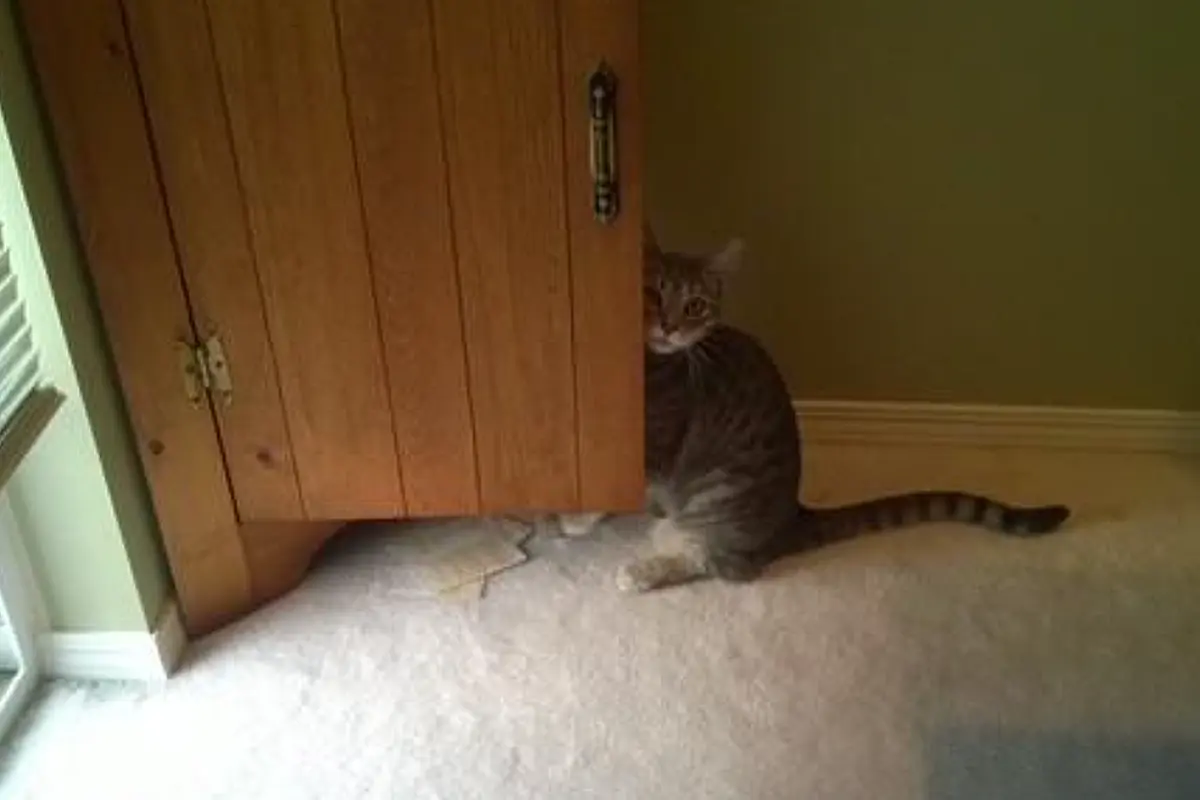
Humans are often more cautious. We develop routines that make life predictable. We pass the same places, notice the same objects, and rarely pause to examine anything that does not directly demand our attention. Frankie does not operate that way.
Every unfamiliar item represents a question. It might be useful. It might be comfortable. It might even contain food. There is only one way to find out.
The investigation usually begins with a slow approach, followed by a brief sniff, a quiet inspection, and occasionally a paw extended to test whether the object responds in any interesting way. Most of the time nothing remarkable happens. But sometimes the result is a new sleeping location, a hidden corner of the house, or a cardboard box that becomes the most important piece of furniture in the room.
Frankie seems perfectly comfortable with this ratio of results.
Curiosity is not about guaranteed success. It is the habit of paying attention to what is there.
If he were writing this chapter, the advice would likely be straightforward: When something new appears, take a closer look. You never know which cardboard box might turn out to be the best seat in the house.
Lesson 5: When in Doubt, Go Find the Sun
Frankie has a daily routine that begins at the front door.
Sometime in the late morning he walks over, sits down, and starts to meow. Not loudly. Just enough to make it clear that he wants to go outside.
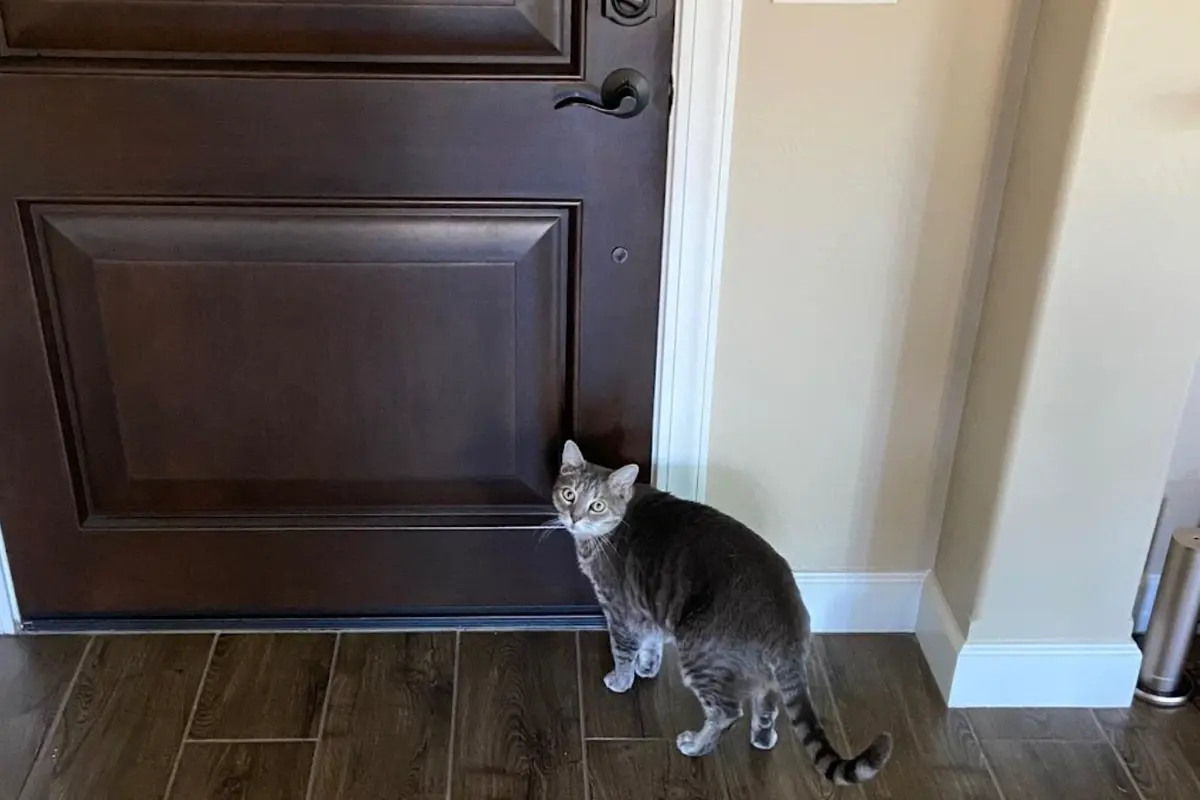
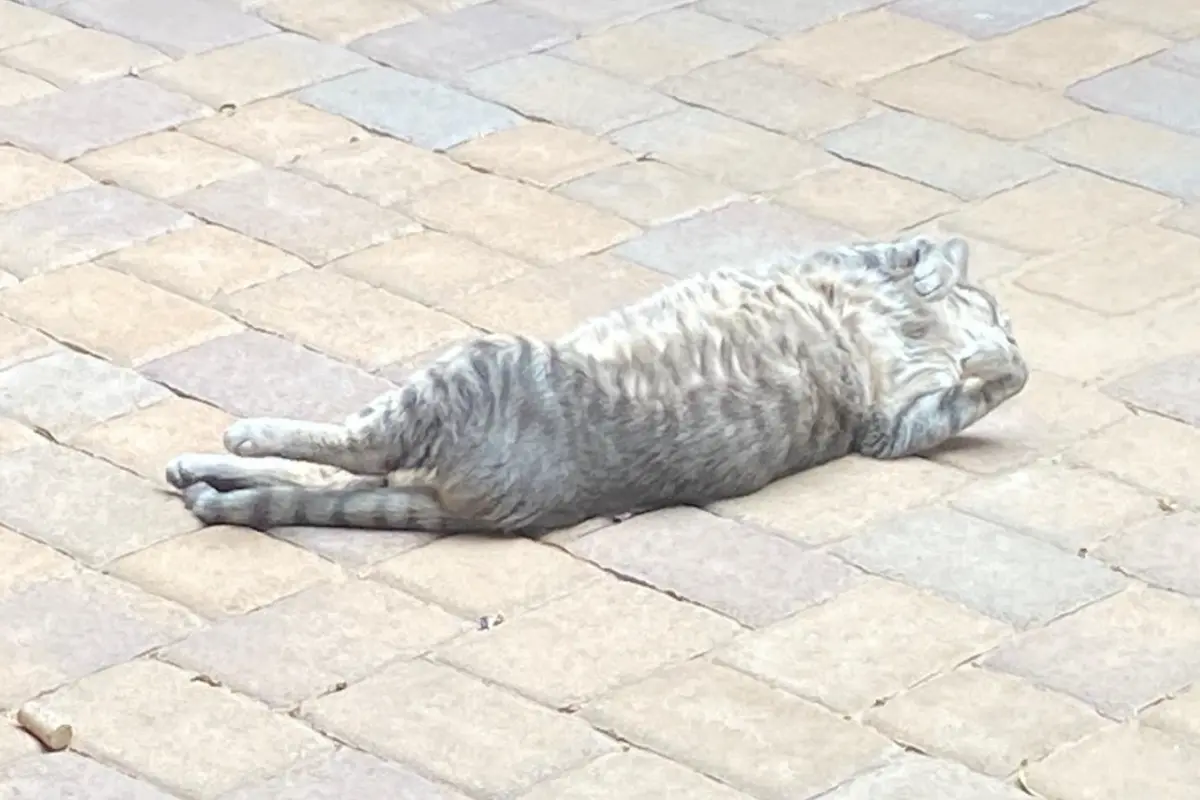
Once the door opens, he heads into the courtyard and begins looking for the warmest place in the sun. The location changes during the day. Sometimes it is near a few plants. Sometimes it is next to the wall where the sunlight reflects a little extra warmth. When he finds the right spot, he settles there and stays for a while.
Frankie sits quietly in the sun, watching the courtyard. Birds pass through. Occasionally a lizard will make the fatal mistake of entering. Leaves move in the breeze. From time to time, he shifts as the sunlight moves.
Eventually he gets up and walks over to the couch that sits in the courtyard. There he climbs up, stretches out as long as he possibly can, and settles into the cushions as if he doesn’t have a single concern in the world.

Humans usually handle uncertainty very differently. When something feels stressful or confusing, we stay inside and try to think our way through it. We analyze the problem, read advice, and search for a strategy.
Frankie’s method is simpler. He asks to go outside. He finds a warm place in the sun. Then he stretches out on the couch and relaxes. From Frankie’s point of view, that seems to work perfectly well.
Frankie’s Final Advice
Frankie has never written a self-help book. He has never attended a seminar, followed a productivity system, or tried to improve himself in any organized way. As far as I can tell, the idea has never crossed his mind.
Yet watching him over the years, I sometimes wonder if cats have already solved several problems humans keep trying to fix.
Frankie rests when he is tired. He pays attention to the few things that actually matter. He investigates anything new that appears in his environment. And when the day becomes uncertain or complicated, he goes outside and sits in the sun for a while.
Eventually he stretches out on the courtyard couch and relaxes as if everything is exactly the way it should be.
Frankie does not seem concerned about productivity, personal branding, or long-term strategic planning. His goals are simpler: a warm place to sit, a quiet place to sleep, and the firm belief that it is always time for food.
Humans tend to complicate things. We build systems, follow advice, and try to improve what may not need fixing.
Frankie would probably recommend a shorter list. Get enough rest. Pay attention to what matters. Spend time in the sun. Then stop.
That is more than enough self-help for one day.