
Guest Story • Rescue Stories • South Korea
We are sharing Julie Choi’s story in full, in her own words. It is a firsthand account of rescue work in Seoul’s redevelopment zones, where familiar streets can disappear almost overnight — and the cats who depend on them can be left behind.
When an Alley Is a Cat’s Whole World
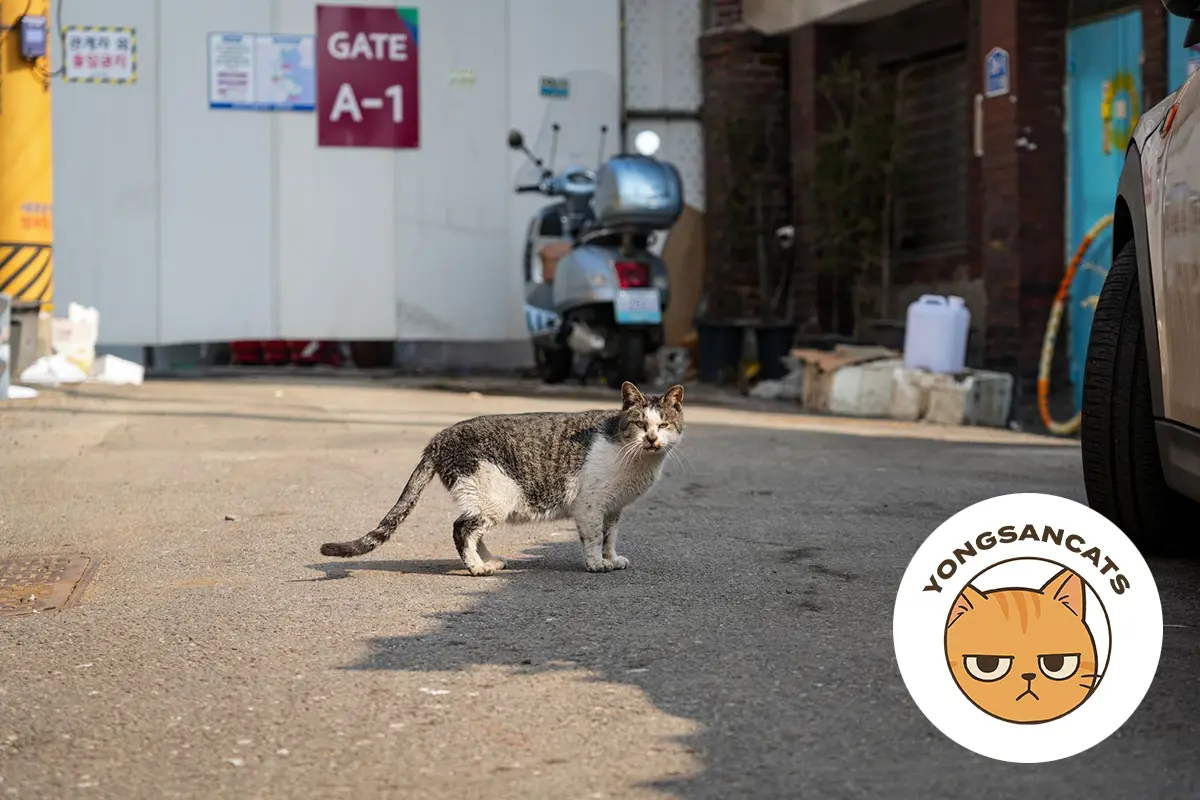
To a person, an alley may look like a shortcut between buildings. To a street cat, it can be an entire map of survival.
There is the wall that blocks the winter wind, the stairway where food appears, the roof that stays warm for a little longer after sunset, and the narrow opening where a frightened cat can hide. A cat may spend years learning this map. Then one day, a fence goes up. The people move out. The feeding place is blocked, and the building that offered shelter is emptied or demolished.
This is what we have been seeing in Yongsan, a central district of Seoul where large redevelopment projects are transforming older neighborhoods around Hannam-dong and Bogwang-dong.
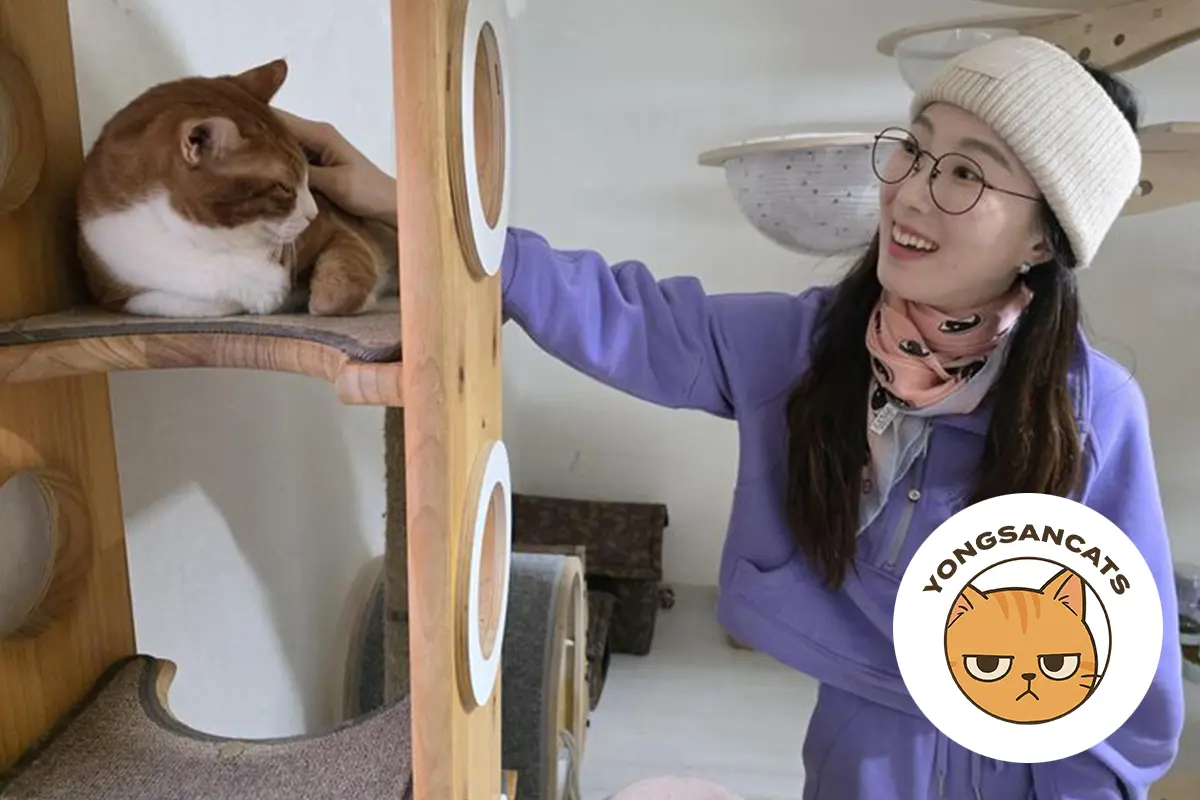
My name is Julie Choi, and I run YongsanCats, a small independent rescue and foster network. I did not begin with a large organization or a long-term plan. I began because I could see what was about to happen to the cats living in the path of demolition, and I could not ignore it.
Since 2024, I have estimated that we have rescued more than 200 cats from redevelopment areas. Each rescue is different, but the pressure behind them is often the same. The neighborhood changes faster than a cat can understand, and faster than a small rescue group can comfortably manage.
A City Can Move Faster Than Rescue
Street cats are territorial. Moving them is not as simple as placing food a few blocks away and expecting them to follow. They return to the places they know, even when those places have become dangerous.
As residents leave, the people who once noticed the cats also disappear. Gates are locked. Familiar routes are cut off. Construction noise and traffic increase. A cat that used to appear at the same hour every evening may suddenly stop coming.
For some cats, trap-neuter-return is no longer a realistic ending because there may be no safe place to return them to. That is why much of our work has had to become a path toward treatment, foster care, and adoption instead.
The practical side is relentless. We feed and monitor cats, arrange trapping, make veterinary visits, find temporary space, coordinate transport, answer adoption inquiries, and keep checking for cats who have disappeared. Often, several urgent cases arrive at once. A cat may need medical treatment, but treatment alone is not enough if there is nowhere safe for that cat to recover afterward.
In spring 2026, even the shelter we were using for rescued cats had to move on a very short timeline as the next phase of relocation advanced. We were trying to protect cats from displacement while facing displacement ourselves.
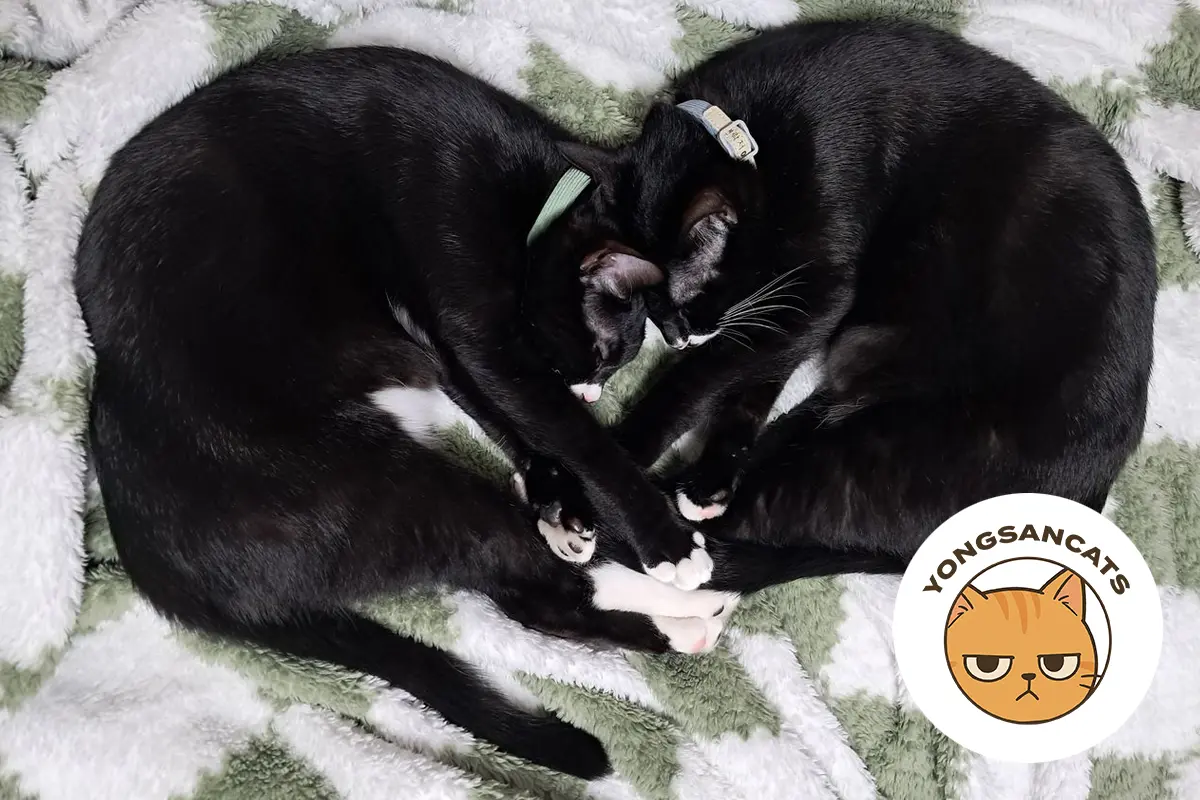
Yeontan Was Still Almost a Kitten Herself
Yeontan was a very young mother living at a demolition site in Yongsan. We knew she had given birth, but we did not know where she had hidden her babies. For more than a month, we searched and watched her movements, trying to find them without frightening her away.
When we finally located the kittens, Hana, Duri, and Sani, they were only about one and a half to two months old. All three had eye infections.
Yeontan was cautious and protective, but never aggressive. She was still so young herself, almost a kitten raising kittens in a place that was disappearing around her. After rescue and initial health checks, the family was reunited in foster care.
That safe room changed what we were able to see.
The kittens’ eyes healed, but their personalities also began to emerge. Duri became affectionate, adventurous, and eager to greet people. Hana, the largest brother, was playful and confident, with the air of a small leader. Sani was more careful at first, but once she trusted someone, she wanted to cuddle and sleep close.
Yeontan and Sani found a home together. Hana is still waiting for a forever home with Duri.
Their story is not finished, but it already shows why foster care matters. Rescue removed them from immediate danger. Foster care gave them the time and stability to heal, develop, and become visible as individuals rather than as four frightened cats from a demolition site.
The Old Street Cat Who Became a Baby Again
Coco’s story shows a different kind of transformation.
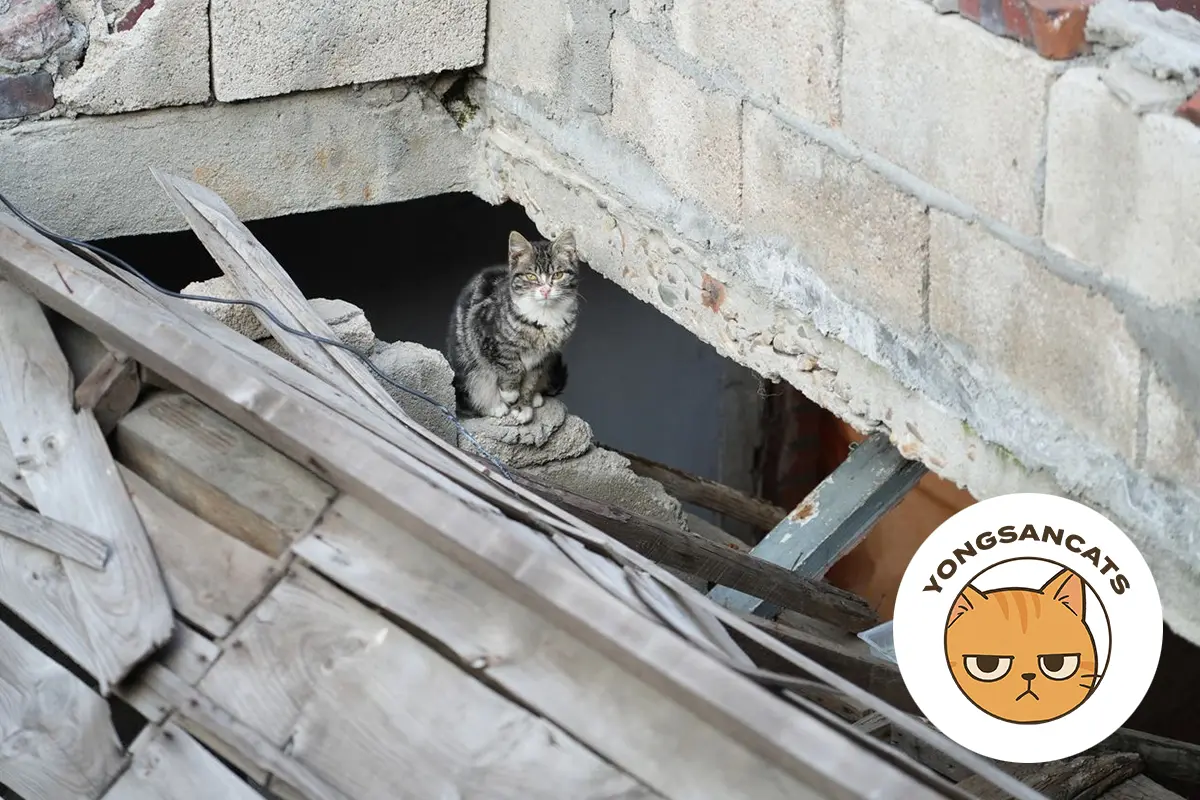
He had survived on the streets around the Hannam-dong demolition area for more than seven years. That is a long life for a street cat. Many neighbors knew him, and because he seemed calm and sturdy, it was easy to imagine that he would always manage somehow.
But when the neighborhood emptied and people were forced to leave, Coco was left behind.
After rescue, he was composed and gentle. At the shelter, he carried himself like an older uncle, often resting near other cats and quietly sharing the space. We thought that was simply who he was: a calm old street cat who had learned not to ask for much.
Then Coco entered the right foster home.
He began to run through the room with sudden bursts of energy. He explored. He rested on the sofa and bed as if he had always belonged there. He enjoyed the company of other cats. He was not yet ready for people to pet him freely, but he accepted treats by hand, one small sign of trust at a time.
We thought we had rescued an old man. In safety, he became a baby again.
That change is one of the quietest rewards of rescue. Safety does not create a new personality. It gives a cat enough room to reveal the personality that survival had been hiding.
The Cats Whose Endings We Still Do Not Know
Not every story reaches foster care in time.
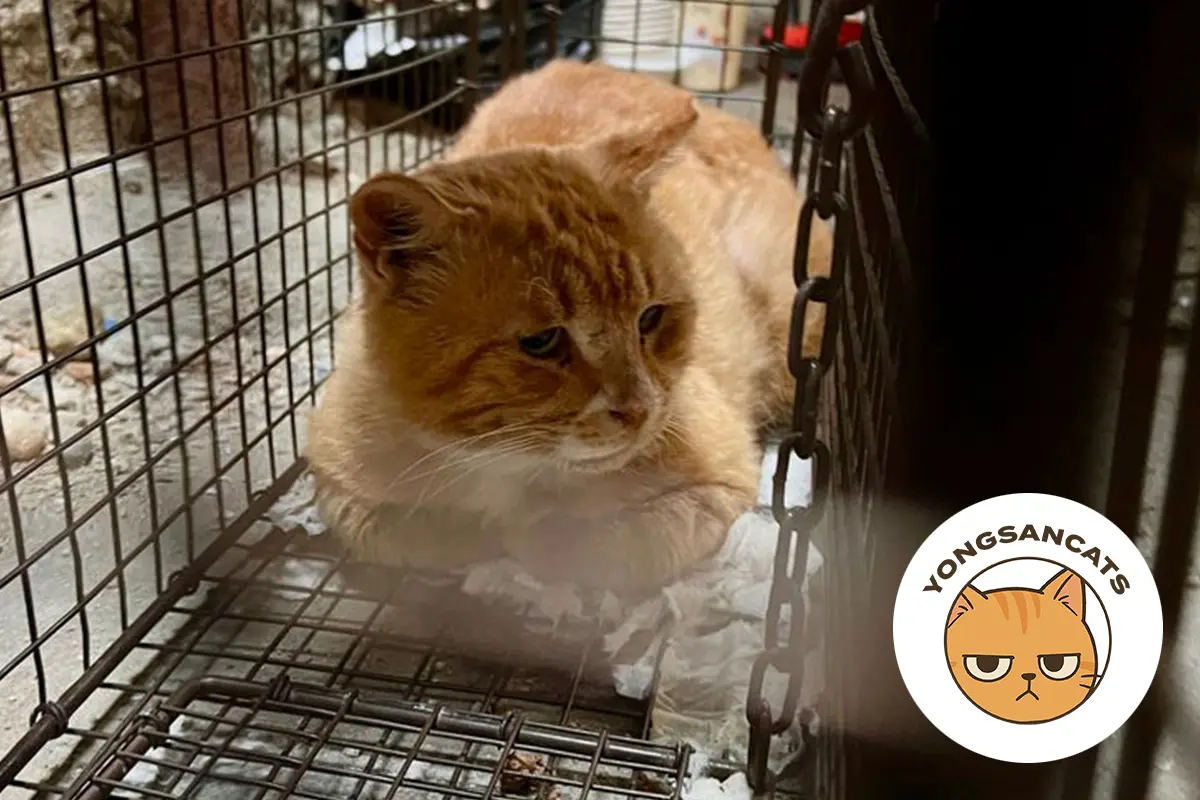
Blueberry was an ash-grey cat we repeatedly saw near the redevelopment fence line. There were periods when Blueberry disappeared and then returned. After full demolition began, Blueberry vanished again. We have not been able to confirm a rescue.
Nana had been hiding beneath an old clothing collection bin. Even after nearby cats were rescued, she kept returning to that small shelter. When demolition intensified, she disappeared too.
We continue to hope that both cats found another route out or were helped by someone we do not know. But uncertainty is part of this work. Sometimes there is no final photograph, no adoption update, and no way to know whether a cat reached safety.
This is why early attention matters. By the time a building is surrounded by fencing and equipment, the cats may already have scattered.
Rescue Is a Chain of Ordinary People
No one rescues a cat alone.
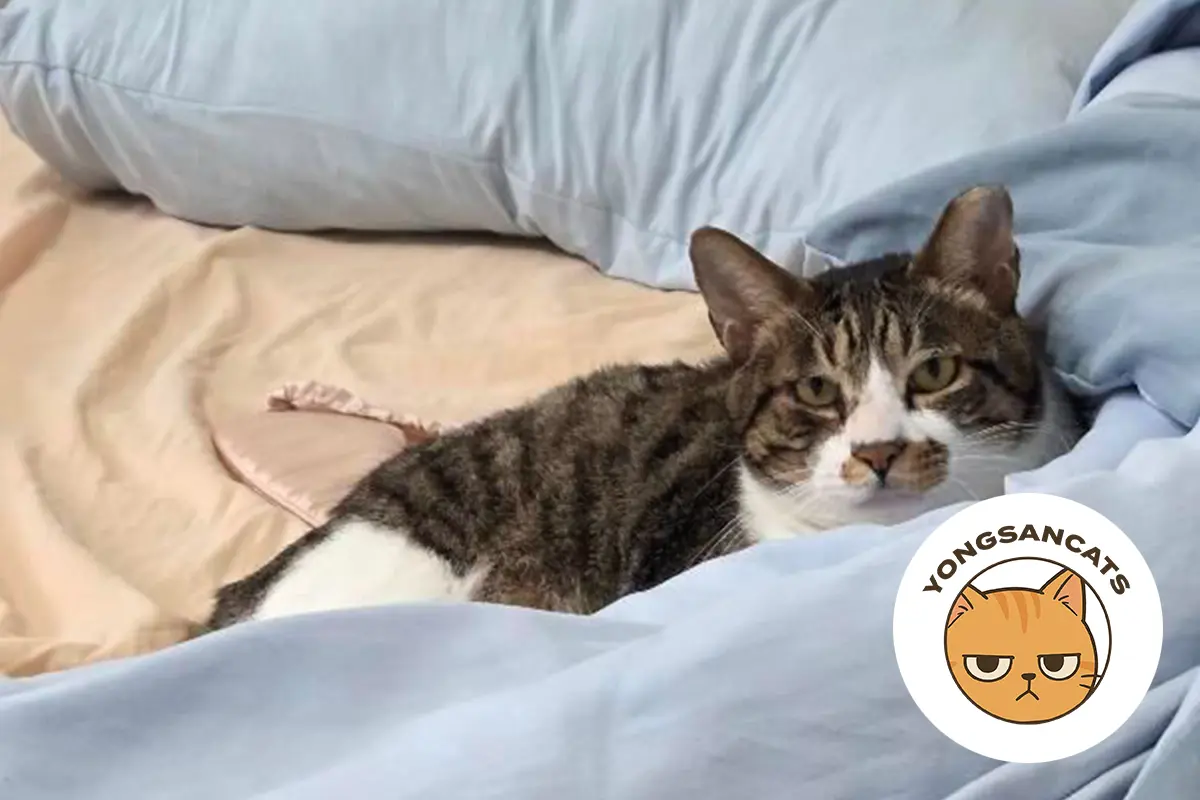
One person notices that a familiar cat has stopped eating. Another keeps feeding at the same time each day so the cat can be trapped safely. Someone drives to the clinic. A foster opens a spare room. A person shares a photograph. An adopter decides that a cautious adult cat deserves a chance too.
Each action can look small, but together they form the path from an unsafe street to a home.
I want people to understand that these cats are not interchangeable. They have routines, relationships, fears, preferences, and places they believe belong to them. The first step is simply to see them clearly. Give the cat a name. Learn when they appear. Take a photograph. Notice when something changes.
Cities will continue to change, and redevelopment will continue to be discussed in terms of buildings, property, and human relocation. But animals live inside those neighborhoods too. Their homes may not be recognized on a map, yet the loss is real.
We cannot save every cat. That truth is painful, and it is also why every cat we do reach matters.
For Yeontan and her kittens, help meant that three sick babies had the chance to heal and grow. For Coco, it meant discovering that an old street cat still had zoomies waiting inside him. For Blueberry and Nana, it means continuing to look, and refusing to let their disappearance become invisible.
Sometimes rescue begins with one very ordinary decision: I see this cat, and I will not look away.
About YongsanCats
YongsanCats is Julie Choi’s independent rescue and foster network in Seoul, helping cats affected by redevelopment and street life move toward food, veterinary care, foster homes, and adoption.
Press kit: https://yongsancats.com/en/press
Instagram: https://www.instagram.com/yongsancats/
Fact-Check Notes for Julie
- More than 200 cats since 2024 follows Julie’s estimate reported by The Korea Times on April 11, 2026. The public YongsanCats support page separately says 300+ street cats rescued or cared for; keep the more conservative independently reported figure unless Julie prefers to update it with a current internal count.
- The shelter relocation timing is supported by The Korea Times reporting that notice arrived on March 6, 2026 for an April 16 move.
- Yeontan and the kittens’ ages, eye infections, one-month search, foster outcome, personalities, and current placement status come from the current YongsanCats pet records and Press Kit.
- Coco’s history and foster transformation come from the current YongsanCats pet record.
- Blueberry and Nana’s unconfirmed status after demolition comes from their current public YongsanCats records.
- Before sending photographs, confirm that YongsanCats owns each image or has explicit permission to publish it, and provide the photographer’s name when known.
Editorial References
YongsanCats Press Kit: https://yongsancats.com/en/press
The Korea Times, April 11, 2026: https://www.koreatimes.co.kr/southkorea/globalcommunity/20260411/yongsancats-saves-hundreds-of-felines-from-disappearing-streets-in-hannam-new-town-redevelopment-zone