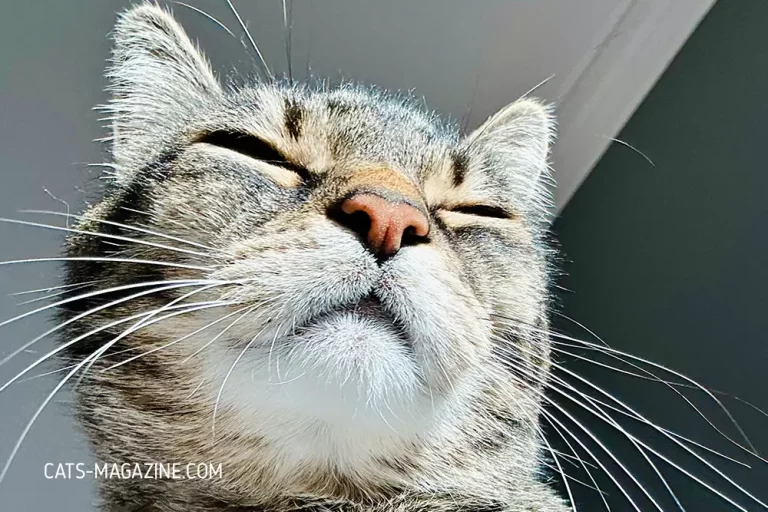

Yes, cats can overheat – and they do not always make it obvious. A cat may simply become quieter, move to a cool floor, or disappear into the deepest patch of shade long before anyone thinks “heat emergency.” By the time a cat is panting, drooling, confused, or unsteady, the situation may already be serious.
When Tito goes outside in summer, I plan around the heat and add a second layer of security with the Pawfit Lite GPS tracker for cats. Its live location, Safety Zones, and activity monitoring can help me find him quickly if he retreats somewhere unexpected and notice when his movement differs from his usual pattern. It is useful summer backup – but not a thermometer, a substitute for supervision, or a reason to stay outside longer.
The most important summer habit is wonderfully low-tech: know your cat. Pierre, Tito, and Myratz live in the same home, yet they behave as if they receive three entirely different weather forecasts.
The short answer: Keep outdoor time to the cooler parts of the day, provide water and real shade, prevent access to hot enclosed spaces, and treat panting or open-mouth breathing as urgent. If you suspect heatstroke, begin gentle cooling and contact a veterinarian immediately.
Cats Do Not All Feel Heat in the Same Way
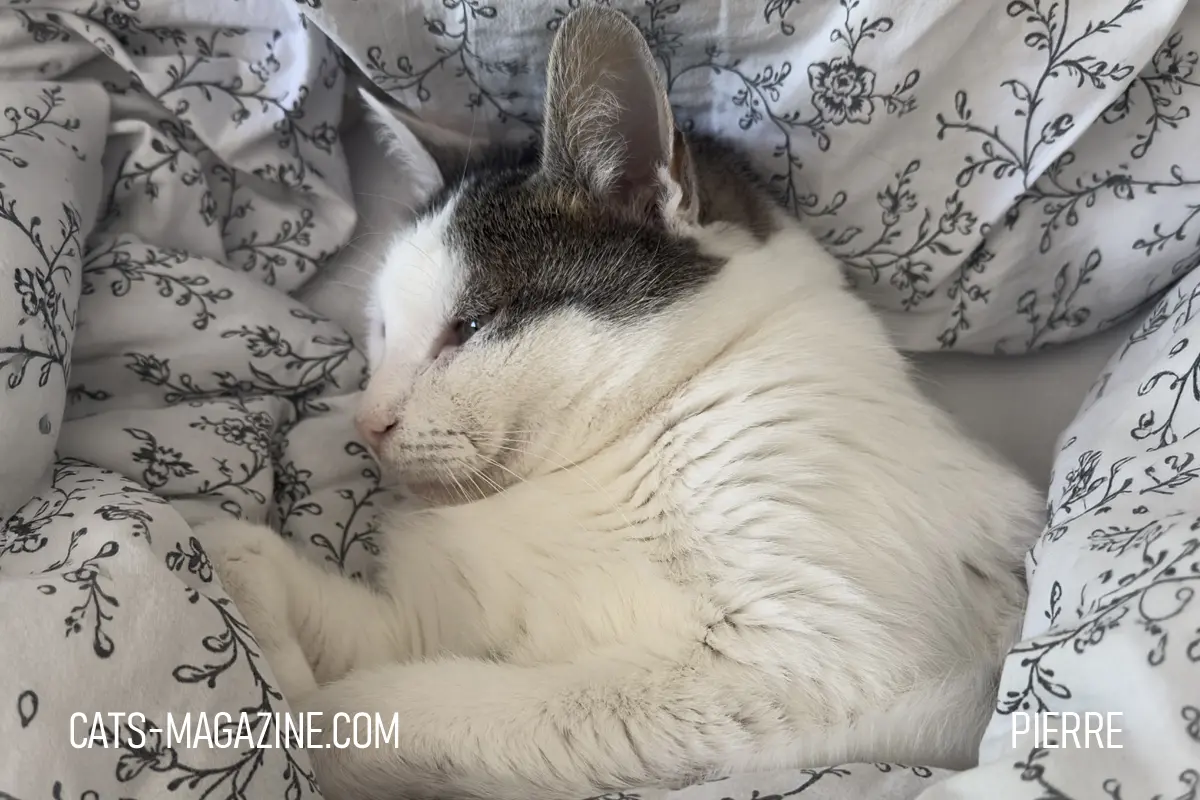
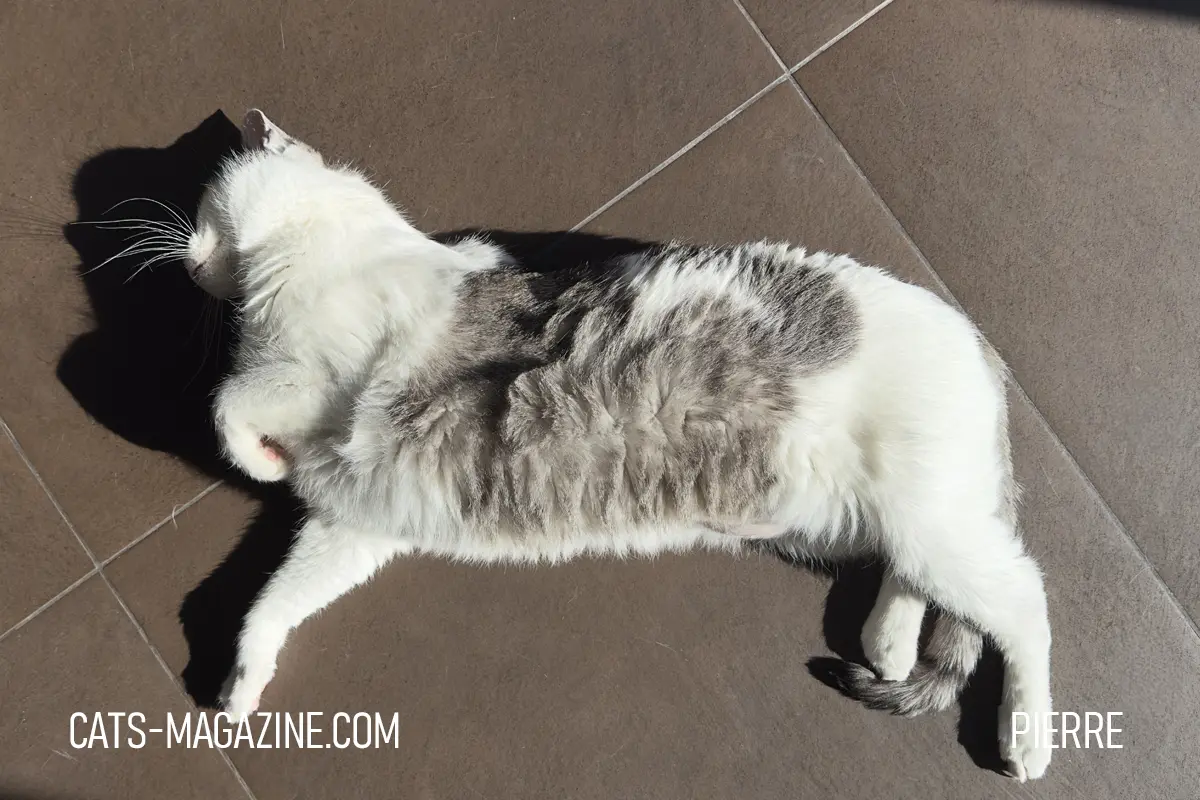
Pierre appears almost personally offended by the suggestion that summer should interfere with blanket season. He may continue sleeping underneath a blanket until the temperature reaches around 37°C (98.6°F). Only then does he finally concede that perhaps the duvet is not essential.
Tito and Myratz are very different. At around 30°C (86°F), they are already stretched out on the floor, choosing cooler surfaces and reducing unnecessary movement.
That difference matters – but it does not mean that 37°C is safe for Pierre or that 30°C is automatically dangerous for Tito and Myratz. Behaviour is not a reliable thermometer. A cat’s response depends on factors including age, weight, coat, health, humidity, air movement, sun exposure, hydration, activity, and whether the cat can freely move to a cooler place.
Your cat’s normal habits give you a personal baseline. Changes from that baseline are often more useful than comparing your cat with someone else’s.
Can Cats Really Overheat?
Absolutely. Cats regulate heat partly by seeking shade, reducing activity, grooming, and moving to cooler surfaces. They have only a limited ability to sweat, so their options become much narrower when the air is hot, humidity is high, ventilation is poor, or escape from the heat is impossible.
Many feline heatstroke cases are linked not to vigorous exercise, but to cats being trapped in hot places: cars, sheds, garages, greenhouses, conservatories, small sunrooms, or poorly ventilated rooms. A quiet cat sleeping in a hidden corner can easily be missed when someone closes a door.
Any cat can overheat, but risk is higher for:
- kittens and senior cats
- overweight or obese cats
- long-haired cats
- flat-faced cats such as Persians
- cats with heart or respiratory disease
- cats who are ill, dehydrated, or less mobile
- cats confined in carriers, vehicles, glass rooms, or other poorly ventilated spaces
Flat-faced cats deserve particular caution because their shortened airways make releasing heat through breathing less efficient. A temperature that one healthy adult cat tolerates may be too much for an older, overweight, long-haired, or medically vulnerable cat.
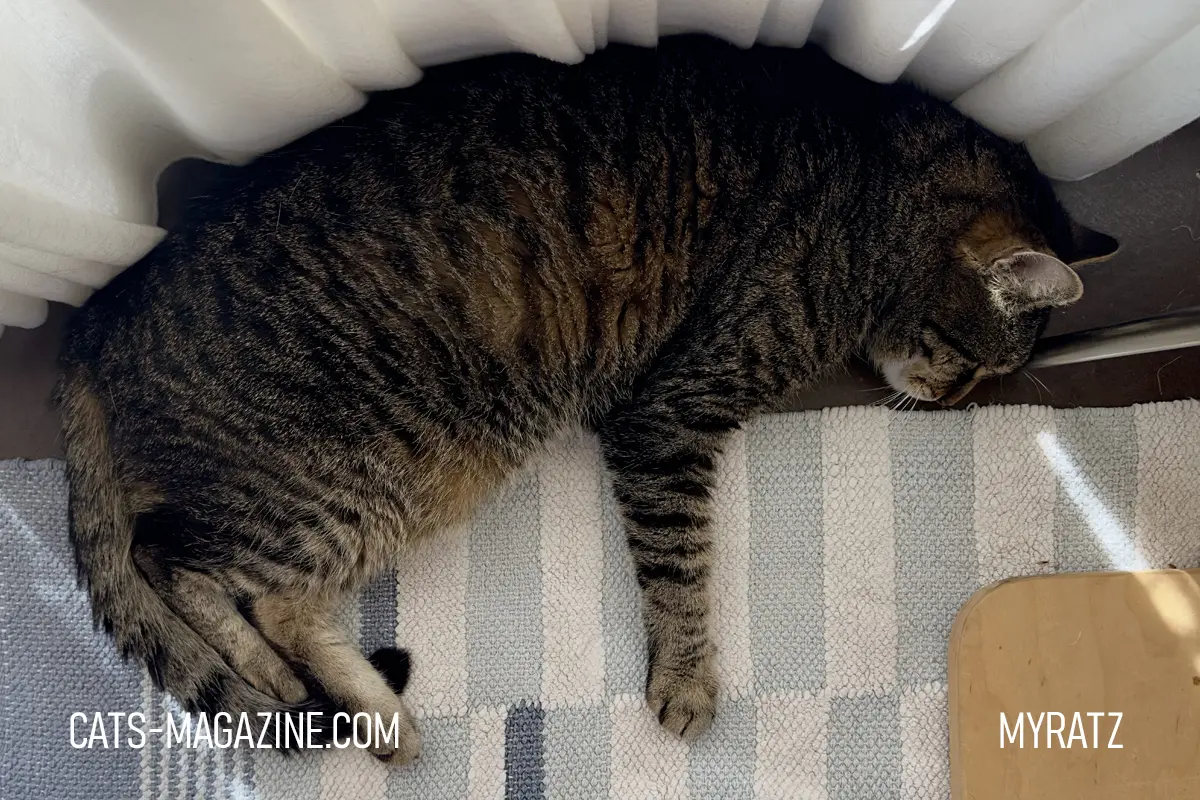
Normal Heat-Seeking: or a Cat Getting Too Hot?
Cats are famous sun worshippers. Enjoying a warm window or moving into shade does not, by itself, mean a cat is ill. The useful question is whether your cat can still regulate their own comfort and behave normally.
Common heat-management behaviour
A warm but comfortable cat may:
- choose tiles, a bathtub, or another cool surface
- lie stretched out instead of curled tightly
- move away from a sunny window
- sleep more during the afternoon
- groom a little more
- reduce energetic play until the evening
- seek shade or a room with better airflow
These are sensible feline adjustments. Let your cat choose among several comfortable areas rather than forcing them onto an ice mat, in front of a fan, or into water.
Warning signs that your cat may be overheating
Watch closely for:
- unusual restlessness or distress
- rapid breathing
- marked lethargy or weakness
- drooling
- vomiting or diarrhoea
- refusing food or water
- confusion, disorientation, or unusual hiding
- gums that are bright red, dark red, or unusually pale
- wobbliness or difficulty standing
Emergency signs
Panting or open-mouth breathing is not a normal cooling response in cats in the way it can be in dogs. A panting cat – especially one who is hot, weak, drooling, distressed, or unsteady – needs urgent veterinary advice.
Collapse, seizures, blindness, or unconsciousness are emergencies. Heatstroke can lead to kidney injury, blood-clotting problems, organ damage, coma, and death. Do not wait to see whether a severely affected cat “sleeps it off.”
What to Do If You Think Your Cat Is Overheating
Heatstroke is a veterinary emergency. The faster cooling and professional treatment begin, the better the chance of recovery.
- Move the cat out of the heat. Go indoors to a cool, well-ventilated room or into deep shade.
- Start gentle cooling. Wet the coat gradually with cool or tepid tap water, keeping water away from the nose and mouth. A fan or air-conditioning can improve air movement.
- Offer water, but never force it. A distressed cat can inhale liquid if water is poured into the mouth.
- Call your veterinarian immediately. Follow their instructions and arrange urgent transport.
- Keep cooling during the journey if advised. Use an air-conditioned, secure, well-ventilated vehicle.
Do not wrap the cat tightly in a wet towel; a covering can trap heat instead of allowing it to escape. Do not use an ice bath, and do not delay calling the vet while trying multiple home remedies. A cat who appears to improve can still have internal complications that are not visible from the outside.
Hydration: More Than Filling One Bowl
Cats evolved with a relatively low thirst drive, and some are impressively talented at ignoring a perfectly respectable bowl of water. Hot weather is not the time to rely on one dusty bowl beside the food dish.
Try a “hydration network” instead:
- place several bowls in quiet, shaded areas
- keep water away from litter trays and, if your cat prefers it, away from food
- refresh the water at least daily – and more often if it becomes warm or contaminated
- put an additional bowl outside for supervised garden or terrace time
- choose wide bowls that do not press against the whiskers
- offer wet food if it is already appropriate for your cat’s diet
- consider a fountain for cats who prefer moving water
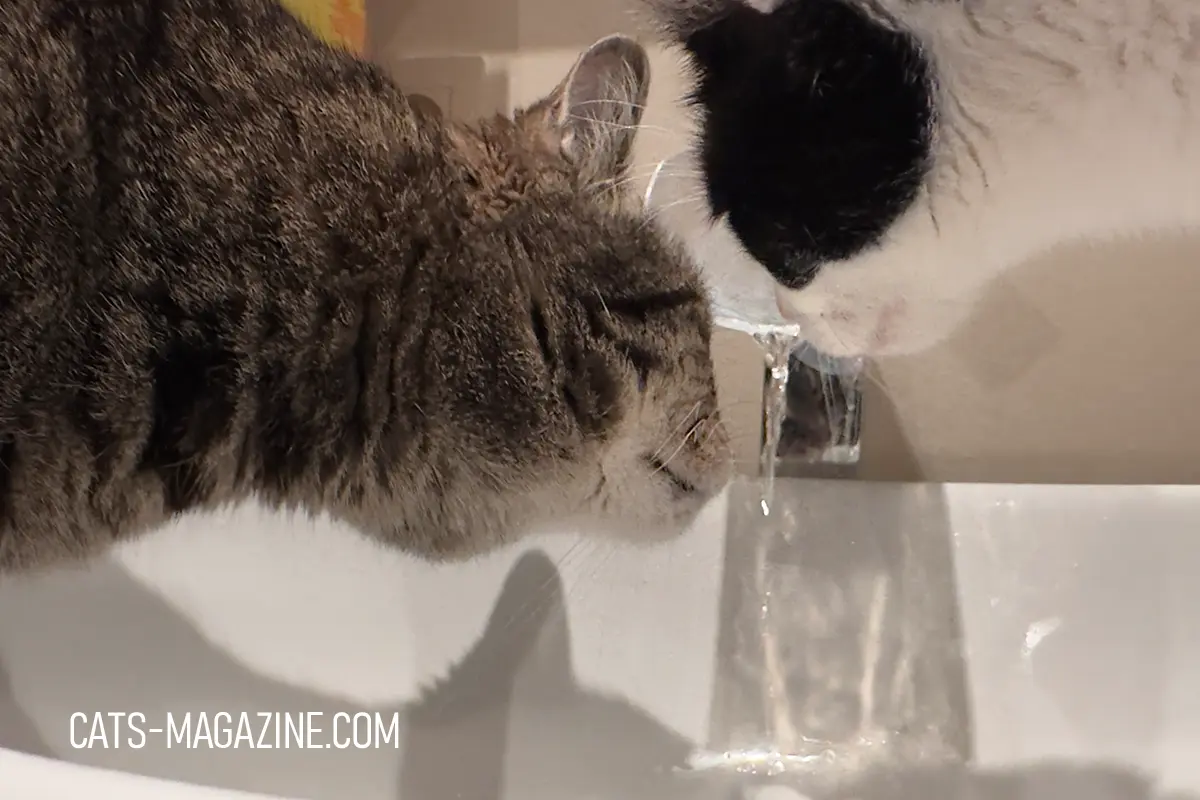
Tito approaches running water with the concentration of a tiny sommelier, so a fountain is genuinely useful in our home. If your cat also considers still water beneath their dignity, see our guide to choosing the best water fountain for cats.
You can also place a frozen water bottle wrapped in a towel near a favourite sleeping area. Leave enough space for your cat to approach or move away freely; cooling should always be a choice, not an ambush.
Shade Must Stay Shady
A spot that is cool at 8 a.m. may become a miniature oven by noon. Check how sunlight moves across the terrace, garden, catio, or room throughout the day.
Good summer shade should be:
- available for the entire outdoor session
- well ventilated rather than enclosed
- large enough for the cat to lie down comfortably
- paired with fresh water
- easy to leave if the cat wants to go indoors
Cardboard boxes, cat hides, dense cat-safe planting, umbrellas, and shade sails can help, but never use a sealed plastic shelter or glass enclosure as “shade.” Greenhouses, conservatories, parked cars, and closed sheds can heat rapidly even when the weather does not feel extreme.
Indoor cats need shade too. Close curtains or blinds on the sunniest side, open safe screened windows when conditions allow, and use fans or air-conditioning to keep air circulating. Fans do not cool a cat in exactly the same way they cool a sweating human, but moving air can still support heat loss and make a room more comfortable.
What Is the Best Time of Day for Outdoor Cats in Summer?
On hot days, the safest window is usually early morning, ideally soon after sunrise. Late evening can also work, but only after the air and ground have genuinely cooled. Heat stored in stone, concrete, balconies, walls, and paving can linger long after direct sunlight disappears.
Cats Protection advises encouraging cats to remain indoors during the hottest part of the day, commonly between 10 a.m. and 3 p.m. During a heatwave, however, that caution window may need to be much longer. Follow the actual temperature, humidity, direct sun, and your cat – not only the clock.
Before opening the door, check:
- Is the route shaded now, and will it remain shaded?
- Does the ground feel hot to your hand?
- Is the air humid or still?
- Is drinking water available?
- Can your cat return indoors immediately?
- Is your cat acting completely normal today?
For harness walks, keep sessions shorter than usual and let the cat set the pace. If Tito wants to inspect one blade of grass for seven minutes, summer is not the moment to turn his botanical research into cardio.
For more on harnesses, secure terraces, traffic, plants, and other outdoor hazards, read How to Keep Your Cat Safe in Summer: Tito’s Guide to Outdoor Adventures.
Where Pawfit Lite Fits Into a Summer Safety Plan
Heat changes feline behaviour. A cat may travel less, shelter somewhere unfamiliar, or stay out later because they are resting in shade. That is where a GPS tracker can be genuinely useful – not as decoration, and not as a medical device, but as another piece of information.
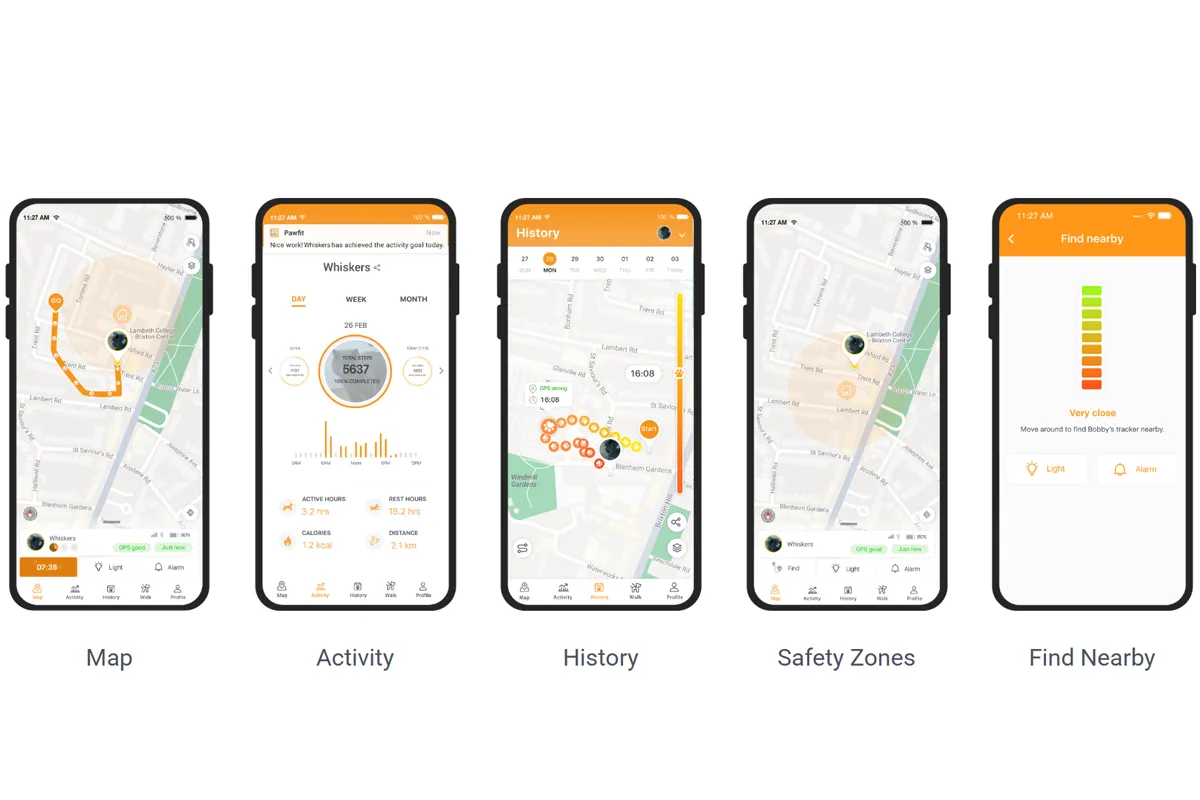
Pawfit Lite weighs 17.6 g and is designed for cats and small dogs weighing at least 2.7 kg. It uses a 4G multi-network connection and combines live location tracking, Safety Zones, and activity monitoring in the Pawfit app. The cat version includes a quick-release safety collar, and the tracker is waterproof – useful when “summer weather” abruptly becomes “surprise thunderstorm.”
How I would use it on a hot day
- Live location: If Tito retreats into dense shade or slips beyond the area I am checking, I can locate him more quickly instead of searching blindly in the heat.
- Safety Zones: An alert can tell me that he has left a defined area, allowing me to react before he travels farther.
- Activity patterns: If his movement is noticeably different from his own normal pattern, I know to check on him. Reduced activity can have many explanations – including sleep, heat, stress, pain, or illness – so the data is a prompt to observe, not a diagnosis.
- A lightweight cat-specific design: At 17.6 g, Pawfit Lite is made for smaller bodies, although fit, comfort, and the cat’s individual health still matter.
What Pawfit Lite Can (and Cannot) Do
Pawfit Lite cannot tell you whether your cat’s core body temperature is dangerous. GPS coverage and battery charge also matter. A tracker never replaces visible supervision, access to shade and water, a secure environment, or veterinary care.
Before every outing:
- Charge the tracker.
- Confirm that location updates are working.
- Check the collar fit and quick-release function.
- Make sure your cat is comfortable wearing it.
- Keep the app notifications enabled.
Pawfit is the backup plan for the cat who ignores the original plan – which, in fairness, is an extremely cat-like job description.
Travelling With Cats in Summer
Cars deserve their own warning because they can become dangerously hot very quickly. Never leave a cat unattended in a parked vehicle, even in shade, with the windows partly open, or “just for a minute.”
For an essential summer journey:
- cool the car before bringing the cat inside
- use a secure, well-ventilated carrier
- keep air flowing around – not directly blasting into – the carrier
- bring water and a bowl
- plan the route and stops in advance
- never open a carrier or car door unless the cat is securely contained
- keep medications and veterinary details accessible
Some cats genuinely enjoy travelling; others feel safest in their familiar territory with reliable care. Our guide Should You Take Your Cat on Vacation or Leave Them at Home? helps you make that decision based on the individual cat rather than the human fantasy of a perfectly photogenic feline holiday.
If travel is unavoidable – or your cats are seasoned road companions – see the practical lessons from my 1,400 km journey with Tito, Pierre, and Myratz, including carrier preparation, water, route planning, and arrival routines.
When Summer Heat Becomes Wildfire: The Animals Need Us
This summer has brought destructive wildfires to communities and habitats around the world, while Europe has been hit especially hard. At the time of writing, the European Commission’s Joint Research Centre reported that 568,415 hectares had burned across the EU in 1,647 fires by 13 August 2026. The area burned by 12 August was more than twice the average for the same point in the previous 20 years.
Behind every hectare is more than a number. There are nests, burrows, feeding grounds, shelters, farms, gardens, colonies of community cats, and homes shared with beloved animals.
Wild animals, farmed animals, street cats, and companion animals do not start fires, understand evacuation maps, or choose which road remains open. They are entirely innocent in this crisis, yet they can lose their habitat, food, families, or lives within minutes. Caring about them is not a sentimental extra added after human safety; protecting animals must be part of responsible disaster planning from the beginning.
For our own pets, that responsibility is even more direct. They have only us. They cannot unlock the front door, read a smoke alert, pack their medication, carry their water, or find an evacuation centre that will accept them. We chose to bring them into our lives, so their escape plan must be part of ours – not something improvised when flames or smoke are already visible.
Make a wildfire plan before you need one
- Keep one secure carrier for every cat where it can be reached immediately – not buried behind the Christmas decorations in a locked garage.
- Practise getting each cat into the carrier before an emergency. A frightened cat may hide, scratch, or refuse to come when called.
- Prepare a grab-and-go bag with water, food, bowls, litter, medication, basic first aid supplies, veterinary records, recent photos, and your cat’s microchip details.
- Keep microchip registration and contact information up to date.
- Charge your phone and Pawfit tracker, and keep a portable power bank ready.
- Identify more than one evacuation route and check in advance which shelters, hotels, friends, or family members can accommodate animals.
- Evacuate early when authorities advise it. Do not wait until smoke and noise make frightened animals harder to find and transport.
- Never release a cat outdoors near a fire in the hope that instinct will save them. Smoke, panic, blocked routes, and unfamiliar surroundings can disorient even an experienced outdoor cat.
Our responsibility does not end at the garden gate. If it is safe and permitted, leave clean water for community cats and wildlife, support local rescuers and wildlife rehabilitation centres, and report trapped or injured animals to emergency services. Do not enter an active fire zone or handle frightened wildlife without guidance – the most useful rescue is one that does not create another casualty.
When disasters come, compassion needs a plan. Every animal deserves consideration, but our companion animals depend on a promise we made the day they became ours: if we leave, they leave with us.
Nine Smart Summer Habits for Cat Owners
- Learn your cat’s baseline. Know where they sleep, how active they are, and how their breathing normally looks.
- Shift outdoor time. Choose early morning or a genuinely cool evening, not the hottest part of the day.
- Create multiple water stations. Indoors and outside, always in shade.
- Offer several temperatures. Let your cat choose between a bed, a cool floor, a ventilated room, and a shaded retreat.
- Check enclosed spaces before closing them. Cars, sheds, garages, greenhouses, conservatories, tumble dryers, and cupboards can all conceal a sleeping cat.
- Protect pale skin. White, pale, hairless, and sparsely furred cats are more vulnerable to sunburn. Ask your vet about a cat-safe sunscreen; never improvise with human products, which may contain ingredients toxic to cats.
- Reduce intensity, not enrichment. Replace midday garden time with indoor scent games, gentle play, a food puzzle, or birdwatching from a shaded window.
- Use technology sensibly. A charged GPS tracker and active Safety Zone can support supervision; they cannot replace it.
- Treat panting as urgent. Move the cat to a cool place, begin gentle cooling, and call your vet.