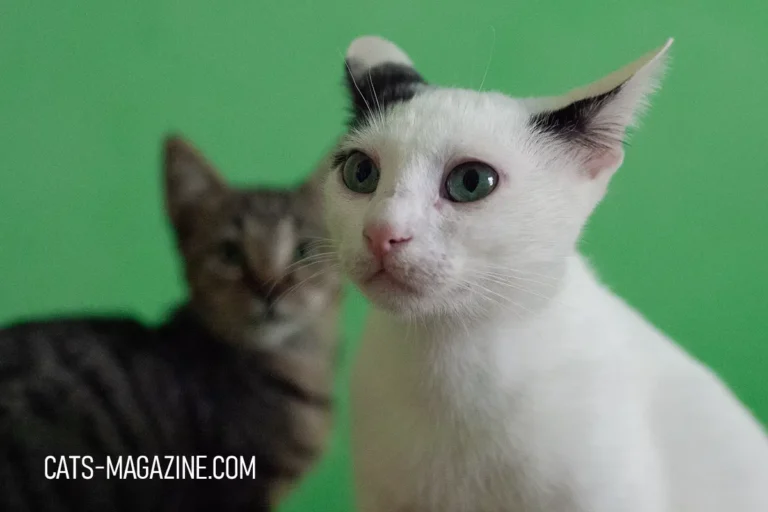
Introduction: When a Cat Feels “Off”
If you live with a cat long enough, you learn to trust a certain quiet instinct. Nothing dramatic has happened. No obvious disaster. And yet, something feels… off. Your cat isn’t quite themselves anymore. Maybe they hide more. Maybe they groom obsessively. Maybe they’re suddenly distant, tense, or oddly restless.
That gut feeling is important.
Cats don’t “act out” randomly, and they don’t change behavior just to be difficult. When a cat’s behavior shifts, it’s almost always a response — to stress, discomfort, confusion, or emotional overload. And more often than not, the earliest signs are subtle. A slightly shorter fuse. A little less appetite. A change in where they sleep.
Big, dramatic behaviors get our attention, but it’s the small changes — the quiet ones — that usually matter most.
Common Signs Your Cat’s Behavior Has Changed
Behavior changes don’t always look like chaos. In fact, many of the most meaningful signs are easy to miss at first.
Some of the most common ones include:
- Hiding more than usual or spending time in new, isolated places
- Overgrooming, excessive licking, or hair plucking
- Sudden aggression, irritability, or, on the opposite end, withdrawal
- Changes in sleep patterns or appetite
- Increased vocalization — or a cat who suddenly becomes very quiet
One important thing to remember: a single sign on its own may mean nothing at all. Cats have moods. They have off days. What matters is pattern and persistence. When several changes appear together, or one change doesn’t resolve over time, that’s when it’s worth paying attention.
The Big One: Environmental Change & Moving Stress
Cats are deeply territory-based animals. Their sense of safety is built on familiar smells, predictable light, known sounds, and stable routines. When that environment changes, even in ways that seem minor to us, it can be profoundly unsettling for them.
Moving once is stressful for most cats.
Moving multiple times — across homes, cities, or countries — can be overwhelming.
Every move strips away the invisible map your cat relies on: scent markers, safe corners, familiar pathways, and routine cues. Even when the new place is objectively “better,” the loss itself can trigger anxiety.
This is where Pierre’s story comes in.
Pierre has always been delicate — emotionally sensitive, easily overstimulated, deeply affected by change. After multiple moves, his anxiety didn’t show up as aggression or noise. It showed up physically: restlessness, overgrooming, hair plucking. Not because he was “misbehaving,” but because his nervous system was trying to cope.
Pierre didn’t become difficult — the world became too loud for him.
Not All Cats React the Same (Meet Tito & Myratz)
One of the hardest things for cat guardians is watching one cat struggle while another seems completely unfazed — in the exact same environment.
This doesn’t mean you did something wrong.
Cats have wildly different stress thresholds and personalities.
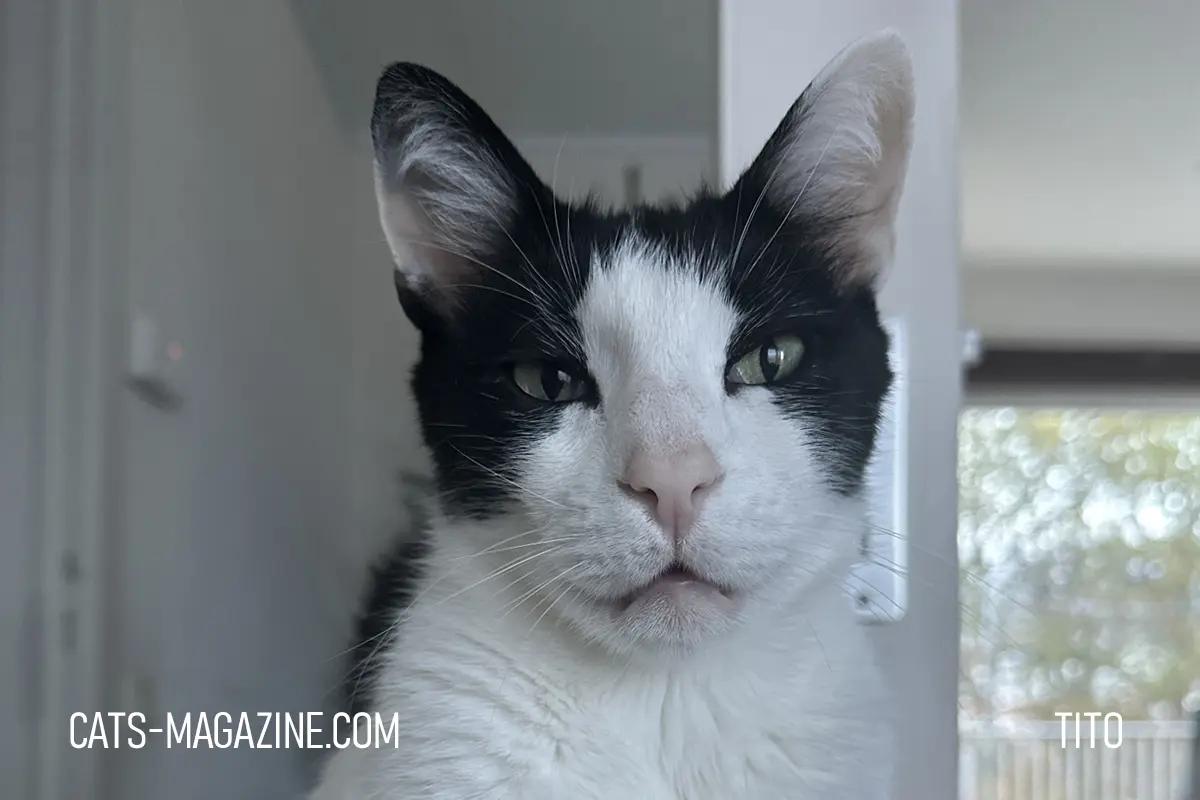
- Tito is high-energy, adaptable, and chaos-proof. Change barely registers. He processes the world externally and moves on.
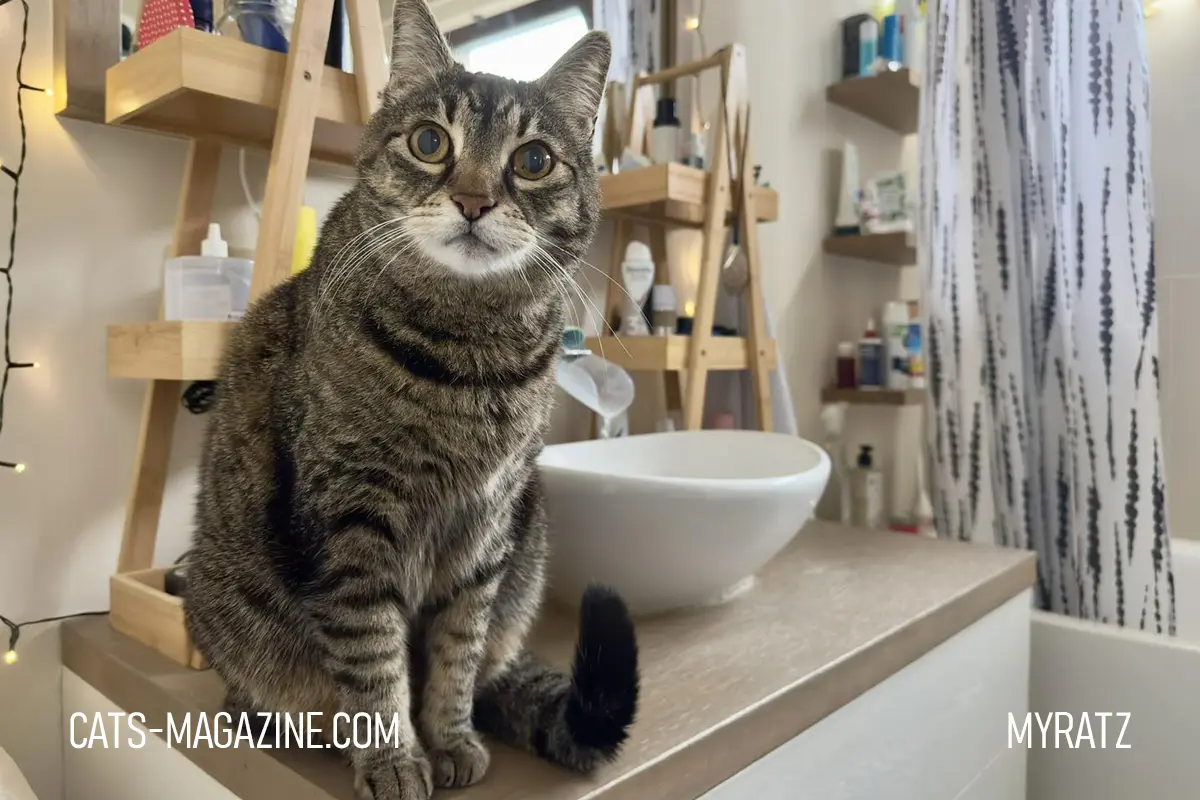
- Myratz is an old grandpa at heart — settled, emotionally steady, and unbothered by most disruptions.
- Pierre, on the other hand, internalizes everything. He feels deeply, absorbs stress quietly, and carries it in his body.
Same moves. Same household. Completely different reactions.
This is why behavior change is not a measure of care or love. It’s a reflection of temperament.
Anxiety in Cats: The Quiet Struggle
Feline anxiety is often misunderstood because it doesn’t always look dramatic. Many anxious cats don’t lash out. They retreat inward.
Signs people often miss include:
- Excessive grooming as self-soothing
- Tension in the body even at rest
- Hypervigilance or exaggerated startle responses
- Restlessness without obvious cause
Overgrooming and hair plucking, in particular, are not “bad habits.” They are coping mechanisms — the feline equivalent of nail-biting or pacing. The behavior isn’t the problem. It’s the signal.
Blame has no place here. Observation and compassion do.
When a Sudden Change Is Temporary — And When It’s Not
Many behavior changes are temporary, especially after events like moving, renovations, visitors, or routine disruption. Cats often need weeks, not days, to adjust.
However, some signs should never be ignored:
- Sudden behavior change paired with weight loss, vomiting, or lethargy
- Aggression or withdrawal that escalates instead of softening
- Overgrooming that leads to wounds or bald patches
Waiting it out isn’t always kind. Sometimes the most loving thing you can do is seek help early — not because something is “wrong,” but because your cat is struggling.
What Actually Helps a Sensitive Cat
There are no miracle fixes — and that’s okay.
What truly helps sensitive cats is consistency and gentleness:
- Predictable daily routines
- Safe zones where the cat can retreat undisturbed
- Familiar objects carrying old scents
- Reducing noise, visual clutter, and sudden disruptions
- Above all: time and patience
Healing isn’t linear. Progress often looks quiet.
Cats don’t have words for stress, fear, or overwhelm. Behavior is how they speak. A sudden change isn’t rebellion or attitude — it’s communication. For sensitive cats like Pierre, understanding and patience matter far more than correction.