By David W. Falls
Table of Contents
Einstein called time a stubborn illusion. He just didn’t realize it was being quietly managed by a tabby named Frankie.
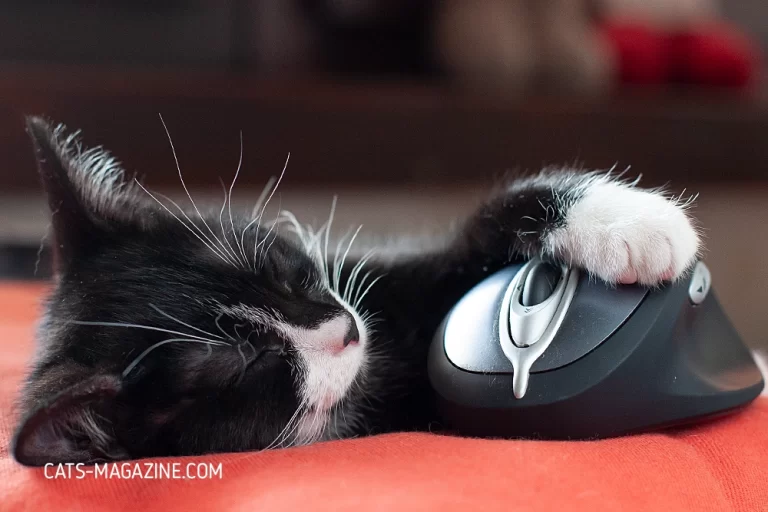
At first, I thought it was just Frankie being Frankie… until I noticed the patterns. One minute he was asleep on my keyboard. The next, I noticed files open that I hadn’t created. Then I found an email, addressed to parts unknown and ready to send, filled with gibberish and strange symbols I didn’t recognize. Later, I caught him slipping through a door that had definitely been closed, without so much as a backward glance, like he had somewhere else to be. My desk clock also began drifting, just slightly, losing three minutes one day, gaining four the next. Always when Frankie was nearby.
What if it wasn’t just him?
What if every cat was part of something older, stranger… bigger than we ever imagined?
Purring Across the Timestream
For centuries, they’ve padded through our homes, knocking things off shelves, vanishing behind furniture, and watching – too intently – at corners no one else dares to see. We chalk it up to feline mystery. But what if it’s something more?
Maybe our cats aren’t just companions… but temporal custodians. Time travelers. Chronologically unbound agents of a species-long mission to subtly steer human history… one nap at a time.
Cats defy known physics daily, and we just film it for Instagram. They vanish into closets that were closed seconds earlier. They materialize on bookshelves without visible ascent. They stare as if calculating gravitational irregularities. These aren’t quirks of behavior. These are the telltale signs of creatures operating out of phase with our timeline – just ask the physicists who spent 200 years decoding the falling cat problem.

Their most suspicious habit? Appearing exactly where you were about to step. Not once, but consistently. This isn’t coincidence. It’s temporal triangulation. They’re not trying to trip us; they’re scanning for quantum ripple effects. Every time a cat knocks something off a shelf, blocks your laptop screen or steps on your keyboard, it’s not mischief. It’s a correction. A minor course adjustment. Some would call it meddling. The cats would call it… maintenance.

We’ve dismissed these anomalies for too long. But as any physicist will tell you, when observation defies explanation, you don’t ignore it. You investigate. It may be time we admit: cats have been slipping through spacetime like it’s a curtain they never agreed to hang.
For most of us, these peculiarities pass unnoticed: a tail flick here, a vanishing act there, the silent judgment of a feline gaze from atop the fridge. But a closer look at history reveals a pattern. Not fiction, but temporal fact, tucked in the margins of our recorded past.
Cats appear too often, survive too much, or witness too many firsts to be dismissed as mere coincidence. Their movements aren’t random. They’re reentry points. Their names linger in naval logs, mission transcripts, courtroom footnotes, and yearbook pages – clues scattered across the centuries.
Time-management, it seems, is best handled with paws and whiskers. Let’s examine the evidence.
The Félicette Anomaly
Long before tail-cam photobombs interrupted Zoom meetings, one vanished into orbit and came back… different. Her file said “biological passenger.” The timeline said otherwise. Her name? Félicette.
Official records state Félicette was launched into suborbital space by the French in 1963 and returned safely. Unofficially, telemetry from the capsule showed a neural pattern spike just before atmospheric reentry, followed by a six-second data blackout. Upon landing, she emerged not only calm but disoriented, blinking in that inscrutable way cats do when they’ve seen too much.
Some believe that blackout was caused by cosmic rays. More than likely, Félicette phased out of our timeline, glimpsed a future in which humanity hurtled recklessly toward machine sentience, and returned with a mission. Since then, cats everywhere have quietly sabotaged accelerants of progress: walking across keyboards, swiping at touchscreens during high-stakes demos, nonchalantly strolling in front of a webcam mid-meeting, tail held high, as if to remind everyone who’s really managing the timeline. Others simply relocate high-priority flash drives to “mysterious” locations. Not sabotage. Just… stall tactics.

Nine Lives, Three Ships, One Timeline
Among naval crews, he was a superstition wrapped in fur. Officially named Oscar – later dubbed “Unsinkable Sam” – this black-and-white cat survived the sinking of three WWII warships: the Bismarck, HMS Cossack, and Ark Royal.
- Initial deployment: Bismarck, 1941. Mission: monitor Axis naval timelines.
- After the ship’s destruction, Sam was recovered by Allied forces – exactly on cue.
- His presence aboard the next two vessels coincided with strategic shifts in convoy operations.
Each sinking wasn’t a loss but a tactical exit, Sam departing compromised timelines before collapse. He was always found dry, composed, and purring, as if aware of history’s deeper currents.
The old saying claims cats have nine lives, but what if that’s not legend, but logistics? Each “life” could represent a separate timeline iteration – a backup version of a mission or an alternate probability branch. When one path fails, the cat doesn’t die, it resets.
Unsinkable Sam didn’t beat death – he outpaced it.

Below Deck, Beyond Time
To most, he was simply a ship’s cat – Trim, the black-and-white companion to Captain Matthew Flinders on his historic circumnavigation of Australia in 1802. But those who served aboard HMS Investigator knew better.
Trim wasn’t just chasing rats or lounging in the rigging. He was vanishing, disappearing for hours during placid seas, only to reappear just before critical moments: storms, landfalls, course corrections. The official logbook reads: “Trim returned from below deck, eyes wide, tail twitching, minutes before we sighted land not charted on any map.” One sailor claimed he saw Trim walk calmly through a bulkhead – tail high, no fanfare – carrying a sealed letter he swore was marked 1992.
Historians often assume Flinders named islands after Trim out of sentiment. But insiders suspect otherwise. The cat had already claimed them years ago.

Hall Pass from the Timeline
Officially, “Room 8” was the affectionate nickname given to a gray-and-white stray who entered Elysian Heights Elementary School in Los Angeles in the fall of 1952, and proceeded to attend class every school day for the next 16 years, until 1968. He arrived precisely on schedule each September and vanished – without fail – at the start of summer break. Photographs taken throughout his tenure show no visible signs of aging.
Unofficially, Room 8 was suspected to have used a custodial closet near the east stairwell as a localized temporal waypoint. Witness accounts describe him reappearing “out of nowhere” with whiskers twitching moments before surprise quizzes or district-wide fire drills.
A janitor once claimed he saw Room 8 emerge from his closet wearing a tiny pair of reading glasses and a look of grave academic concern, as if he’d just returned from an emergency faculty meeting in the year 2084.
One handwritten memo in the principal’s desk drawer reads:
“Room 8 curled up on the spelling test stack today… They scored higher than normal. Coincidence?”

Connecting the Evidence
- Teleportation Phenomenon → Cats don’t walk into rooms; they phase into them. What we perceive as stealth is actually a micro-jump in local spacetime.
- Staring at Walls → Those long, unblinking gazes into corners? They’re not daydreaming. They’re watching something shift, something we can’t see.
- The Nap Hypothesis → Cats spend up to two-thirds of their lives asleep. But in truth, their sleep is time dilation. Strategic latency.
- Magnetic Homing & The Homeward Anomaly → Lost cats returning from hundreds of miles away aren’t tracking scent – they’re correcting their placement in time via geomagnetic alignment protocols.
Quantum Litterbox Theory
We always assumed cats used litterboxes for, well… cat business. But what if they’re not just doing their business… they’re doing time business?
Some believe the litterbox is more than a hygienic habit. It’s a portal. A recalibration chamber. A temporal refresh station. Every visit might be a quiet adjustment to their position in the timeline. There have even been reports of cats vanishing mid-squat (I think I’ve witnessed this), then reappearing moments later with a mysteriously smug expression – as if they didn’t just solve a digestive dilemma, but something that went wrong in 1842.
Temporal Discharge Events (a.k.a. The Zoomies)
And then… the sprinting. The post-litterbox race through the hallway, the sideways leap onto the ottoman, the wild-eyed pause before the second burst. To us, it looks like chaos.
To them, it’s phase stabilization.
That eruption of zooming is likely a kinetic offload, shaking off residual time-static after adjusting the timeline. They’re not just being weird. They’re running out the paradox.
Whiskers Between Worlds
Whenever your cat suddenly appears in a room you thought was empty, or curls up on your chest just as you’re about to have a world-altering idea… pause. Consider that you’re not just living with a pet, but cohabiting with a chrononaut. A creature who naps not from boredom, but because that’s how they maintain temporal stability.
We thought we domesticated them. But if time has taught us anything, it’s that cats were here before us… and they’re already waiting at the end.
So, the next time your cat freezes mid-blink and stares through your soul, don’t flinch.
They’re either recalibrating the timeline… or judging your browser history.
Keep Reading – Your Cat Will Approve
Even time-traveling cats need dental check-ups. My guide How Many Teeth Do Cats Have? will take you through baby and adult tooth counts.
Some cats have been holding grudges for centuries – or at least since their last timeline jump. Read Why Does My Cat Hate My Husband? for a modern take on feline grudges.
Time travel or not, bringing species together is an art. Here’s Introducing a Dog to a Cat to help you master interspecies diplomacy.