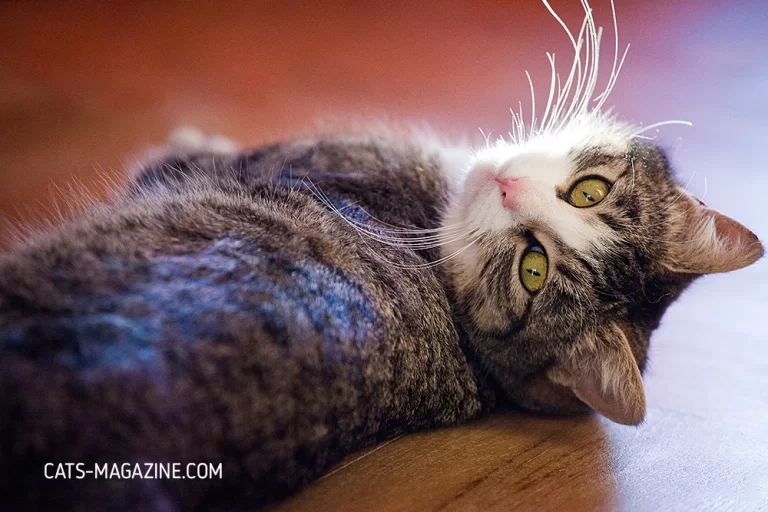
Grey cats may not be rare, but they’re one of the most misunderstood and beloved feline colors in the world.
Table of Contents
The Mystique of Silvery Whiskers
I’ve written about all sorts of cat shades before – the sleek confidence of black cats, the patchwork poetry of calicos, the adorable chaos of tortoiseshells, the perfect contrast of black and white cats, the sweet warmth of brown tabby and white cats.
But today, Silvia is stepping into the misty, moonlit world of grey cats – or “blue cats,” as the official coat-color nerds like to call them.
No specific breeds here. Just the universal, mysterious elegance of cats whose fur looks like it was sculpted from smoke, silver, and storm clouds.
Why do grey cats feel so magical?
What makes that ash-colored coat so uniquely charming?
And is there a secret gene behind all that silky, stormy beauty?
Quick Answer:
Grey cats aren’t a separate breed — they’re cats with a diluted black coat caused by a specific gene. Many people describe them as calm, observant, and gentle, although personality always depends on the individual cat.

Grey cats aren’t actually “grey” at all – they’re diluted black cats. The famous blue coat is simply black pigment softened by a dilution gene. That’s why Russian Blues, Chartreux, and Korats all have that same shimmering silver look, even though they’re completely different breeds.
Why Grey Cats Feel Magical
Some people say that grey cats have a different vibe – and I agree. This is often described as the classic “grey cats personality” — calm, intuitive, and slightly mysterious.
While every cat is their own tiny boss, many grey-coated felines radiate a sort of calm, intuitive intelligence. They watch more. They evaluate more. They send slow blinks that feel like wise proverbs.
Cat parents often describe them as:
- observant
- gentle
- affectionate but independent
- a bit aloof in an elegant way
- “old souls”
Do I have scientific studies proving this?
Not really.
But the mountain of anecdotal evidence is delightful – and honestly, I trust cat people more than any academic paper.
Why Do Grey Cats Exist? (The Genetics Behind the Magic)
Here’s where things get juicy (genetically speaking).
Grey fur comes from:
Diluted eumelanin
Eumelanin = black pigment.
Dilution gene = softens that black to blue-grey.
It’s basically:
pure black → + “dilution gene” → ash, silver, or slate fur
Think of it as adding foamed milk to a strong espresso.
Same base. Softer look.
More Instagram-friendly.
This dilution gene affects:
- coat color
- coat patterns (solid, tabby, smoke, shaded)
- intensity of the blue shade
Some grey cats have a single coat.
Others have a thicker double coat, giving them a plush, velvety feel.
Coat Patterns in Grey Cats (Not Just “Grey”)
Grey cats can come in many “flavors”:
Solid blue (like Russian Blue or Chartreux)
Smooth, even color from head to tail.
Grey tabby
Striped, swirled, or spotted – and absolutely adorable.
Smoke
Dark undercoat + lighter outer fur = dramatic, mysterious.
Blue-and-white
Tuxedo vibes but dipped in moonlight.
Patterns matter because many breeders – especially in Europe and the United States – select these diluted coat variations for personality traits and temperaments.

Can Any Cat Breed Be Grey?
Almost yes!
You’ll find grey-coated cats in:
- Domestic Shorthairs
- Maine Coons
- British Shorthairs
- Norwegian Forest Cats
- American Shorthairs
- Persians
And then, of course, there are the iconic blue breeds:
Russian Blue
Elegant, shy, extremely loyal.
Chartreux
Smiling expression, wool-like coat, French charm.
Korat
Ancient Thai breed said to bring good fortune.
These aren’t just “grey cats.”
They’re cultural icons.
A Short, Smoky History of Grey Cats
Grey (or gray) cats appear in:
- Medieval European art
- Japanese folklore (as calm spirit guardians)
- Paintings of French aristocracy
- American domestic cat history
- Ship logs (grey cats were considered lucky rat catchers)
We’ll never know when the first grey cat strutted onto the scene.
But I like to imagine a silent, moon-eyed feline watching ancient humans and thinking:
“Yes. They seem trainable.”
Gray cats are also common in American domestic cat history, where early records show sailors often preferred them for their calm temperament.
Grey Cat Personality: Myth or Reality?
Are grey cats actually different? Many people search for “grey cats personality” because they notice these cats often seem calmer and more observant than others.
Some fun stereotypes and myths claim that grey cats are:
- calm
- clever
- gentle
- emotionally stable
- less reactive
- slightly introverted
- devoted to one human
Are these proven?
No.
But cat behavior often links loosely to breeds, breeding goals, and coat genetics.
And honestly…
Every grey cat I’ve met had the “philosopher vibe.”
That quiet, grounding presence.
Maybe it’s the color.
Maybe it’s personality projection.
Maybe it’s magic. I’ll let you decide.

Grey Cats in Pop Culture
A few famous smokey-furred icons:
- Tom (Tom & Jerry) – technically blue-grey
- The Aristocats’ Berlioz – a fluffy grey charmer
- The British Shorthair in “Cats & Dogs”
Grey cats quietly dominate the animation world – always classy, always calm, always slightly above the drama.
(Unlike Tito.)
Why are some cats grey?
Grey cats get their color from a “dilution gene” that lightens the black pigment eumelanin, turning it into a soft blue-grey shade.
Are grey cats more calm or intelligent?
There’s no scientific proof, but many owners describe grey cats as gentle, observant, calm, and clever – often with a wise, old-soul personality.
Which cat breeds can be grey?
Many breeds can be grey, including British Shorthairs, Maine Coons, Persians, Russian Blues, Chartreux, and domestic shorthairs.
Are grey cats rare?
Grey is not a rare cat color, but it is distinctive. Some breeds, like the Russian Blue or Chartreux, are famous for their iconic grey coats.
Do grey cats have special coat types?
Grey cats can have different coat patterns – solid, tabby, smoke, or shaded – and may have single or double coats depending on the breed.
And because even the most mysterious grey cat needs good nutrition, here’s the freeze-dried recipe I love using for my own cats.

A Little Treat Break
Looking to make mealtime a gourmet, stress-free event for your kitty? Instinct Freeze Dried Raw Meals Grain Free Recipe is one of the easiest ways I’ve found to add real nutrition without fuss.
It includes:
- high-quality chicken
- organ meats
- salmon oil (hello, shiny coat!)
- taurine for heart and eye health
And zero artificial anything.
If your grey beauty deserves a boost, this meal is a winner.
Help Stray Cats in Need (Including the Grey Ones!)
Before I let you cuddle your moonlit furball, I have to talk about something that matters deeply to me.
SOS Cat Rescue in Croatia has been helping feral cats for over a decade – including many beautiful grey-coated sweethearts like Poppy and Grizzle.
They rescue, feed, treat, vaccinate, and rehome cats who would otherwise be left to survive alone.

They have a fundraiser on WhyDonate: Emergency Appeal – Help Stray Cats Survive This Winter.
It’s safe, verified, and every cent goes straight to cats.
Do a Little Good, Shop a Little Cute
And if you’re in the mood for something fun, take a peek at my cat shop – packed with art, clothing, and designs inspired by whiskers and purrs.
Thank you for helping support cat rescues, my work, and the cat world we all love so much.
Amazon Affiliate Disclaimer
Please note that links from Cats-Magazine.Com to Amazon.Com are affiliate links. This means that if you click on the link and make a purchase, we may receive a small commission at no extra cost to you. This helps support our work and allows us to continue providing valuable content. Thank you for your support!