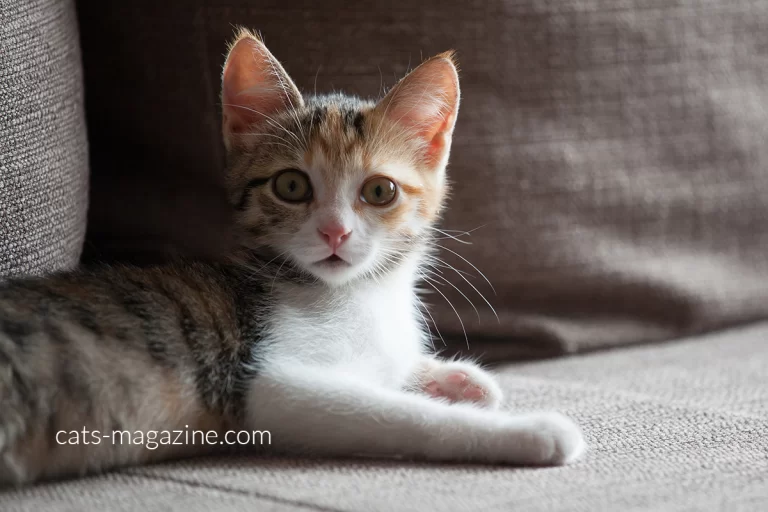
Calico cats are more than just a pretty patchwork – these tri-colored queens are genetic marvels, cultural icons, and full of feline sass. From the X-chromosome mystery that makes most of them female to their role as Japan’s luck-bearing Maneki-neko, calicos are steeped in science, legend, and cattitude. This article explores their rare male counterparts, unique personalities, stunning coats, global symbolism, and even features personal stories of two unforgettable calicos: Poofah and Daisy. Get ready for a vibrant journey into the colorful world of calico cats!
Table of Contents
Today, I’m here to brush your whiskers with the fascinating tale of the calico cat. These vibrant vixens of the feline world are more than just pretty faces; they’re a walking masterpiece, a genetic wonder, and a living symbol of good fortune. Their coats look like tiny explosions of autumn, with fiery oranges, deep blacks, and creamy whites dancing together in a riot of color that no painter could ever truly capture. But trust me – a calico cat isn’t just about looks. Oh no.
Behind those mesmerizing patches lies a story packed with science, superstition, sass, and more heart than a basket full of kittens. So fluff up your tail, sharpen your claws (metaphorically, of course), and get ready – because the world of the calico cat is anything but ordinary. It’s a whirlwind of mystery, charm, and just the right amount of feline attitude.
The Calico Code: A Genetic Jigsaw
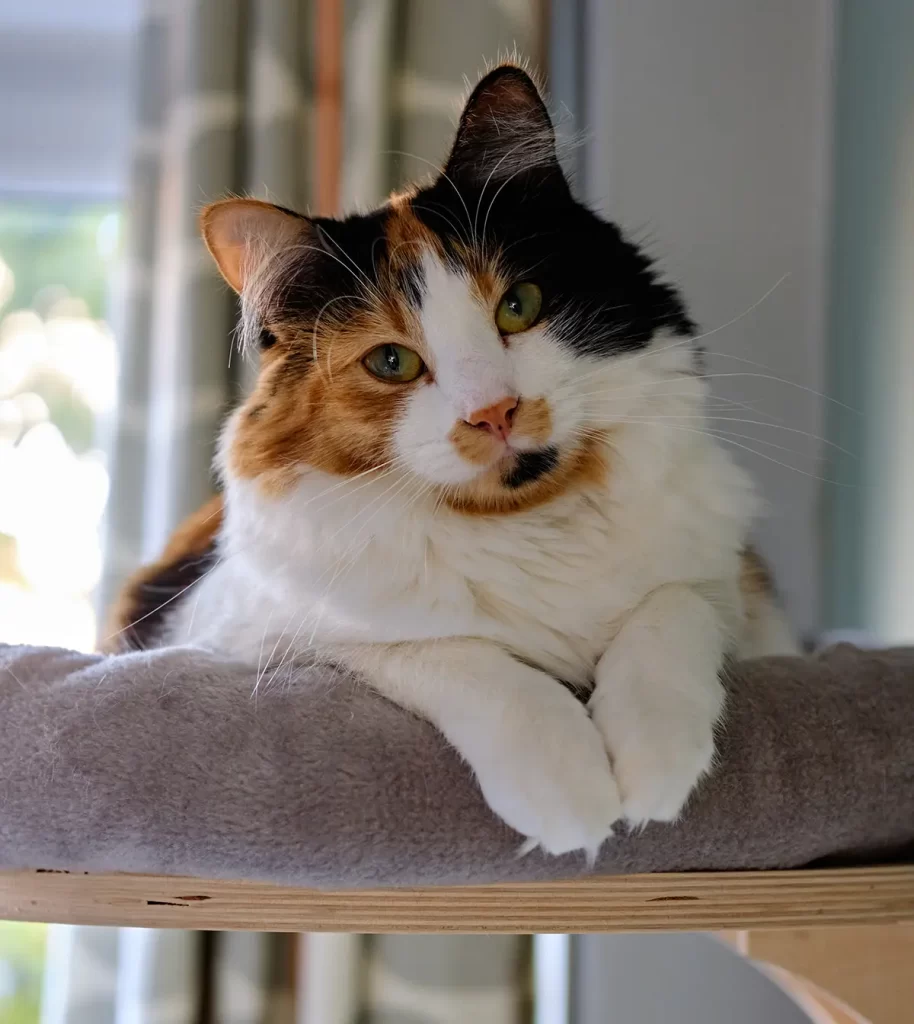
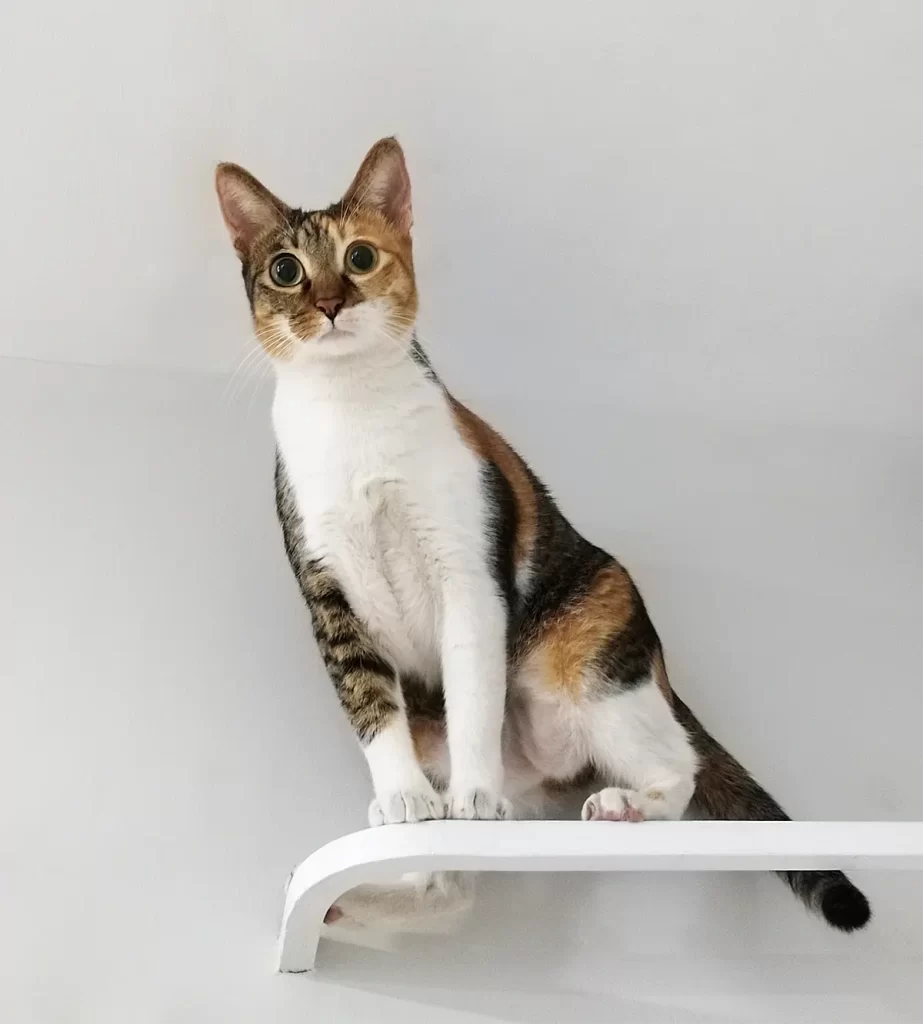
First off, let’s talk genetics – because trust me, it’s far from boring when it comes to the enigmatic calico cat. These fabulous felines are the runway models of the cat world, strutting a tri-color coat that’s usually a crisp white background splashed with bold patches of black, vibrant orange, and, if Mother Nature is feeling particularly artsy, even a few smoky blueish hues.
But here’s the kicker: almost every calico cat you meet is female. Why? It’s all thanks to the quirky magic of X chromosomes.
Female cats have two X chromosomes (XX), while males are rocking the XY combo. The genes that decide a cat’s fur color live on the X chromosome, and with two Xs in play, female cats get the dazzling opportunity to wear both black and orange at the same time, with white as the dramatic stage for their colorful performance.
Male cats, with their single X and Y chromosomes, simply don’t have the same genetic fashion options.
And those rare, mythical male calico cats you might hear about? Oh, they’re real – but they’re like the limited-edition trading cards of the feline universe. These extraordinary boys usually have a genetic anomaly called Klinefelter Syndrome*, meaning they have an extra X chromosome (XXY). As a side effect of this chromosomal plot twist, male calico cats are almost always sterile.
In short, if you ever meet a male calico cat, go buy a lottery ticket immediately – because you’ve just stumbled across one of nature’s rarest and most beautiful mistakes!
*For scientific authority, see: MedlinePlus – Klinefelter Syndrome (47,XXY) and PubMed – Centerwall & Benirschke (1975): XXY male calico cats.
A Brush with Fame: The Maneki-neko
Now, let’s jet-set across the world to Japan, where the calico cat isn’t just admired – it’s practically worshiped. Meet the Maneki-neko, also known as the “beckoning cat,” the adorable little figure you’ll often spot waving one paw in the air at shop entrances, restaurants, and homes. But spoiler alert: it’s not just being polite – it’s calling fortune right through the front door.
While Maneki-neko figurines come in all sorts of colors today, the most traditional – and the one considered the luckiest – is modeled after the fabulous, flamboyant calico cat. That’s right: all those charming statues flashing their paws and flashing their smiles owe their design to the original tri-color queens of the cat world.
Legend has it that a long time ago, a humble Japanese temple was saved from ruin thanks to a calico cat who beckoned a wealthy lord inside, just before a storm struck. The grateful lord donated money to the temple, and the calico cat became an eternal symbol of prosperity, protection, and good fortune.
So, if you happen to share your life with a calico cat, maybe don’t just count your blessings – count your lottery tickets, too.
Who knows? With a calico cat lounging around your living room, you might be just a paw wave away from your next big jackpot.
The famous Japanese “beckoning cat” statue, Maneki-neko, is traditionally modeled after a calico cat. In Japan, calicos are believed to bring good fortune, protect against evil, and even guard ships from storms.
The Calico Cat Personality
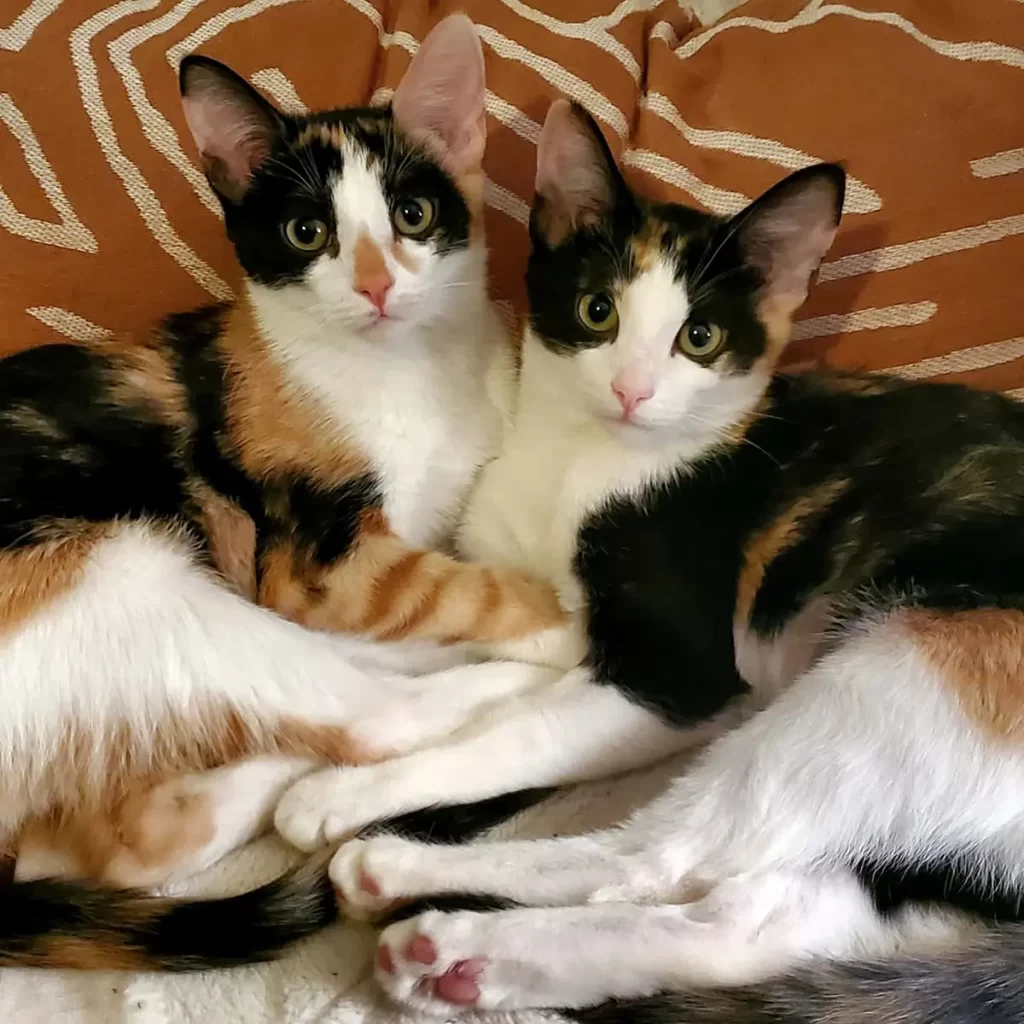
Personality-wise, the calico cat is as wildly colorful on the inside as she is on the outside. Much like their patchwork coats, their temperaments are a fabulous quilt of quirks, sass, and heart-melting charm.
Ask anyone who’s ever had the honor of living with a calico cat, and you’ll hear the same word tossed around like catnip: cattitude.
A calico cat often struts through life with a bold, confident spirit, mixing a sassy streak with undeniable charisma. One moment they’re purring in your lap like you’re the sun itself; the next, they’re giving you an indignant side-eye because – how dare you move your leg and disturb Her Royal Floofness?
Affectionate, playful, fiercely independent, and sometimes just a whisker away from dramatic – the calico cat embodies all the delicious contradictions that make cats, well… cats.
And sure, you might argue that many cats have their moody diva moments (and you’d be right!), but when it comes to calicos, there’s a certain undeniable flair. It’s as if they know they’re rare, they’re stunning, and they’re a little bit magical – and they expect you to act accordingly.
One thing’s for sure: no two calico cats are ever exactly alike. Each one is a one-of-a-kind masterpiece, painted by genetics and polished by pure personality.
Living with a calico isn’t just about having a pet – it’s about sharing your space with a tiny, fabulous enigma who will surprise, challenge, and love you in ways you never saw coming.
In Irish and American folklore, calico cats were believed to protect homes from ghosts and bad luck. Sailors also kept them on ships for good fortune and smooth sailing – because who wouldn’t trust a tri-colored fluffball to handle the supernatural?
The Calico Clique: Rare Gents in a Lady’s World
Remember those rare male calicos I teased earlier? Well, buckle up your cat ears, because we’re diving straight into feline folklore. A male calico cat is like a hidden gem in the velvet bag of the cat world – precious, rare, and wrapped in a little bit of myth.
With only about one in every 3,000 calico cats being male, spotting one is like stumbling across a four-leaf clover during a lunar eclipse. If fortune ever places a male calico cat in your path, consider it a once-in-a-lifetime moment – you are standing in the presence of feline royalty, my friend.
Why so rare? It all circles back to genetics. For a male calico cat to exist, he needs an extra X chromosome, making his genetic code XXY instead of the usual XY. This anomaly, known as Klinefelter Syndrome, allows the male to flaunt those famous patches of black, white, and orange – but it often comes with sterility and some potential health quirks.
Think of him as a beautiful, accidental masterpiece – one Mother Nature didn’t plan, but the universe couldn’t resist creating anyway.
Meeting a male calico cat is a reminder that life occasionally breaks its own rules, just to sprinkle a little more wonder into the world. And honestly, isn’t that just… magical?
Roughly 1 in 3,000 calico cats is male – and most of those rare gents are sterile due to a genetic condition called Klinefelter Syndrome. These feline unicorns are so rare that spotting one is like finding a four-leaf clover with whiskers.
The Calico Canvas: More Than Just a Pretty Coat
It’s not just the striking looks that make the calico cat special; it’s the swirling mystery and hidden science wrapped up in every patch of fur. A calico cat doesn’t just wear her colors – she becomes a living masterpiece, where nature has thrown caution (and a whole lot of pigment) to the wind.
The way those vibrant splashes of black, orange, and white scatter across their coats is like an artist’s brush gone gloriously rogue – creating a unique work of art with every single cat. No two calico cats are ever exactly alike, which means that when you meet one, you’re not just seeing a cat – you’re witnessing a completely original creation, the feline equivalent of a one-of-a-kind painting.
And here’s the real mind-bender: the patterns aren’t random by accident. They’re the result of a genetic phenomenon called lyonization – where one of a female’s two X chromosomes randomly switches off in each cell during early development.
It’s as if Mother Nature had a blank canvas, closed her eyes, spun around three times, and said, “Let’s make something unforgettable today.”
Owning a calico cat is like having a museum-quality masterpiece casually nap on your windowsill – no ticket required.
Calico cats get their stunning patchwork coats thanks to a process called lyonization – where one of the two X chromosomes randomly turns off in each cell. It’s basically genetic roulette, with every calico a one-of-a-kind creation!
The Calico Connection: From East to West
The love for the calico cat knows no borders – it’s a feline fanfare that stretches from the cobbled streets of Europe to the bustling temples of Japan. No passport required.
In the West, the calico cat is adored for her dazzling looks and her one-in-a-million uniqueness. Cat lovers from London to Los Angeles celebrate these colorful beauties as four-legged masterpieces, often marveling at how no two calico cats ever look the same. Owning a calico cat in the West feels like winning the feline version of the art lottery – your very own living, breathing Picasso with a purr.
Meanwhile, in the East, particularly in Japan and parts of Southeast Asia, the calico cat has been elevated to near-mythical status. They’re revered not just for their beauty, but for the luck and prosperity they are believed to bring. Sailors would keep calico cats aboard ships to ward off storms and mischievous spirits, trusting in their protective powers like tiny, fluffy good-luck charms.
And of course, let’s not forget the Maneki-neko – the world’s most famous beckoning cat – often portrayed as a calico cat, waving in fortune, health, and happiness with every tiny paw.
From East to West, across cultures, oceans, and centuries, the calico cat has whispered one undeniable truth into our hearts: beauty, luck, and a little bit of mystery are universal languages – and no one speaks them better than a calico.
A calico cat named Tama became a celebrity stationmaster in Japan, saving a rural train line from financial ruin. She wore a tiny hat, greeted passengers, and boosted tourism so much that she got promoted to “Super Stationmaster” and even had her own shrine after she passed.
Remembering Poofah: A Tribute to Our Beloved Calico and the Heartwarming Rescue of Daisy
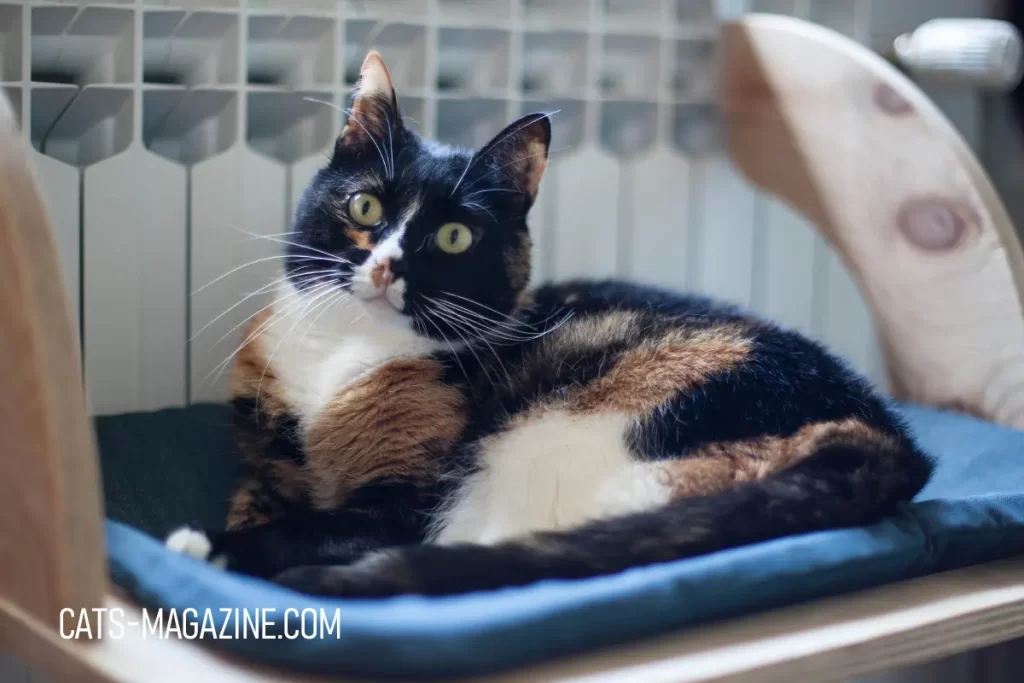
Amidst the enchanting world of the calico cat, there’s one particular whiskered queen who still holds a special throne in my heart – Poofah.
Our beloved family calico cat, Poofah graced our lives for 14 unforgettable years, wrapping us in the vibrant warmth of her colorful coat and the fierce, spirited personality that only a true calico can possess. She wasn’t just a pet; she was a spark of living color, a walking piece of art, and a daily reminder that love often arrives wearing a patchwork coat and a mischievous grin.
Her memory remains as vivid and brilliant as her fur – a swirling dance of orange, black, and white that left an indelible mark on our lives, long after her pawprints faded from the floors.
And Poofah wasn’t the only calico cat to leave a permanent pawprint on our story.
One day, fate placed another tiny miracle in our path – a scrappy little calico kitten we rescued from the side of the road. Her name is Daisy, and her journey from abandoned stray to cherished family member is a story I hold close to my heart.
(You can read all about her incredible adventure here: Daisy’s Journey – From Roadside to Forever Home.
Both Poofah and Daisy are shining examples of why calico cats are so much more than just beautiful – they’re resilient, courageous, and bursting with enough personality to turn any house into a true home.
They don’t just fill your living room; they fill your life – with laughter, mischief, purrs, and the kind of love that never really leaves, even when their physical presence does.
The term “cattitude” might as well have been invented for calico cats. Bold, sassy, affectionate, and sometimes hilariously moody, their personalities are as colorful as their coats.
The Colorful World of Calicos
So, there you have it – a peek into the vibrant, mysterious, and absolutely fascinating world of Calico Cats. They’re not just pretty faces with quirky coats; they’re genetic wonders, cultural icons, and, in rare cases, the most exclusive members of the cat kingdom.
Remember, if you’re ever lucky enough to be owned by a Calico, you’re not just a cat owner; you’re a curator of a living, purring, four-legged work of art. Embrace the colorful journey and who knows, maybe a bit of that Maneki-neko luck will rub off on you!