By David W. Falls
Table of Contents
A Cat, a Box, and the Strangest Paradox in Physics
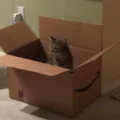
In 1935, physicist Erwin Schrödinger proposed a now-famous thought experiment to illustrate the bizarre implications of quantum mechanics – specifically, quantum superposition – the idea that at the smallest scales, subatomic particles don’t exist in a single definite state until measured, instead remaining in multiple possible states at once. He imagined placing a cat inside a sealed box with a mechanism that may or may not release a deadly substance. Since the outcome depends on an unpredictable quantum event, the cat exists in both possible states – alive and dead – until someone opens the box to check.
To help visualize this, imagine flipping a coin – but instead of landing on heads or tails, the coin remains suspended in midair, displaying both sides at once, waiting for someone to observe it. The moment it’s seen, probability “decides” which side lands. Schrödinger’s cat (source: Sciencing.com ) follows the same principle – before the box is opened, the cat exists in both possible realities, just like the hovering coin. Once observed, the uncertainty collapses, and one reality is chosen.

The Strange World of Superpaw-sition
At the quantum level, particles exist in multiple states until measured – a bizarre phenomenon Schrödinger used to illustrate the absurdity of applying quantum mechanics to everyday objects. His famous thought experiment used a cat to dramatize this concept: while no real cat exists in two opposing conditions at once, at the quantum scale, particles can occupy multiple states simultaneously until observed.
Of all the animals Schrödinger could have chosen for his paradox, a cat was the perfect fit. Unlike a predictable lab rat or a compliant dog, cats exist in a perpetual state of defiance – both engaged and indifferent, both present and elusive.
Cats are always in two conflicting states: both hungry and full, inside the box yet outside the box, eager for attention but radiating disdain for human affection – and, of course, simultaneously demanding belly rubs while plotting revenge on anyone foolish enough to oblige. They walk the line between two realities daily, vanishing into unseen corners only to reappear where least expected. Perhaps Schrödinger wasn’t just illustrating quantum mechanics – perhaps he was acknowledging that cats have always understood probability better than we have.

Mystery Novel of Existence
Consider another example. Imagine reading a mystery novel with a shocking twist. Until you reach the final chapter, multiple endings exist in your mind – the detective could solve the case, or the real culprit could be someone unexpected. As long as you haven’t read the conclusion, all possibilities remain open.
Schrödinger’s paradox follows the same principle. Before looking inside the box, the cat exists in both realities – alive and dead – just like the unresolved mystery hovering in your imagination. The moment you observe it, uncertainty collapses, and only one version becomes real.
The Belly Rub Paradox: Proof That Physics Has No Rules
It may seem abstract, but anyone familiar with cats knows that Schrödinger simply described their everyday reality. My cats Ele and Frankie are true masters of physics, bending the laws of the universe to their whims.
Take the belly rub paradox – Frankie might roll over, inviting you into what appears to be a moment of trust, yet the instant your hand touches fur, you are both welcomed and officially doomed. The claws come out, yet the purring persists – leaving you to wonder whether you’re truly safe or have just sealed your fate. Meanwhile, Ele lurks nearby, existing in her own quantum state of potential mischief, waiting to either intervene or simply observe the chaos unfold.

Schrödinger may have placed a theoretical cat in a box, but if he had spent an afternoon with Ele and Frankie, he might have realized cats already embody quantum uncertainty. After all, they exist in a perpetual state of probability, always hovering between decisions.
The Physics of Indifference: Why Cats Exist in a Perpetual Maybe
If quantum mechanics insists that particles remain undefined until observed, then cats have perfected this principle as a lifestyle. At any given moment, a cat is both preparing to leap and reconsidering its life choices, balanced between a flawlessly executed jump and an embarrassing miscalculation. The result depends not only on skill but also on the whims of physics and feline self-confidence.
Even a cat’s response to its own name operates within this quantum framework – until it determines whether acknowledging you serves its immediate interests, it exists in a dual state of both recognition and complete indifference. Schrödinger may have imagined a cat trapped in quantum limbo within a box, but in reality, cats willingly exist in a paradox of selective participation, effortlessly bending probability to their advantage.

Quantum Cat-namics
And so, Schrödinger’s Cat remains both a physics lesson and a feline reality check – because whether in a quantum box or lounging on your kitchen counter, cats refuse to conform to our expectations. They exist in their own abstract universe, both obeying and defying the laws of nature, both rulers and rebels, both affectionate and utterly indifferent. Cats remind us that certainty is an illusion, and perhaps, in their quantum-like elusiveness, they understand the cosmos far better than we do.
In the end, quantum mechanics may explain the mysteries of the universe, but cats? They remain an enigma all their own. Maybe Schrödinger wasn’t unlocking the secrets of physics – maybe he just had a cat who kept vanishing and reappearing at will, and this was the best theory he could come up with.
Scientists may have spent decades theorizing about quantum superposition – but let’s be honest – cats have been bending the laws of physics long before humans even attempted to explain them.
Either way, one thing is certain: when it comes to cats, we may never truly know what’s inside the box – until the truth pounces.
Stay tuned for more feline-fueled insights from David – because when it comes to decoding the mysteries of the cosmos, cats might not just be the key… they might be the ones who locked the box in the first place.