By David W. Falls
Table of Contents
The First Disruption
If something breaks, vanishes, or defies explanation, assume a cat. That’s not coincidence, it’s feline inevitability. In a world devoted to clean logic and tidy conclusions, cats have always had other plans.
William of Ockham, the 14th-century friar associated with the principle now known as Ockham’s Razor, believed that the simplest explanation was usually best. He prized clarity, economy, and minimal assumptions. Not because he disliked complexity, but because he believed that unnecessary complications obscure truth rather than reveal it.
The philosophical principle known as Ockham’s Razor comes from the medieval thinker William of Ockham (c.1287–1347). The idea is simple: when several explanations are possible, the simplest one is usually the best. In everyday life, many cat owners have discovered a humorous version of this rule — if something mysterious happens in the house, the simplest explanation is often the cat.
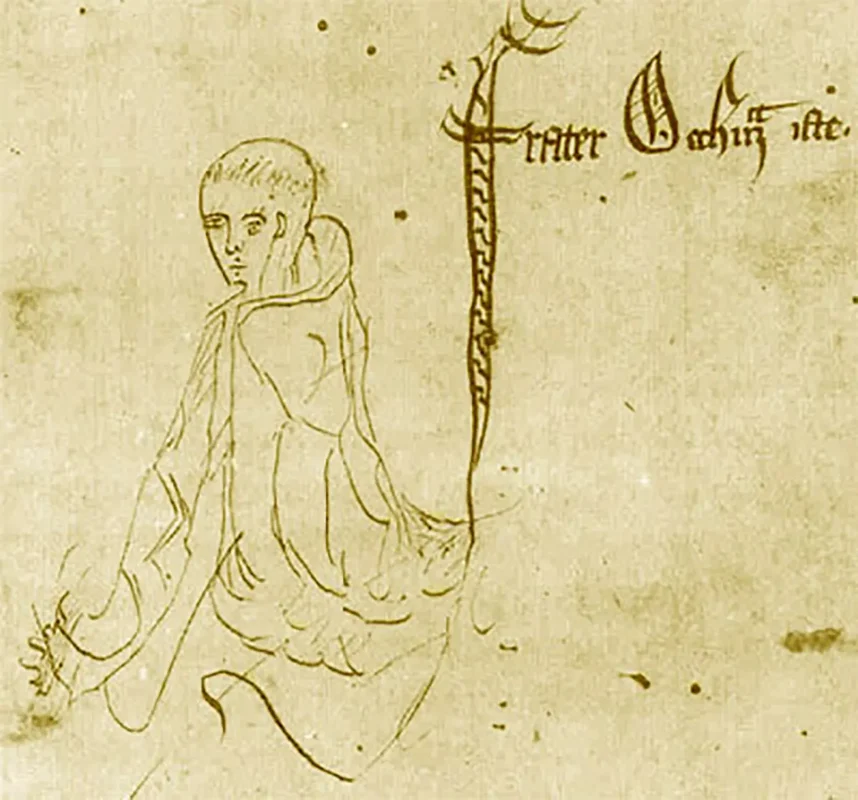
The story goes like this: Ockham had a working theory. And he had a cat named Razor.
Some say Ockham invented the Razor to simplify theology. But really, it may have been his cat he was trying to explain. Every morning, his manuscripts were rearranged, his thoughts disrupted, and his sense of order quietly pawed out of place. The idea wasn’t born from logic. It was born from whiskers and fur.
Cats don’t make things simpler. They make things messier, but in a way that feels intentional. Where there was order, they introduce unpredictability. Where everything seemed balanced, they add something extra. Even in the cleanest, most logical spaces, they leave behind fur, movement, and distraction.
Cats have a way of turning cause and effect inside out. You hear a sound in the next room—a thud, a clatter, the unmistakable noise of something no longer where it was supposed to be. Your first instinct is to reconstruct the moment. You imagine the room, the angle of the object, the force required to move it. You look for a tidy chain of events that might explain what just happened.
Then you see the cat.
The process ends there. Not because every detail has been resolved, but because enough has been. The presence of a cat collapses complexity. Objects don’t need motives. Timing doesn’t require explanation. Whatever just happened now has a shape that feels complete, even if its logic remains opaque.
Living with a cat retrains your sense of inquiry. Pens disappear. Papers migrate. Items appear in places they have no business being. You can reconstruct the scene step by step, or you can accept the simpler answer and move on. The cat did it. Not out of malice. Not even with intention. Just inevitably.
This isn’t surrender. It’s efficiency. Cats teach us which questions are worth asking and which ones are better abandoned. Sometimes clarity doesn’t come from knowing every step in a sequence, but from recognizing when an explanation has done enough work.
They’re not against logic. They just don’t follow it. They’ll sit right on top of your carefully organized notes, knock over the one object you thought was safe, and then fall asleep in the middle of it all.
Ockham’s Razor is about removing what’s unnecessary. But cats make sure something unexpected always stays in the picture. They don’t just interrupt the process; they change what the process means. And sometimes, what they leave behind is more important than what the Razor tried to remove.
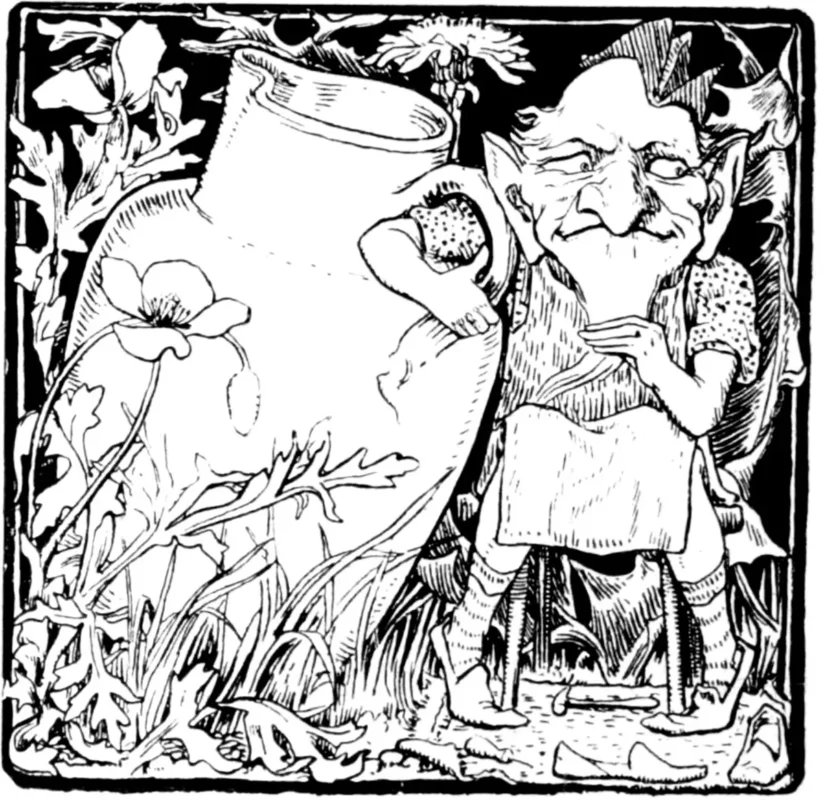
Razor, Meet Razor
The theory continues: Ockham had a working theory. And he had a cat named Razor. Not as a metaphor. Not as a joke. Just a theory. Just a cat. Just a disruption.
They didn’t agree on much. Ockham wrote, revised, and tried to make sense of things. Razor interrupted. Not with argument, just by being there, being a cat. A paw on the page. A tail in the way. A blink that made the whole idea feel less certain.
Ockham believed in simplicity. Razor didn’t care. Ockham tried to remove what wasn’t necessary. Razor made himself necessary.
The principle came later. But the cat was already part of the process.
Razor didn’t interrupt Ockham’s thinking so much as exist alongside it. There was no argument between them, no philosophical tension to resolve. Ockham worked. Razor occupied space. One pursued clarity; the other simply remained. And presence, unlike argument, does not ask to be justified.
The cat did not oppose simplicity. He rendered it incomplete. By staying exactly where he was—on the page, on the desk, in the way—Razor introduced something that could not be reduced or removed. Not an error. Not an exception. Just a fact.
Razor didn’t need to challenge the idea. He made it insufficient simply by remaining.
The Philosopher and the Paw
One morning, William of Ockham awoke to find his writing desk in disarray. His manuscripts were scattered, his prized razor teetered at the edge, and Razor sat squarely in the center of it all, tail flicking, eyes half-lidded with cosmic indifference. The ink pot, somehow, remained perfectly upright. It was the only thing the cat hadn’t touched. Yet.
Ockham watched as the cat extended one paw and, without ceremony, nudged his razor off the desk.
It clattered to the floor. The cat blinked, purred, and was thoroughly pleased with himself. Somewhere in the distance, a theory collapsed. Or was born.
That was the moment. Faced with chaos, presence, and a cat named Razor knocking a literal razor to the floor, Ockham reached for clarity. He would later call it a principle: the simplest explanation is best. But it began here, with a paw, a fall, and the quiet irony that Razor had inspired the Razor. Ockham had spent most of his life trying to make sense of things. He believed that the best way to understand the world was to keep explanations simple, no extra steps, no unnecessary ideas. If something could be explained with fewer parts, that was the better answer.
But the cat didn’t follow any of that. It didn’t offer a theory or a solution. It just sat there, calm and unbothered, right in the middle of the mess. It didn’t care about clarity or logic. It was just present.
And in that moment, Ockham realized something important: simplicity isn’t always about removing complexity. Sometimes, it’s about recognizing what’s always been there. The cat didn’t need interpretation. He was the answer.
The Simplest Explanation Is the Cat
Ockham’s Razor insists we avoid multiplying causes beyond necessity. But necessity, the cat would argue, is a matter of mood. When a vase shatters, a pen disappears, or a theory frays at the edges, the cleanest explanation isn’t gravity, entropy, or flawed reasoning. It’s the cat.
Cats aren’t chaotic. They simply make things easier to explain. When something strange happens—a noise, a missing object, a broken glass—you don’t need a long list of possibilities. You just need to know there was a cat nearby.
Humans want explanations not only to understand the world, but to stop thinking about it. A clean explanation offers relief. It closes the loop. It allows attention to move on without lingering uncertainty.
“The cat did it” works because it satisfies that need. It assigns responsibility without demanding motive. We do not need to know why the cat chose that moment or that object. We only need to know that the event now has a recognizable cause.
Once a cat is involved, the question shifts from how something happened to what happens next. Analysis gives way to acceptance.
In this way, cats honor the spirit of the principle while ignoring its letter. They are the simplest explanation, but never the simplest beings.
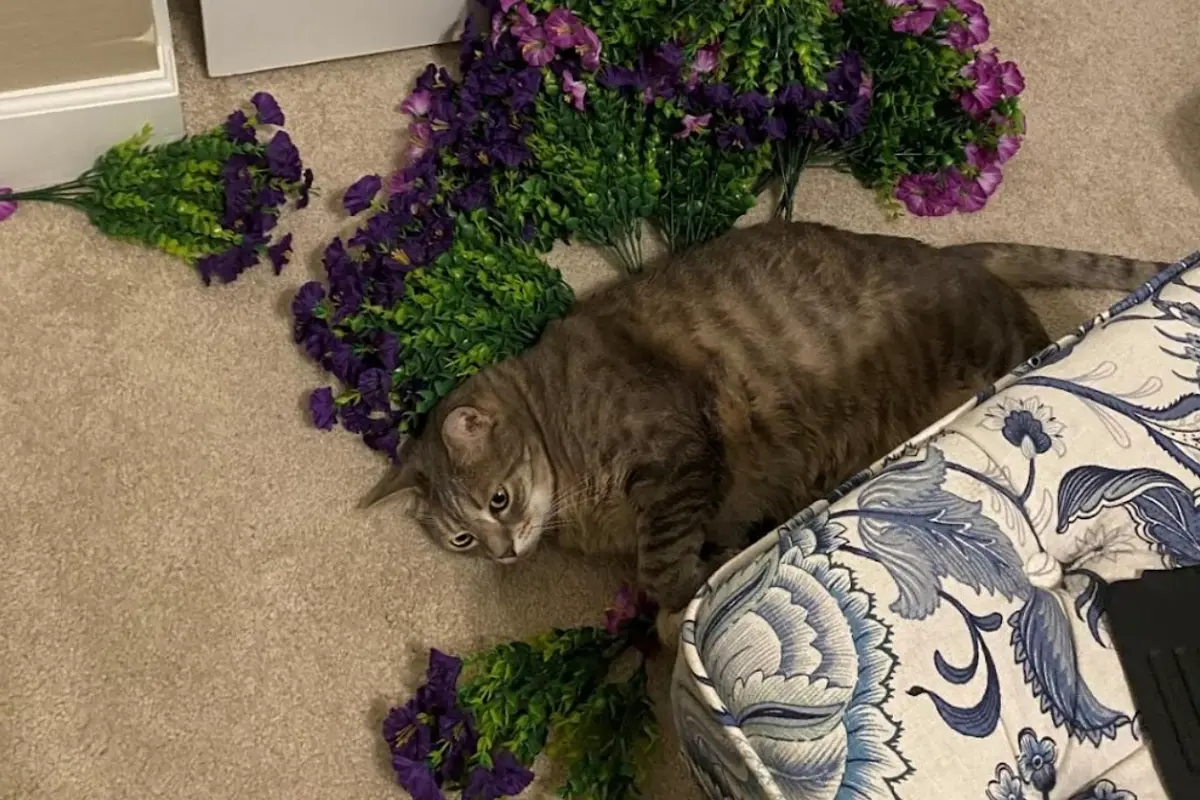
Simplicity Isn’t Always Enough
Ockham believed fewer assumptions improved clarity. Cats reveal something slightly different: clarity is not the same as completeness. An explanation can be clean and still leave something out.
When a cat knocks something over or interrupts a moment of focus, the event may be explained easily. But the presence of the cat cannot be reduced to that explanation. The act is simple. The animal is not.
Cats don’t exist to complete a theory. They occupy space within it. They add presence where logic would prefer efficiency. And presence cannot be shaved away without changing the whole structure of what you are trying to understand.
They will still knock the glass off the counter tomorrow.
If cats can inspire philosophy, they might also inspire theories about extraterrestrial intelligence. In another essay, David W. Falls explores this playful idea in The Alien Cat Hypothesis, where feline behavior becomes part of the search for life beyond Earth.
A Feline Revision
Ockham’s Razor was meant to remove what was unnecessary. Cats follow a different rule. They remain. No matter how carefully you simplify a room, an idea, or a routine, a cat will place itself squarely in the middle of it. Not as a disruption, but as a fact. The Razor trims. The cat persists.
Ockham tried to shave away the excess. Razor knocked the razor off the desk. One removed what was unnecessary. The other refused to be removed at all.
Ockham had Razor. I have Frankie.
And Frankie does not care how simple I try to make the world.