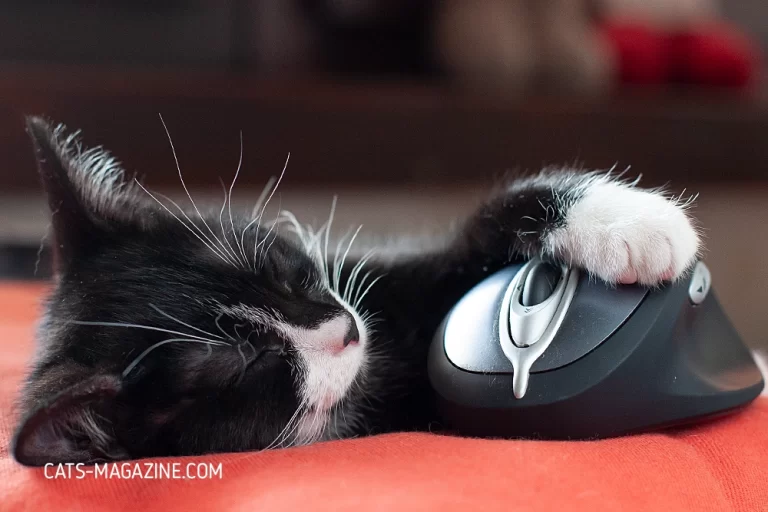
Cats are hilarious enigmas. From 3 A.M. zoomies and dramatic tail flicks to knocking cups off tables just for fun – these funny cat behaviors reveal instincts, emotions, and feline flair. Tito and Pierre help me decode why our furry comedians act so weird (and why we love them for it).
Understanding these funny cat behaviors isn’t just about laughs – it’s about environmental enrichment and feline well-being. Each odd quirk has roots in instinctive behaviors that help cats express emotions, release energy, and stay mentally stimulated. Recognizing them makes us better companions to our whiskered comedians.
Table of Contents
Funny Cat Behaviors: The Midnight Madness: Why Cats Zoom at 3 AM
You’re finally drifting off to sleep when – BAM! Your cat turns into a Formula 1 racer, sprinting across the house like their tail is on fire. Sound familiar? Welcome to the 3 AM zoomies – one of the most funny cat behaviors that baffles humans worldwide.
Why do they do this?
Cats are crepuscular (fancy word for “most active at dawn and dusk”), meaning their wild ancestors hunted during these hours. Your cat, despite living the spoiled life of a house gremlin, still has that instinct. So, while you dream of beaches and endless snacks, your cat is reenacting The Fast and the Furious: Feline Drift.
These nocturnal sprints are more than chaos – they’re a form of self-directed play, a natural energy release behavior that helps indoor cats maintain muscle tone and cognitive balance. In behavioral science, this falls under environmental enrichment, keeping your cat both physically active and emotionally content.
How to calm the zoomies?
- More playtime before bed – A good session with a wand toy can burn off that late-night energy.
- Late-night snack – A small meal mimics a hunting routine and signals bedtime.
- Ignore them – No fun if the human doesn’t react, right? (Warning: They might take revenge at 5 AM.)
For more ways to keep your night owl entertained, read my guide on indoor cat enrichment.
And, yes, even diabetic cats can get zoomies after insulin!
Funny Cat Behaviors: Tail Twitching & Flicking: What Does It Mean?
Your cat’s tail is like a mood ring – except way more unpredictable. Sometimes it flicks, sometimes it thumps like a tiny drum. But what does it all mean?
Tail Translations 101
- Gentle flicking: Mild irritation or focus (e.g., hunting imaginary bugs).
- Fast, aggressive swishing: “I’m annoyed! Stop whatever you’re doing, human.”
- Puffed-up tail: Your cat has either seen a ghost or is channeling their inner Halloween decoration.
- Tail wrapped around you: Congratulations, you’re chosen. This is a sign of affection!
Your cat’s tail isn’t just decoration – it’s a built-in communication tool that reveals feline instincts and emotions.
Tail movement is a subtle part of feline body language, communicating everything from excitement to stress. Learning these communication cues enhances your cat’s social enrichment – it’s how you build trust and harmony in a multi-cat or human-cat household.
Want to know more about feline body language? Don’t miss The Ultimate Cat Behavior Guide.
Funny Cat Behaviors: The Stare of Doom: Do Cats See Ghosts?
Ever catch your cat staring at an empty corner like they’re witnessing a horror movie unfold? Yeah… slightly terrifying.

So, can cats actually see ghosts?
Scientifically speaking, no evidence confirms cats have supernatural vision. However, they do have heightened senses:
- Superior night vision – They can detect the smallest movements in dim lighting.
- Enhanced hearing – A cat hears frequencies up to 64 kHz (humans tap out at 20 kHz). That “empty” corner? Probably a tiny bug.
- Whisker radar – Those whiskers pick up the slightest air currents, making them super aware of their environment.
Fun Fact:
Ancient Egyptians believed cats could protect against evil spirits. So, if your cat stares at a wall for 10 minutes, let’s just assume they’re fighting off invisible demons for you.
Funny Cat Behaviors: Pawing at Water Before Drinking – A Fancy Ritual?
Some cats delicately tap their water before drinking, while others treat it like a pool party for one. But why?
Possible Reasons:
- Checking for reflections – Cats’ close-up vision isn’t great, so tapping the water helps them see it better.
- Hunting instincts – Wild cats stir water to spot ripples or hidden prey.
- “I’m just extra.” – Let’s be real – cats love unnecessary drama.
What to Do?
- A wide, shallow water bowl helps cats see the water better.
- Fountains can be a game-changer – some cats prefer running water over a still bowl.
- If your cat is splashing for fun, well… enjoy the tiny indoor flood.
Funny Cat Behaviors: The Art of Knocking Things Over – A Scientific Study (Not Really!)
Why does your cat knock your phone, keys, coffee mug, or priceless antique vase off the table? Simple. Because they can.
The Science Behind It
- Curiosity: Cats love to test gravity (spoiler: still works).
- Hunting instincts: Knocking things over mimics the “kill” motion of real prey.
- Attention-seeking: If it gets a reaction (especially a loud “NOOO!”), it’s guaranteed entertainment for them.
How to Stop the Madness?
- Ignore them. If they’re doing it for attention, don’t react.
- More playtime. A mentally stimulated cat is less likely to commit table crimes.
- Sticky tape trick. Cats hate the feeling of tape on their paws – try it on surfaces they frequently attack.
That being said, let’s be honest: You will never stop this behavior completely. Accept your fate.
What looks like mischief is often object play, a crucial form of behavioral enrichment that mimics hunting practice. Providing interactive toys or puzzle feeders can redirect that instinct away from your coffee mug and toward something less breakable.
For a closer look at this gravity-testing habit, check out my article on why cats knock things over.
Funny Cat Behaviors: Why Cats Love Boxes More Than Expensive Beds
You buy the softest, fluffiest, most luxurious cat bed… and your cat promptly curls up in the Amazon box it came in. Classic, right? But there’s more to this odd preference than stubborn feline humor – it’s a peek into your cat’s instinctive behavior and environmental psychology.
For cats, a box isn’t just cardboard – it’s a safe zone, a stress reliever, and a temperature-controlled sanctuary all in one. Boxes tap into their denning instinct, the same evolutionary behavior that once kept wild cats safe from predators and harsh weather. Inside that small, enclosed space, your cat feels hidden yet watchful – perfectly poised between relaxation and alertness.

Why are boxes irresistible?
Safety & Comfort: Boxes satisfy your cat’s natural denning instinct – that primal urge for safety and control over their territory. An enclosed space provides a sense of security and emotional comfort, reducing stress and anxiety for indoor cats who crave quiet retreats away from household chaos.
Perfect Insulation: Cardboard acts as a natural thermal regulator, trapping heat and creating the cozy warmth cats associate with safety. It’s environmental enrichment at its simplest – a private spa day in corrugated luxury.
Ambush Potential: Every box doubles as a mini hunting ground. Cats are ambush predators, and a box offers the perfect spot to hide, observe, and then pounce – even if the “prey” is your ankle or another cat’s tail. It’s instinctive feline play behavior that keeps both body and brain active.
Should You Let Them Have Boxes?
Absolutely! Just ensure they’re tape-free and safe. But don’t be surprised if your cat chooses the ugliest box in the house to be their new throne.
Behaviorists often recommend cardboard boxes, tunnels, and hideouts as affordable enrichment tools. These allow cats to express predatory, exploratory, and resting behaviors – the holy trinity of a balanced feline life.
A study from Utrecht University found that providing hiding spaces like boxes can significantly reduce stress levels in shelter cats within just three days. It’s a powerful reminder that something as simple as a cardboard box can serve as real environmental enrichment and emotional comfort for our feline friends.
Your Cat is Weird (And That’s Purr-fectly Fine!)
If your cat has funny cat behaviors, congratulations – you have a normal cat! From 3 AM zoomies to knocking over your morning coffee, cats have mastered the art of keeping us entertained.
So, next time your cat does something weird, just remember: they’re not broken – they’re just built differently. And honestly? That’s why we love them.
Want more hilarious cat insights? Subscribe to our newsletter for the latest feline fun and join Cats Magazine Facebook page!
Want to understand more quirky indoor cat habits? Explore the full indoor cat care guide to see what your feline’s antics really mean.
Note: While this article is meant for entertainment, all behavioral insights are based on advice from veterinarians and feline behavior research. Cats are complex – blending instinct, intelligence, and environmental adaptation in ways that keep scientists, and the rest of us, endlessly fascinated.