
Table of Contents
Feeding a cat sounds simple – until you actually start doing the math.
Over the years, I’ve fed cats on supermarket dry food, premium wet diets, carefully prepared homemade meals, and very specific sensitive-stomach plans. I’ve cooked chicken in bulk, thrown away food that caused vomiting, tested supplements that helped (and some that didn’t), and learned the hard way that the cheapest option isn’t always the least expensive in the long run.
If you’re wondering how much it really costs to feed a cat per month in 2026, this article is for you.
I break down the real monthly costs – from cheap dry food to premium wet food, homemade cat food and the often-overlooked costs of feeding cats with sensitive stomachs.
If you’re new to cooking for cats, you may want to explore my full Homemade Cat Food guide first and, if you like clarity and honesty, the 25 Common Questions About DIY Cat Food – Answered with Love and Experience
And because Cats Magazine isn’t just about numbers, you’ll also find moments of reflection here – like Elizabeth Cassidy’s beautiful poem Nine Lives Times Two Plus One, which reminds us that caring for cats is never just a financial decision.

Cost overview: how much does it cost to feed a cat per month?
Before diving into details, here’s a clear overview of what most cat guardians can realistically expect to spend per cat, per month in 2026.
Monthly Cat Food Cost Breakdown (1 Cat)
| Feeding Type | Estimated Monthly Cost | What This Usually Includes |
|---|---|---|
| Cheap dry food | $20–35 | Supermarket kibble, bulk bags, minimal moisture |
| Premium wet food | $55–95 | Cans or pouches, higher meat content, better hydration |
| Homemade cat food | $35–65 | Fresh meat, supplements, freezer storage |
| Sensitive stomach diet | $65–130 | Novel proteins, food trials, supplements, wasted food |
These ranges aren’t random – they reflect what people actually spend, including mistakes, adjustments, and learning curves.
For example, feeding a cat with digestive issues often costs more not because the food itself is expensive, but because trial-and-error adds up. I documented this in detail in Homemade Cat Food for Sensitive Stomachs – Tito’s Tummy Tale, where one cat’s vomiting episodes changed my entire feeding approach.
In the sections below, I’ll explain why these costs vary, what you’re really paying for in each category, and where spending a little more can actually save money – and stress – over time.

Cheap dry cat food: $20–35 per month
Cheap dry food is usually the first option people consider – and sometimes the only one that feels financially possible.
At $20–35 per month, this category includes supermarket kibble, large economy bags, and basic pet-store brands. On paper, it looks like a bargain: dry food is calorie-dense, easy to store, and rarely goes to waste.
But here’s the reality.
Cheap dry food often relies heavily on carbohydrates and plant proteins, with lower moisture content and less digestible animal protein. That doesn’t automatically make it “bad,” but it does mean you’re paying for volume rather than quality.
The hidden cost shows up later:
- increased thirst and dehydration
- constipation or digestive upset
- overeating due to lower satiety
- more frequent vet visits in the long run
If you’re feeding dry food to stay within budget, the smartest approach is:
- choose the highest meat content you can afford
- avoid extreme bargain brands with vague ingredient lists
- pair dry food with hydration support (wet food or fountains)
Cheap dry food can keep a cat fed – but it’s rarely the cheapest option over time.
Premium wet cat food: $55–95 per month
Premium wet food costs more upfront, but for many cats, it’s where feeding finally becomes… easier.
At $55–95 per month, this category includes:
- high-meat canned food
- single-protein recipes
- grain-free or limited-ingredient options
- food designed to support hydration and digestion
What you’re really paying for here is digestibility and moisture.
Cats eating quality wet food often:
- drink less water (because food provides it)
- feel full faster
- experience fewer digestive issues
- produce less waste
That means less wasted food, fewer “maybe this one will work” purchases, and often fewer health scares.
Not all premium labels are equal, though. “Human-grade” and “natural” are marketing terms, not guarantees. The real value comes from:
- clearly named animal proteins
- minimal fillers
- simple, transparent recipes
For many cat guardians, premium wet food sits at the sweet spot between convenience, health, and predictability – especially for cats prone to urinary or digestive issues.

Homemade cat food: $35–65 per month
Homemade cat food often surprises people – both in cost and complexity.
When done responsibly, feeding homemade meals typically costs $35–65 per month per cat, depending on meat choice, supplements, and freezer space. That puts it right between cheap dry food and premium wet food.
What affects the price most:
- meat selection (chicken vs salmon vs novel proteins)
- supplements (taurine, vitamins, minerals)
- batch cooking and storage
- occasional trial-and-error
Homemade food isn’t about being “cheap.” It’s about control.
You know exactly what goes into the bowl. For cats with allergies or intolerances, that control can be life-changing – and sometimes cheaper than endless vet-recommended brands that don’t work.
That said, homemade cat food should never be treated as a complete diet without proper guidance. I always recommend starting with:
- clear ingredient sourcing
- correct supplementation
- feeding homemade meals as part of a varied diet, not a replacement for veterinary care
Homemade feeding isn’t for everyone – but for the right cat, it can be one of the most cost-effective and rewarding options available.
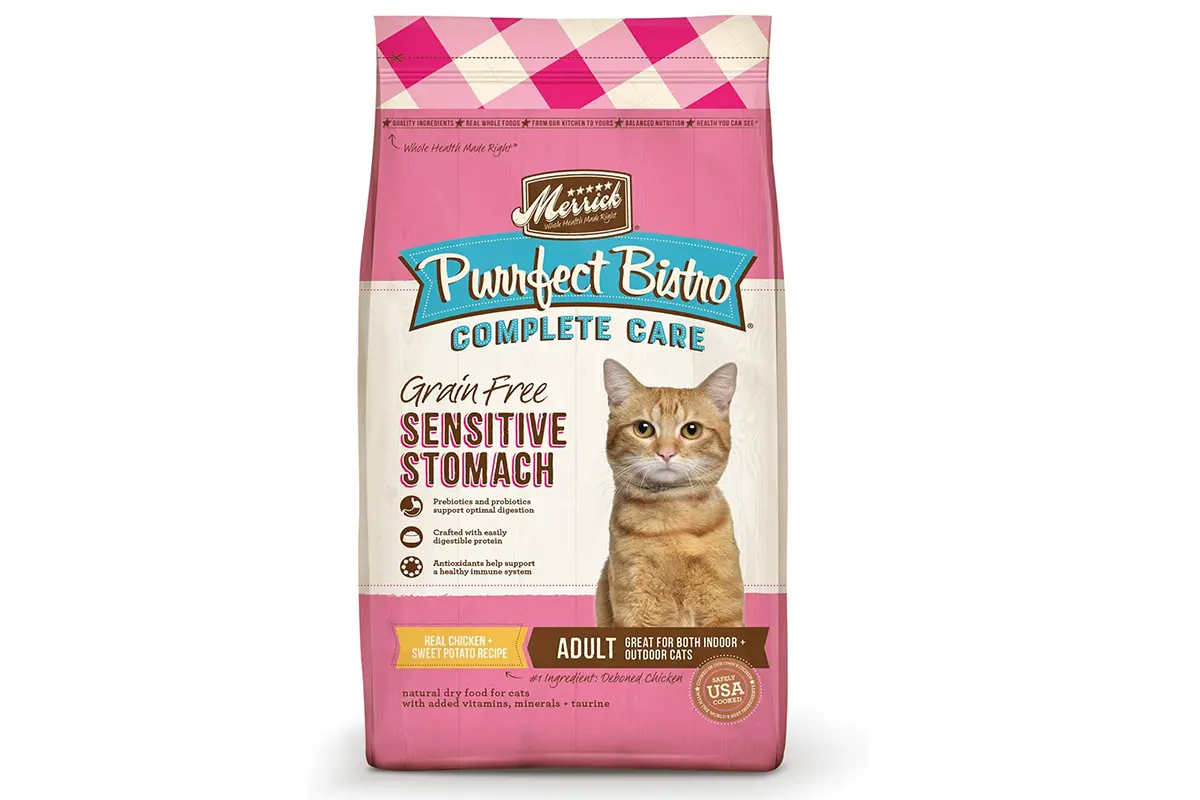
Feeding a cat with a sensitive stomach: $65–130 per month
This is where feeding costs quietly explode – and where most people underestimate the budget.
Cats with sensitive stomachs, food intolerances, allergies, or chronic vomiting rarely thrive on the first food you try. In reality, feeding a sensitive cat often means paying for several foods that don’t work before finding one that does.
Monthly costs of $65–130 per cat typically include:
- novel-protein foods (rabbit, duck, venison)
- limited-ingredient diets
- probiotics and digestive supplements
- wasted food from failed trials
- occasional vet-recommended brands
The most expensive part isn’t always the food – it’s the experimentation.
I learned this firsthand with Tito. Vomiting episodes, food refusal, and “this worked for a week” cycles quickly add up. What finally helped wasn’t a miracle product, but slowing down, simplifying ingredients, and controlling what went into the bowl. I documented the entire process in Homemade Cat Food for Sensitive Stomachs – Tito’s Tummy Tale, because it’s a story many cat guardians quietly live through.
For sensitive cats, higher costs don’t mean luxury – they mean stability. Once the right food is found, expenses often level out, stress drops, and feeding finally becomes predictable again.
Why cat food costs vary so much
Two cats can eat the same calories and still cost vastly different amounts to feed.
What drives the price difference:
- calorie density (cheap food often requires more volume)
- digestibility (poor digestion = waste)
- moisture content (hydration matters)
- intolerance risk
- marketing vs actual nutrition
In other words, cheap food isn’t cheap if it causes problems, and expensive food isn’t expensive if it prevents them.
This is why feeding cats is never just a math problem – it’s a balance between budget, health, and peace of mind.
What I’d realistically budget per cat in 2026
If I were budgeting today for one healthy adult cat, here’s what I’d plan – honestly and without optimism bias.
- Healthy adult cat: $45–65 per month
- Wet-food-focused diet: $65–85 per month
- Homemade food + supplements: $45–65 per month
- Sensitive stomach cat: $85–130 per month
Most cat guardians should realistically budget $60–80 per cat per month in 2026.
I’d also keep a small buffer for:
- food trials
- supplements
- sudden dietary changes
Because cats don’t get cheaper with time – they get more specific.
And that’s okay.
Feeding a cat is part responsibility, part learning curve, and part relationship.
So… how much does feeding a cat really cost?
There is no single “right” way to feed a cat – only informed choices that fit your cat, your budget, and your reality.
Understanding how much it costs to feed a cat per month helps you budget calmly and avoid costly trial-and-error mistakes.
That’s the goal.
* If you’re searching how much does it cost to feed a cat per month in your country, use these numbers as a realistic baseline and adjust for local prices.
Amazon Affiliate Disclaimer
Please note that links from Cats-Magazine.Com to Amazon.Com are affiliate links. This means that if you click on the link and make a purchase, we may receive a small commission at no extra cost to you. This helps support our work and allows us to continue providing valuable content. Thank you for your support!