Do cats smile? Can they frown? This guide explores the subtle but powerful world of cat facial expressions. From the affectionate slow blink to the judgmental squint, you’ll learn how to read your cat’s face like a pro – and finally understand what your feline is really trying to tell you.
Table of Contents
Cat Facial Expressions
Cats. Mysterious, elegant, and occasionally rude. One moment they’re purring on your lap, the next they’re staring at you like you’ve interrupted a secret meeting of the Feline Illuminati.
But what’s really going on behind those whiskers?
Do cat facial expressions actually reveal emotions – or are we just desperate to understand our tiny house predators?
Compared to dogs, who broadcast every feeling with tail wags and derpy grins, cats are far more subtle. Their expressions are nuanced, blink-and-you-miss-it clues that require a bit of decoding. But once you learn to read them, their faces tell a surprisingly rich story.
Let’s dive into the gallery of iconic cat facial expressions – and what they really mean.
The Mysterious Sphinx Stare
Ah yes, the legendary Sphinx Stare: that unblinking, ancient-philosopher gaze cats use when contemplating the universe… or judging your lunch choices.
A steady stare can signal:
- Curiosity
- Dominance
- Mild irritation
- A request for food
- Or absolutely nothing at all
Context is everything.
But if that stare softens into a slow blink?
Congratulations – you’ve just received the feline equivalent of “I love you.”
The Wide-Eyed Look of Surprise (or Terror?)
You know this one: pupils the size of dinner plates, ears forward, body frozen.
Interpretation depends on the combo:
Wide pupils + perked ears
Excitement or hyper-focus.
Your cat has spotted:
- a toy
- a bug
- a dust particle
- or the elite enemy: a cucumber
Wide pupils + ears flattened
Fear or stress.
Translation: One step closer, human, and you lose a thumb.

The Disapproving Squint
Cats squint when they’re annoyed – and they are very, very good at it.
This look usually means:
- You’re late with dinner
- You moved their blanket
- You dared to exist too loudly
- You closed the bathroom door
It’s the cat version of:
“I am not mad… just disappointed.”
The Half-Lidded Look of Ultimate Chill
Half-closed eyes, loose whiskers, relaxed ears – this is peak feline bliss.
You’ll see this look:
- During cuddles
- In sunbeams
- After meals
- When they trust you completely
If your cat gives you this expression regularly, rest assured you are doing something right in life.
The Wrinkled Nose of Disgust
Offer your cat a new food they hate?
Boom – wrinkled nose, lip curl, head turn.
This is the feline version of rating your cooking a 1 out of 10, would not recommend.
The Aggressive “I’m-About-to-Smash-Something” Face
Flattened ears, forward whiskers, tense face, twitching tail…
This look appears moments before:
- a pounce
- a swipe
- a sprint
- a zoomie meltdown at 3 AM
Cats aren’t mysterious during this one. They’re chaos incarnate.
Do Cats Really Express Emotions Through Their Faces?
Short answer:
Yes – but not in the way humans do.
Most of a cat’s communication is nonverbal:
- Tail position
- Ears
- Whiskers
- Posture
- Blink speed
- And of course, vocalizations
Facial expressions matter, but they’re subtle. You need the whole-cat context to decode them.
The Science Behind Cat Expressions: More Than Meets the Eye
Research is catching up.
Scientists have developed the Feline Grimace Scale – a tool to detect pain or discomfort based on facial cues like:
- Ear angle
- Orbital tightening
- Whisker position
- Nose flattening
- Head tilt
This scale isn’t meant for reading emotions like joy or jealousy – it’s for evaluating pain.
But it proves one crucial point:
Cat facial expressions exist.
We just haven’t fully learned how to read them yet. (source: Nature.com)


The Dea Dilemma: A Tale of a Worried Kitten
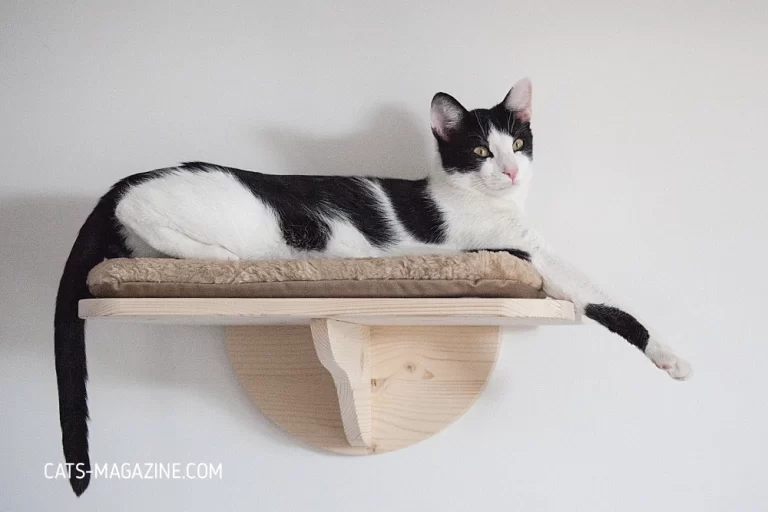
While photographing for a local cat rescue, I met a tiny kitten named Dea. She perched in a cardboard shelf, eyes wide and solemn – the kind of look that sinks straight into your heart.
She watched every move I made. Her expression seemed worried… almost sad.
Was she afraid?
Was she stressed?
Or did she just have one of those permanently “concerned” faces?
The Human Interpretation Trap: Are We Just Too Stupid?
We humans are serial anthropomorphizes.
We project emotions onto animals constantly – sometimes correctly, often hilariously wrong.
A cat with naturally downturned eyes may look sad, even when they’re perfectly fine.
So yes – sometimes we’re too oblivious to interpret their expressions.
And other times, we’re too eager to assign meaning.
The Transformative Power of Play: Dea’s Story
Eventually, curiosity (and guilt) got the best of me.
I grabbed a toy and tried interacting with Dea.
Magic happened.
Her expression shifted:
- her eyes brightened
- her pupils narrowed
- her ears perked
- her whiskers moved forward
That “worried kitten” look melted into pure engagement and joy.
So, are we crazy cat people for thinking we can read a cat’s emotions?
Maybe.
But sometimes the proof is in the purring.

The Enigmatic World of Cat Facial Expressions
o, do cats express emotions on their faces?
Yes – but only partially.
Science tells us:
- Their faces can show pain
- Their eyes signal trust or fear
- Their whiskers hint at interest
- Their pupils reveal arousal or stress
But for emotional subtleties?
We rely on context, instincts, and – let’s be honest – our own slightly over-analytic cat-obsessed brains.
And maybe that’s fine.
Because decoding your cat is part of the joy of loving them.
Want to go even deeper into cat communication?
If you think their faces are mysterious, wait until you hear their voices.
I tried the MeowTalk app with my two cats – and while the results weren’t exactly accurate, they were uncannily close. Let’s just say… AI is learning, and so are we.
Discover the full experiment here:
Cats’ MeowTalk Translator: A Purr-spective on Feline Communication
Or dive into the bigger picture of AI learning cat language:
AI Is Learning Cat Language (Finally, Some Respect for Our Feline Overlords)