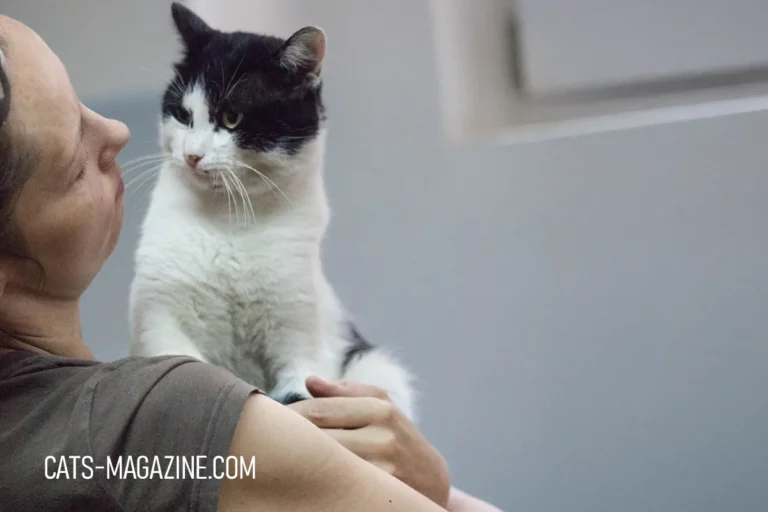
If you’ve ever seen your cat pawing the floor around their food bowl, you’re not alone – and today’s story shows exactly why they do it.
Table of Contents
I love when readers write to me with stories that make me laugh and teach me something new about our feline companions. A few days ago, I received an email from a lovely reader named Cindy. She wrote that she went to the store to buy cat nibbles, wasn’t paying attention, grabbed the wrong bag, and only realized at home that she had purchased dog food – same brand, same colors, just a dog on the front instead of a cat.
Her cats took a few bites, paused, gave her the most offended look imaginable… and then began pawing the floor like they were trying to bury a culinary crime scene. No more eating. Full rejection. End of story.
And the moment I read it, I felt it in my bones – because the same thing once happened to me. I ordered food online, didn’t bother double-checking, and when the delivery arrived… surprise! Dog food. My cats sniffed it, stared at me like I’d lost all professional credibility, and walked away. I ended up donating the whole bag to a local dog rescue and promising myself I’d never shop in a hurry again.
But Cindy’s story (and mine too) raises two questions:
Why do cats “bury” food they don’t like?
and
Can cats eat dog food?
Cats have around 14 times more scent receptors than humans. That’s why they instantly detect the difference between cat food and dog food, even when the bags look nearly identical to us.
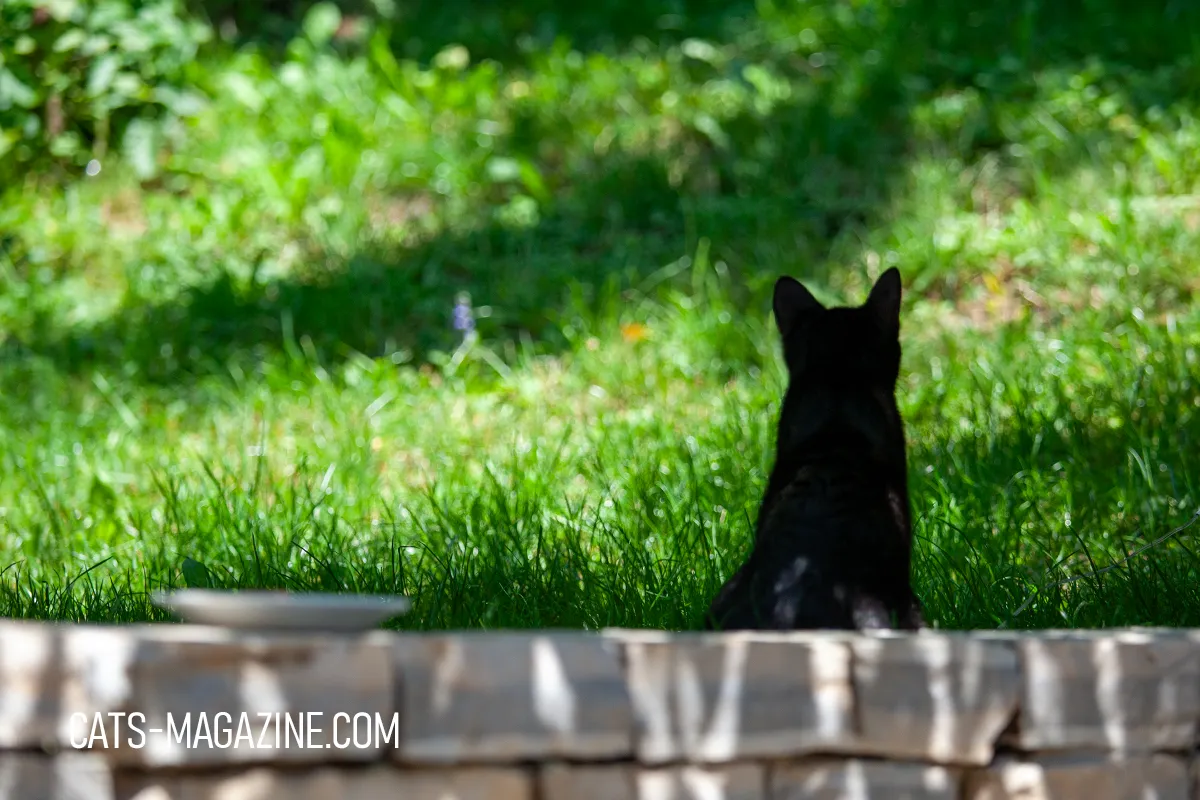
Why Do Cats “Bury” Food They Don’t Like?
When a cat paws the floor around their bowl, they’re not being rude or dramatic. They’re running a very old biological program – one that predates litter boxes, cat beds, and us. Cat pawing the floor looks dramatic, but it’s actually pure instinct.
1. They’re trying to bury leftovers (ancient wildcat behavior)
In the wild, covering uneaten food hides the scent from predators.
Even indoor cats who have never touched soil still carry this instinct.
To them, the message is:
“This smells suspicious. Better hide it.”
2. They’re marking territory with their paws
Cats have scent glands in their paw pads. Scratching around food is their way of saying:
“Mine. But not for eating right now.”
It’s basically the feline version of labeling leftovers.
3. It’s their way of saying the food smells “off”
Dog food, spoiled food, or anything unfamiliar triggers the burying response.
The scent tells them it’s not safe or not meant for them. When dog food appears in the bowl, cat pawing the floor is their natural way of rejecting it.
4. It’s a polite feline “no thank you”
Some cats walk away.
Others walk away and attempt a burial.
Both are clear feedback: they don’t approve.
A cat’s instinct to bury food comes from wild ancestors who covered leftovers to hide the smell from predators. Even the most pampered indoor cat still thinks like a tiny leopard when something smells strange.
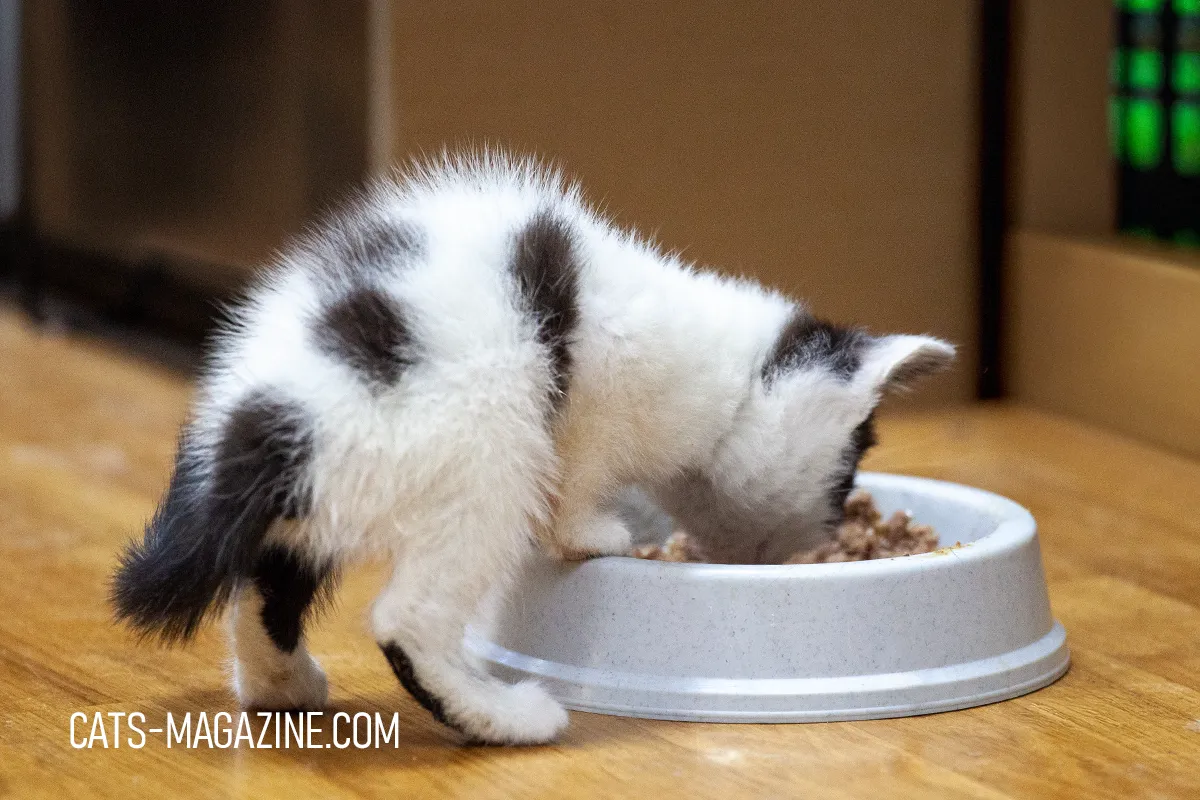
Can Cats Eat Dog Food?
Short answer:
A few bites won’t harm a healthy cat, but dog food is not safe as a diet.
Here’s why:
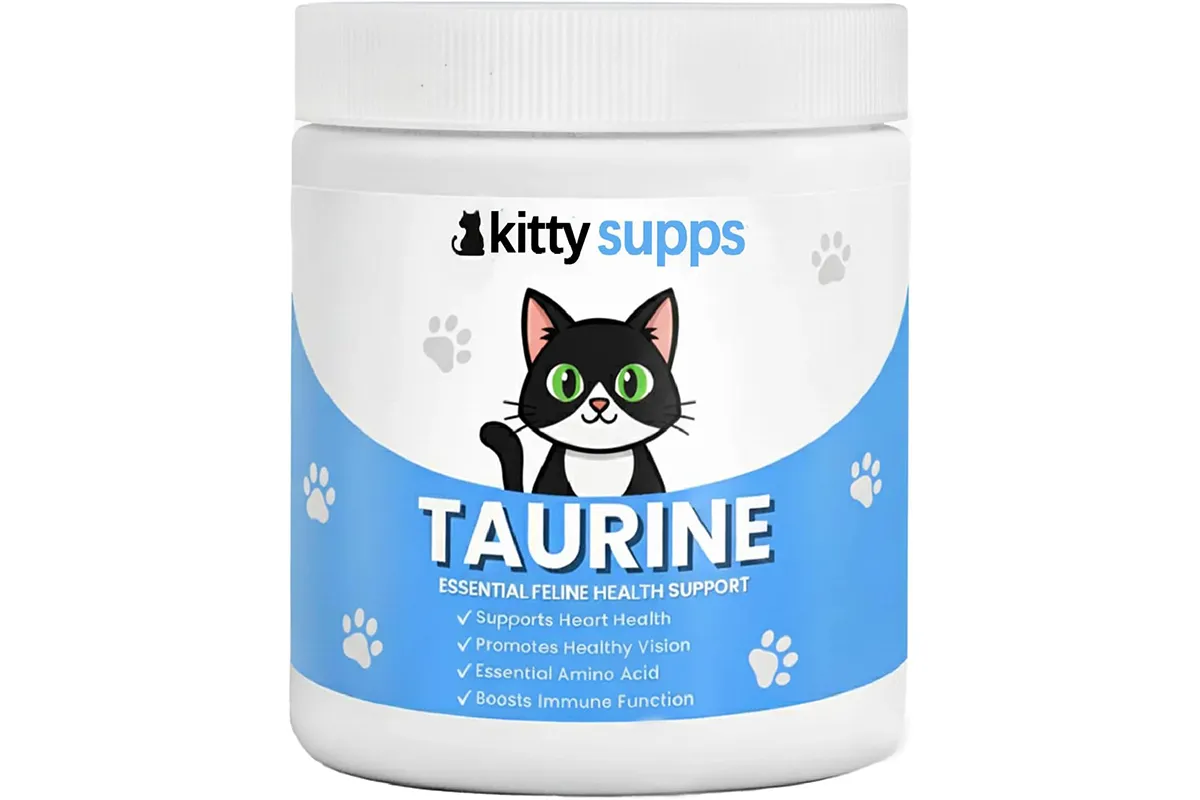
1. Dog food lacks taurine (essential for cats)
Cats cannot produce taurine. Without adequate amounts, they can develop:
- heart disease (DCM)
- vision loss
- immune dysfunction
- reproductive issues
Dog food does not meet feline taurine requirements.
2. Protein levels are too low for cats
Cats = obligate carnivores
Dogs = omnivores
Dog food often has:
- less meat
- more carbs
- more fillers
Your cat’s metabolism depends on high-protein nutrition.
3. Wrong amino acid balance
Cats need:
- taurine
- arginine
- methionine
- cysteine
Dog food is not formulated with these requirements in mind.
4. Vitamins and minerals are not in feline-appropriate levels
Dog food may lack:
- usable vitamin A (cats cannot convert plant beta-carotene)
- arachidonic acid
- sufficient niacin
Even if your cat nibbles a tiny amount, it’s not nutritionally complete.
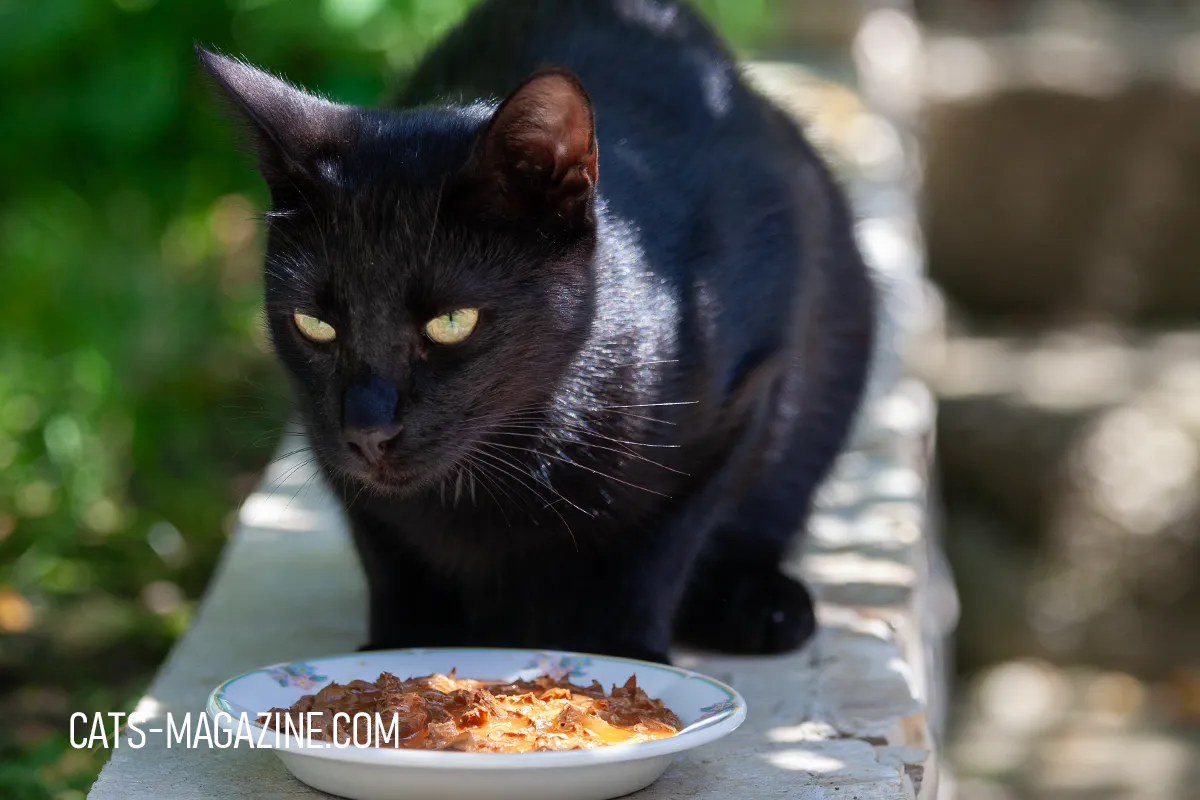
So is a nibble on dog food dangerous?
No – don’t panic. A small accidental bite won’t harm a healthy cat.
But as a meal or a regular food?
Absolutely not.
Dog food is missing essential nutrients that cats must have, especially taurine, and it’s not formulated for feline metabolism. Your cat rejecting dog food is pure survival wisdom.
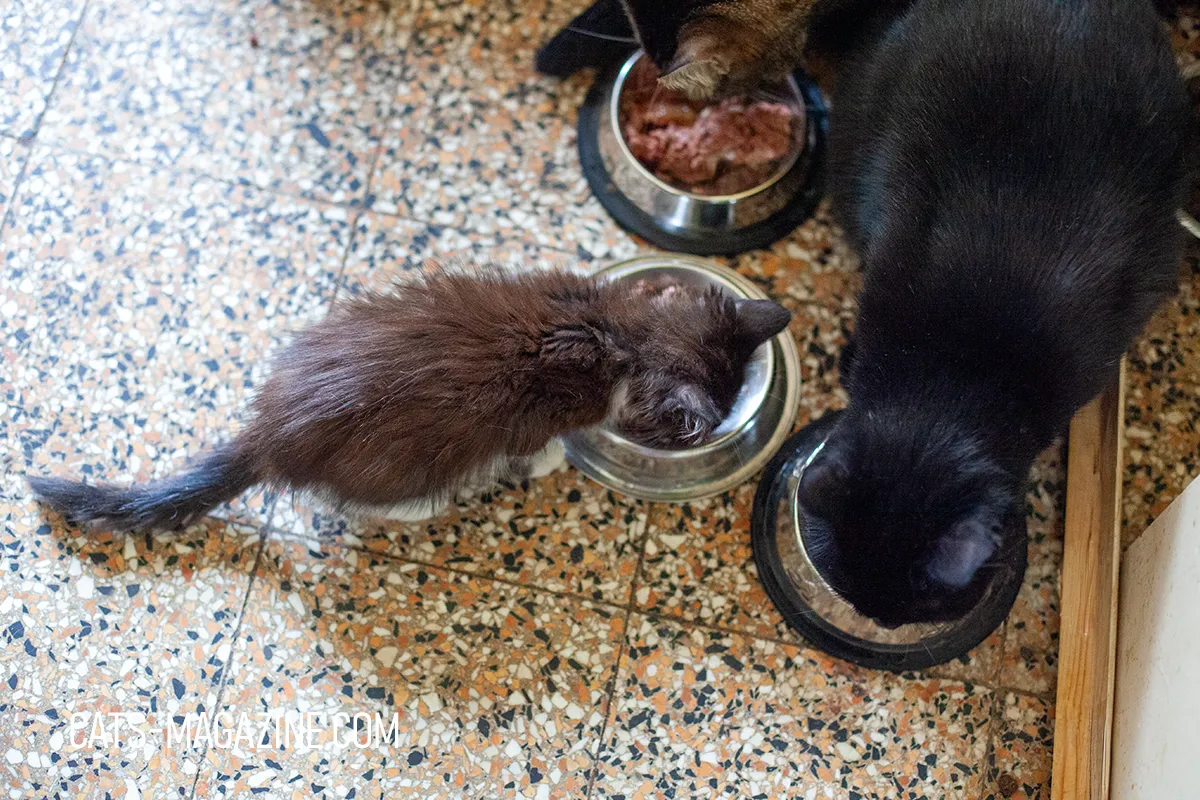
For the Curious: Cat Behavior, Science & Fun
If today’s story made you think about how we choose food for our cats, you’ll enjoy my article on Cat Nutrition Research, which highlights a fascinating study by Rachel Lumbis from the University of Glasgow. Her research explores how caregivers make nutritional decisions for both children and pets. Inside the article, you can also join her survey and contribute to this important work.
If you’re in the mood for humor mixed with science, you’ll love The Laws of Paw: Principles of ThermoCATnamics, where David W. Falls explains why cats don’t break physics – they enforce it. From gravity testing to entropy creation, it’s physics with fur.
Curious about all the quirks — zoomies, pawing, scratching, chirping, or 3 a.m. monologues? My Ultimate Cat Behavior Guide breaks down every mystery.
And since we talked food, you may enjoy my experiment with Tito in Can Cats Eat Pumpkin?, where a common kitchen ingredient turned out to be surprisingly helpful.
If you want something fun – or the perfect holiday gift – check out Mr. Dill Pickles Has Life Advice (and Holiday Tips!). It’s the charming real story of how a family tuxedo cat and two young co-authors created a series full of humor, wisdom, and creativity.
A Little Wild Wisdom in Every Paw Swipe
Cats aren’t burying food to insult us. They’re following ancient instincts that kept their species alive. When they reject something – especially dog food – they’re reading the world with a level of precision our human senses could never match.
Cindy’s story reminded me how sharp their instincts are. Mine confirmed it.
And every buried meal sends the same message: your cat always knows what’s best for them.
Veterinary Sources & Evidence-Based References
Below are trusted veterinary nutrition resources that support the information in this article. These organizations publish science-based guidelines on feline dietary needs, supplements, and safe homemade feeding practices:
- FEDIAF – Nutritional Guidelines for Complete & Complementary Pet Food for Cats and Dogs
European Pet Food Federation - AAFCO – Cat Food Nutrient Profiles
Association of American Feed Control Officials - AAFP – Feline Nutrition Guidelines
American Association of Feline Practitioners - Cornell Feline Health Center – Nutrition Resources
Cornell University College of Veterinary Medicine - Merck Veterinary Manual – Nutritional Requirements of Cats
Merck & Co., Veterinary Division - VCA Animal Hospitals – Homemade Diet Risks & Considerations
Veterinary Centers of America - Journal of Feline Medicine and Surgery (JFMS)
Peer-reviewed studies on feline dietary deficiencies, taurine metabolism, and nutritional standards
These references reflect widely accepted veterinary nutrition principles, which I use to guide homemade feeding in my own home – always in consultation with a qualified veterinarian.
Amazon Affiliate Disclaimer
Please note that links from Cats-Magazine.Com to Amazon.Com are affiliate links. This means that if you click on the link and make a purchase, we may receive a small commission at no extra cost to you. This helps support our work and allows us to continue providing valuable content. Thank you for your support!