Cat litter box cleaning tips aren’t just about odor control – they’re about health, behavior, and keeping your cat stress-free. With tricks learned from fostering 14 cats at once, this guide covers daily scooping, natural litter choices, deep-cleaning routines, and the DIY odor remover that saved my home (and nose).
Table of Contents
Why You Need Proper Cat Litter Box Cleaning Tips
If you’ve ever lived with cats, you already know the truth: the greatest challenge isn’t the food, the toys, or the majestic fur tumbleweeds drifting across the floor like they’re auditioning for Swan Lake.
No, the real challenge – the one that separates casual cat owners from seasoned feline warriors – is the litter box.
Or, to be more precise: the never-ending battle of keeping the litter box clean, fresh, and (most importantly) odor-free.
That’s exactly why proper cat litter box cleaning tips matter far more than most people ever realize.
And trust me, Silvia – I speak from deep, nostril-tested experience.
There was a time when my home looked less like an apartment and more like a tiny, chaotic feline republic. Not one cat. Not two cats. Fourteen cats. Fourteen adorable, demanding, opinionated creatures who thought the top of my refrigerator was a legitimate viewing platform and that every horizontal surface belonged to them by divine right.
For many people, that sounds like a fluffy dream. And honestly? It often was.
But it also meant a lot of litter boxes – multiple boxes, constantly used, constantly monitored, and cleaned with military precision.
Here’s the part that usually shocks people:
my home didn’t smell like a shelter.
Guests would walk in, sniff the air, and look confused.
“No cat smell? With… fourteen?!”
The secret wasn’t magic.
It was consistency, effort, and real, tested cat litter box cleaning tips that I learned the hard way – by fostering cats for years and assisting in a rescue that cared for hundreds more. Between newborn kittens the size of coffee mugs and old souls with wise, cloudy eyes, I’ve scooped for them all.
And with that experience comes a very simple truth:
a clean litter box is the foundation of a happy, healthy, stress-free cat.
No sugar-coating. No Pinterest-perfect advice.
What I’m sharing here is the no-nonsense, scratch-tested reality – the exact methods that kept a home with 32 tiny paws running around from smelling like Eau de Cat Pee.
These are the same cat litter box cleaning tips that work whether you have one cat, five cats, or a tiny whiskered republic of your own.
Ready? Let’s go paw-first into litter box wisdom. I promise – it’s far less scary than what’s hiding under your couch.
And if you’re still unsure about where to place your litter box, which type works best for vertical pee-ers, or how to prevent odor disasters before they start, don’t miss my full litter box guide – it covers everything from box size to smell-proof strategies.

The Hidden Cost of Ignoring the Box
Let’s get this straight: cats aren’t just clean animals – they are cleanliness fanatics. Tiny, fluffy perfectionists. Feline inspectors who walk into their litter boxes fully expecting five-star service. And if their bathroom situation is anything less than pristine, they will let you know… often in ways that test your patience, your flooring, and your will to live.
This is exactly where most people underestimate the importance of real cat litter box cleaning tips. Keeping the box clean isn’t just for our noses (though, let’s be honest, avoiding that ammonia slap-in-the-face is a huge bonus). It’s about giving your cats a space they feel safe and comfortable using – because their health, behavior, and stress levels all start right there in that humble plastic box.
In my years of fostering, rescuing, and sharing my home with more cats than most people would even believe, I’ve learned one painful truth:
cats suffer silently when their litter box is dirty – until they don’t.
I’ve seen cats refuse to use their boxes because they were simply too filthy. These poor souls were labeled “problem cats,” when in reality they were just begging – in the only way they could – for a clean bathroom.
And a dirty litter box isn’t just a smell issue.
It’s a health issue.
A neglected box can lead to:
- urinary tract infections (UTIs)
- bladder inflammation
- painful urination
- stress-related accidents
- litter box avoidance
- and unnecessary behavioral problems
I’ve been called to homes where people were desperate, thinking their cats were being “naughty.” In 90% of those cases, the cats weren’t misbehaving – they were trying to avoid a toilet they couldn’t bring themselves to step into.
According to the Cornell Feline Health Center, most litter box “accidents” happen because the box is dirty, smelly, or poorly placed – not because cats are disobedient.
And honestly, the science backs it up.
Cats instinctively avoid soiled areas. In the wild, returning to a spot filled with their own waste could attract predators, spread infection, or cause territorial disputes. Their instincts are ancient, and they don’t switch off just because we give them warm beds and Instagram fame.
This is why clean litter boxes matter so much – they prevent stress, illness, and a whole cascade of problems.
But here’s the good news:
it’s incredibly easy to fix.
A few consistent habits – like the cat litter box cleaning tips I’ll share in the next sections – can transform your cat’s behavior, reduce stress, and keep your home smelling fresh without a single scented candle having to sacrifice itself.
And honestly? Nothing feels better than knowing you’re giving your cats the comfort and respect they deserve. They may never write you a thank-you card (rude), but you’ll see it in their behavior – softer eyes, calmer energy, fewer “messages” left on your favorite blanket.
Cats notice everything.
A clean litter box is their version of love – a quiet, whiskered approval that you’re doing things right.

Cat Litter Box Cleaning Tips: The Golden Rule – Scoop Daily
If there’s one rule I will shout from rooftops, embroider on pillows, and maybe even tattoo across my forehead, it’s this: scoop every single day.
No holidays. No “I’ll do it later.” No weekend breaks.
The litter box never takes a day off – and neither do we, the proud staff of the whiskered monarchy.
And here’s the reality: pee and poop don’t magically disappear overnight, carried away by some whimsical fairy on tiny sparkling wings. They sit there. They stew. They marinate. And they transform your home from “cozy cat haven” into “something suspicious is happening in that corner.”
That’s why I scoop twice daily:
- once in the morning, while the cats are stretching, yawning, and plotting their daily mischief, and
- once in the evening, right before their nightly zoomies begin and I pretend I’m done for the day.
Is scooping a chore? Absolutely.
Do I always feel thrilled about it? Of course not.
But is it worth it? Oh, yes.
The difference between a clean box and one left “for tomorrow” is the difference between breathing normally and subtly questioning your life choices as a mysterious waft floats by.
The ASPCA suggests scooping at least daily and doing a warm-water wash weekly (unscented soap or baking soda) to keep odors down without triggering aversions.
A clean box isn’t just about smell.
It’s about behavior, health, and keeping your cats comfortable enough to use their litter box without hesitation.
And trust me, once you get into the rhythm of daily scooping, everything else becomes dramatically easier – including maintaining an odor-free home.
Why Skipping Just One Day Causes Trouble
I’ve seen the consequences far too many times – during rescue visits, home checks, or when helping new adopters who genuinely believed that skipping a day here or there “won’t hurt.”
Spoiler: it always hurts.
Cats are patient, yes, but they’re not saints. When their beloved litter box transforms into a biochemical crime scene, they do what any reasonable creature would: find alternative facilities. And those “facilities” tend to be your carpet, your bed, or that perfect little corner behind the couch you never check.
And honestly – can you blame them?
If you walked into a public bathroom that hadn’t been cleaned in days, would you stay? Neither would they.
A clean litter box isn’t just about odor control; it’s a form of communication between you and your cat. They notice when you care enough to keep their bathroom fresh. They also notice when you don’t. Happy cats step into a clean box without hesitation. Unhappy cats… well, they leave you a message. Usually on something soft, important, or recently laundered.
This daily habit – scooping without fail – is the backbone of everything. Without it, no fancy litter, no advanced deodorizer, not even my cherished DIY cat urine odor remover will save you from the gradual, creeping invasion of unpleasant smells.
So if you take only one thing from all these cat litter box cleaning tips, let it be this:
scoop every single day.
No exceptions. No negotiations.
Your cats may never say “thank you,” but you’ll see it in the relaxed tail flick, the quiet purr, and the blissful absence of surprise puddles in your shoe.

Choosing the Right Cat Litter – My Tried & Tested Picks
If there’s one thing years of fostering has taught me (besides the fact that cats will always nap on the single object you didn’t want them to), it’s this: not all cat litter is created equal.
Not even close.
I’ve tested every variety known to humankind – clumping clay, silica crystals, wood pellets, recycled paper pellets, corn-based litter, walnut-shell litter… if a brand claimed to solve the world’s odor problems, I bought it. Some promised miraculous odor control, others boasted about being low-dust or eco-friendly, and a few even tried seducing me with vanilla scents. (Vanilla?!)
So after all that testing, what’s the real secret to choosing the right litter?
Absorption.
That’s it. That’s the whole magic.
The best cat litter must be able to:
- soak up urine quickly
- trap moisture before ammonia forms
- create manageable clumps (if it’s a clumping type)
- keep the box dry enough that your cat actually wants to step inside
When litter fails at absorption, everything else falls apart – the smell, the hygiene, the texture, the cat’s willingness to even consider using the box. And once odor starts creeping out of the hallway like an unwanted guest, no amount of air freshener can rescue you.
In short: choose litter that works with your cleaning routine, not against it. Your nose – and your cats – will thank you.
Natural vs. Synthetic Litter: What Works Best?
After years of trial, error, and more experiments than any human should reasonably conduct with bags of sand-like substances, I’ve found myself returning – again and again – to natural, biodegradable litter. It handles moisture beautifully, keeps odors in check, and doesn’t turn your home into a dust storm every time a cat decides to dig like they’re tunneling to the Earth’s core.
Many cat guardians don’t realize this, but some commercial litters – especially certain clumping clay types – can be dusty and full of chemical additives. That dust doesn’t just settle on your furniture; it settles in your cat’s lungs (and yours). If your litter box creates a mini fog machine every time a paw shifts, it’s time to reconsider your options.
Natural litter made from wood, corn, tofu, or other plant fibers tends to lock in odors more gently but just as effectively, especially when paired with daily scooping – yes, I keep repeating it, because it is the mantra. Bonus: when I use high-quality natural litter, my cats dig with far more enthusiasm and far fewer sneezes. No suspicious “are you trying to gas us?” looks from them.
Another thing I love about natural litter?
I don’t have to replace the whole box as often.
Because I scoop daily and spot-clean properly, I only fully change the litter every three weeks – sometimes even four if everything still smells fresh. That saves time, money, and a surprising amount of waste.
And honestly? Visitors often comment on how my house doesn’t “smell like cats,” despite three fluffy inspectors patrolling every corner. It’s not magic. It’s the combination of:
- daily maintenance
- natural litter
- and a few strategic cat litter box cleaning tips you’ll see in the next sections
And in case you’re wondering whether my own feline overlords approve – they absolutely do. They step into the box confidently, dig happily, and give me that rare look of feline approval that says:
“You did well, human.”
And that alone makes natural litter worth it.
My Personal Routine: Daily Freshness Made Easy
Daily scooping is essential, but it’s only half the battle. The real secret weapon in my litter-box toolkit – the thing that keeps my home from drifting into the unmistakable fragrance of Eau de Cat Pee – isn’t something you’ll find in any commercial cleaning aisle. It’s my homemade DIY cat urine odor remover.
And no, it’s not a mysterious folklore potion brewed under moonlight with a whisker from a forest spirit. It’s simple, affordable, easy to make, and honestly more effective than most store-bought sprays I’ve tried over the years (and trust me, I’ve tested a small fortune’s worth).
If you’ve already read my article about this miracle-in-a-bottle, you know exactly how quick and budget-friendly it is. If you haven’t – you’re missing out. Not only does this DIY solution save money (which is always welcome when you live with cats who treat litter like a consumable luxury), but it’s also gentler than chemical-heavy cleaners. That means it’s safer for your cats, safer for your nose, and shockingly good at neutralizing stubborn odors.
This little formula has served me faithfully through everything – from the wild chaos of living with 14 cats at once, to today’s much calmer life with my spoiled trio. It’s the backbone of keeping the boxes fresh, the floors clean, and the house inviting, even with multiple feline bathroom breaks happening daily.
Freshness doesn’t have to be complicated – just consistent. And this routine? It works.

Here’s my daily routine. Every morning – before coffee and before I fully accept I’m awake – I head to the litter boxes. I scoop out all the clumps and overnight “surprises,” then tilt the box to expose any plastic where pee may have slipped underneath the litter. A quick spray of my DIY cat urine odor remover goes right on that spot. I let it sit for a moment, wipe it with a tissue or kitchen towel, and done.
It takes less than a minute, but it keeps the box fresh, the plastic clean, and the smell from ever becoming a problem.

I repeat the same quick routine in the evening, and voilà – the plastic stays fresh, hidden odors never get a chance to build up, and my cats happily keep using their designated bathroom instead of scouting for alternatives (like the freshly folded laundry or that suspiciously quiet corner behind the sofa).

This simple trick is probably the most underrated of all the cat litter box cleaning tips. It takes just a couple of minutes, yet the difference is huge. And trust me – you can always tell when someone skips this step. You can literally smell it.

But more importantly, the cats notice. They may not send thank-you cards, but they show their appreciation by using the litter box without hesitation, without stress, and without the passive-aggressive urge to pee somewhere else “to make a point.” A clean, fresh-smelling box feels like a warm invitation to them – a quiet way of saying, “This is your space, and I respect it.”
That, to me, is the heart of every good relationship with your cats. Respect them, and they trust you. And there’s nothing more comforting than knowing your cats feel safe and comfortable – and that your guests won’t be subtly sniffing the air the moment they step through the door.

Deep Cleaning – The Step Most People Skip
Here’s a little secret I’ve learned after years of living with cats: even if you’re the absolute Queen (or King) of Daily Scooping, plastic litter boxes have a hidden superpower – they trap odors. Slowly, quietly, and relentlessly. It doesn’t matter how fancy your litter is or how often you scoop; plastic absorbs smells the way a sponge absorbs water.
That’s why deep cleaning isn’t optional. If you’re serious about following real cat litter box cleaning tips, deep cleaning needs to be part of your regular routine – not something you do only when the smell becomes unbearable.
For me, deep cleaning happens every time I replace the litter completely, which is roughly every three weeks thanks to my daily maintenance. And let me tell you – this step is worth every minute. Your cats may never say it out loud, but they absolutely notice (usually by not peeing on your bed).
Here’s exactly how I do it:
Step 1: Empty the Entire Box
Remove every last grain of litter. Shake it, scrape it, flip it – no shortcuts.
Step 2: Spray With DIY Cat Urine Odor Remover
Generously coat the inside of the empty box, focusing on corners and edges where sneaky droplets like to hide.
Step 3: Scrub Thoroughly
Use a dedicated sponge – not the one you wash dishes with unless you enjoy your tea with ammonia notes – and scrub every surface.
Step 4: Rinse Like You Mean It
Rinse the box in the bathtub or shower with warm water to remove all residue and cleaning solution.
Step 5: Sun-Dry for Natural Disinfection
If the weather is kind, place the box in direct sunlight. UV rays naturally kill bacteria and break down odor-causing compounds without adding chemicals. Bonus: sunlight helps plastic lose that subtle “old plastic smell” we all pretend not to notice.
Over the years, I’ve found that boxes I deep-clean and sun-dry last longer, smell better, and are noticeably more inviting to the cats. And believe me, cats detect lingering odors long before we do. Some will even avoid a box entirely if they sense something off.
If you want a clean, calm, odor-free home, add deep cleaning to your litter box routine. It may seem like extra work, but it pays off every single time – in feline happiness and a home that smells like a home, not a cat café during rush hour.
How Often Should You Change the Litter?
I get this question all the time, and the honest answer is: it depends on your litter and your routine. Because I scoop religiously and spot-clean every day, I only do a full litter change about every three weeks. It may sound like a long time, but high-quality natural litter and consistent daily care make it work beautifully.
If you can’t scoop daily, you’ll need to refresh the litter more often. The simplest rule?
Trust your nose.
If you smell it – it’s time.
How Many Boxes Do You Need?
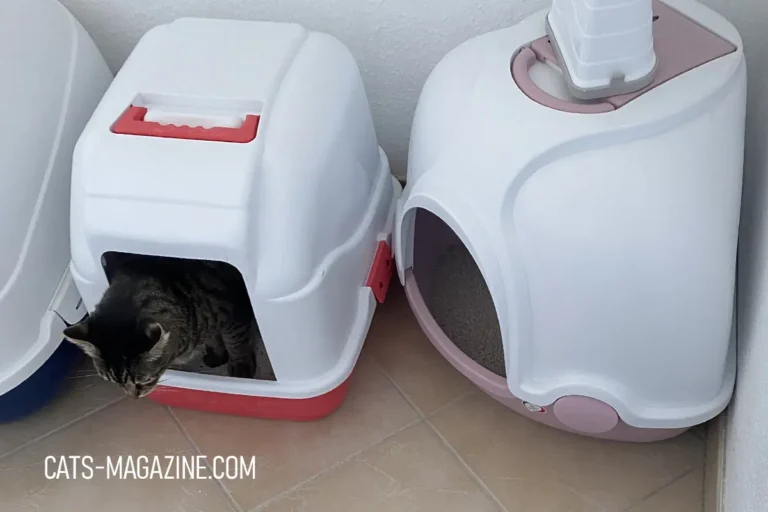
The classic rule is simple: one litter box per cat, plus one extra. So if you have three cats, the “textbook” setup would be four litter boxes.
Do I follow that rule perfectly? Not anymore. I currently have three cats and three litter boxes – and they’re completely happy. The reason it works is simple: I clean consistently. When you’re diligent with maintenance, you can sometimes get away with fewer boxes.
But when I had more cats, that extra box (or two) was absolutely essential. Larger feline families need more space, more options, and more clean surfaces to keep everyone stress-free.
So here’s the real rule:
Follow the “one plus one” guideline if you can.
If you can’t?
Then make up the difference with vigilant cleaning – and never assume one box is enough in a multi-cat home.
Bonus Tips for a Smell-Free Home
A few small habits go a long way toward keeping your home fresh:
- Place litter boxes in well-ventilated areas. Fresh air helps disperse odors and keeps humidity down.
- Skip scented litter. Most cats dislike perfumes, and some even avoid the box because of them.
- Use mats under the boxes to catch stray litter and reduce tracking around the house.
- Wash scoops regularly. A dirty scoop can smell just as bad as a dirty box.
- Pay attention to your cat’s behavior. Hesitation, scratching outside the box, or avoiding it altogether usually means something needs fixing – either the box or their health.
These tiny tweaks make a huge difference, especially in multi-cat homes.
Happy Cats, Happy Home
Keeping your home odor-free with cats isn’t about fancy gadgets or pricey cleaning products – it’s about consistency, care, and a few simple habits. A clean litter box is one of the easiest gifts you can give your cats and yourself.
I’ve lived through everything – from chaotic rescue environments with dozens of cats to calm, quiet homes with just a few – and I can promise you this: a few minutes of daily maintenance changes everything. Happier cats, fresher home, calmer you.
Oh, and join us on the Cats Magazine Facebook page for more tips, stories, rescues, and of course, endless cat cuteness.
See you there!