Table of Contents
I’m officially going to the CATS! Exhibition at the MARKK Museum in Hamburg!
The only obstacle?
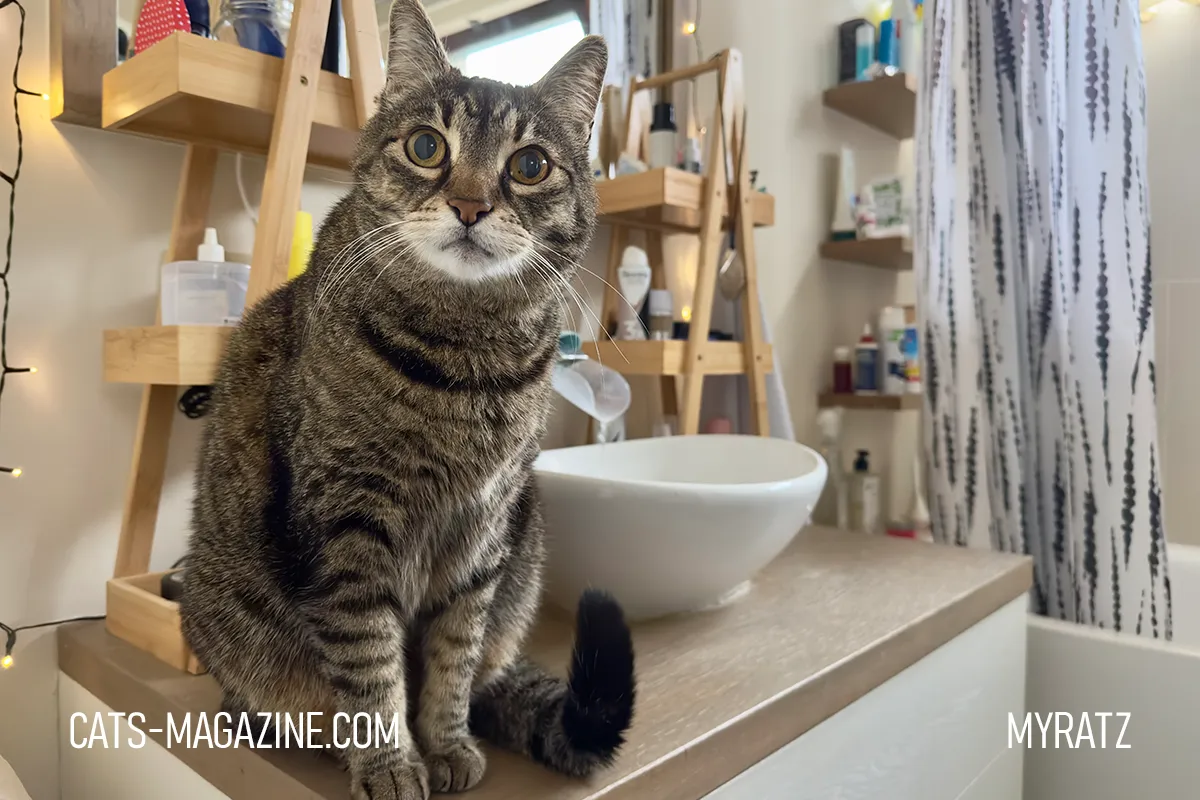
Finding someone willing to feed, clean, and cuddle three dramatically different feline personalities.
Thanks to Pawshake (no affiliation, just pure convenience), I found a sitter in less than an hour and all agreed online.
Now I can finally focus on the exhibition itself – and oh wow, it deserves a proper spotlight.
MARKK Hamburg: A Giant of World Cultures
The Museum am Rothenbaum – Kulturen und Künste der Welt (MARKK) is one of Europe’s major ethnology museums. With over 200,000 cultural objects, it feels less like a building and more like a world tour with better lighting.
And for almost an entire year – December 5, 2025 to November 29, 2026 – the museum dedicates its spaces to the story of cats across cultures, eras, and belief systems.
This is not a cute little art show.
This is cats as:
- divine protectors
- political symbols
- spiritual guides
- meme queens
- mythological shapeshifters
- household companions
- mirrors of femininity, independence and resistance
And the vision behind it comes from two brilliant curators:
Curators: Johanna Wild & Lotte Warnsholdt
Dr Johanna Wild is the Chief Curator and Curator of Contemporary Art at MARKK Hamburg.
Dr Lotte Warnsholdt a cultural researcher with a background in European Ethnology and media studies.
Behind the CATS! Exhibition: An Exclusive Interview with the MARKK Curators
Cats occupy an almost mythic space across cultures – from divine protectors in ancient Egypt to independent household companions today. When curating this exhibition, what central narrative thread emerged about humanity’s evolving relationship with cats?
One central thread we kept encountering in our research is the close association between cats, femininity and fertility. Ancient Egyptians venerated Bastet, the cat-headed goddess of fertility and pregnancy, to whom temples were devoted in Bubastis and in other locations along the Nile delta. The Hindu pantheon includes Shashthi, the goddess of fertility and protector of children, who does not herself manifest as a cat, but is depicted riding a cat. The same is true of Nordic belief systems, where Freya, the goddess of love and fertility, was visualized riding in a chariot pulled by cats.
Meanwhile, during the witch trials of early modern Europe, we witness a shift in meaning and the cat is increasingly comprehended as a symbol of misfortune, which is condemned along with the witch as a possible manifestation of the devil. Here, the cat – which continues to evade human control – is perceived as a threat to social hierarchies and associated with women who are socially marginalized.
The same is true of Japan, where the shapeshifting cat demon bakeneko can manifest in the guise of (particularly older) women. Fast forward to the US presidential elections of 2024 and you encounter Kamala Harris, the Democratic presidential candidate, being defamed as a “childless cat lady”, who is accused of not contributing to the nation for lack of her own biological children.
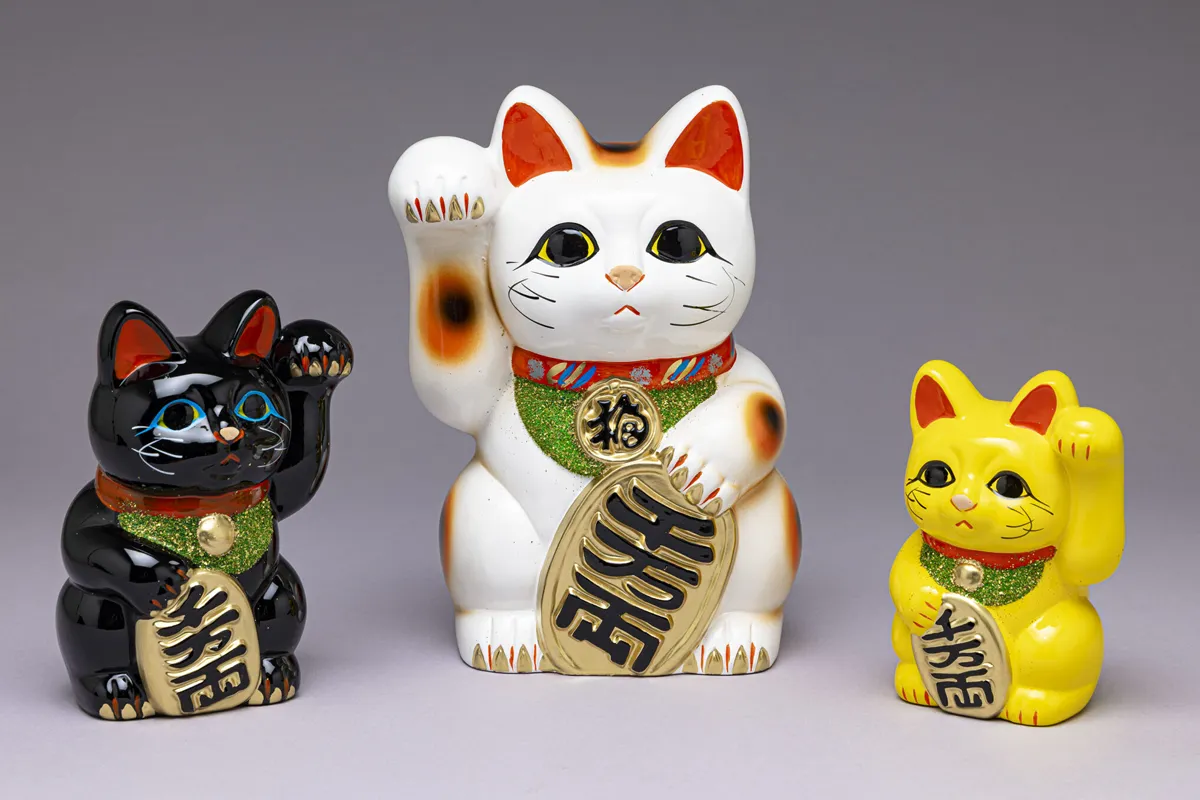
How did you weave together such contrasting narratives – the ancient spiritual cat and the viral internet cat – into one cohesive exhibition experience?
Because the exhibition takes place in a museum of world cultures and engages the cat both transculturally and historically, we decided to focus on five recurring attributes that the cat is associated with globally – the cat as cute, as useful, as worshipped, as strong and (in)dependent. Moreover, the exhibition does not solely focus on domesticated cats, but also on wild and predatory cats, which are amply represented and depicted in various media in our collections.
What surprised you most during the research phase? Were there cat-related objects or cultural practices you hadn’t expected to uncover?
For us, the association of cats with water resources in the precolonial Andean cultures of Latin America came as a surprise, because we tend to think of domestic cats as fearing water. Our collections hold ceremonial vessels from the Nasca culture of Peru (dat.), for instance, that depict the so-called “mythical spotted cat”, which was likely based on the Andean pampas cat (Leopardus colocolo).
Serving as a symbol of fertility in the Nasca world view, the “mythical spotted cat” is depicted with beans and pepper pods sprouting from its body. But it was also associated with water, because this species of wildcat tended to appear when the rivers were flowing. This connection between cats and water also extends to Inca symbolism, where wildcats were often depicted with rainbows on ceremonial water or drinking vessels.
We also found a scientific source that refers to an Irish legal text from the 7th century, which states that a cat was worth three cattle, provided it could both hunt mice and purr – which was a very high price. A cat that did not purr was worth only half as much. Modern research supports this intuition: a cat’s purr can lower blood pressure and trigger the release of endorphins. This early appreciation of the cat in such a close human context truly surprised us.
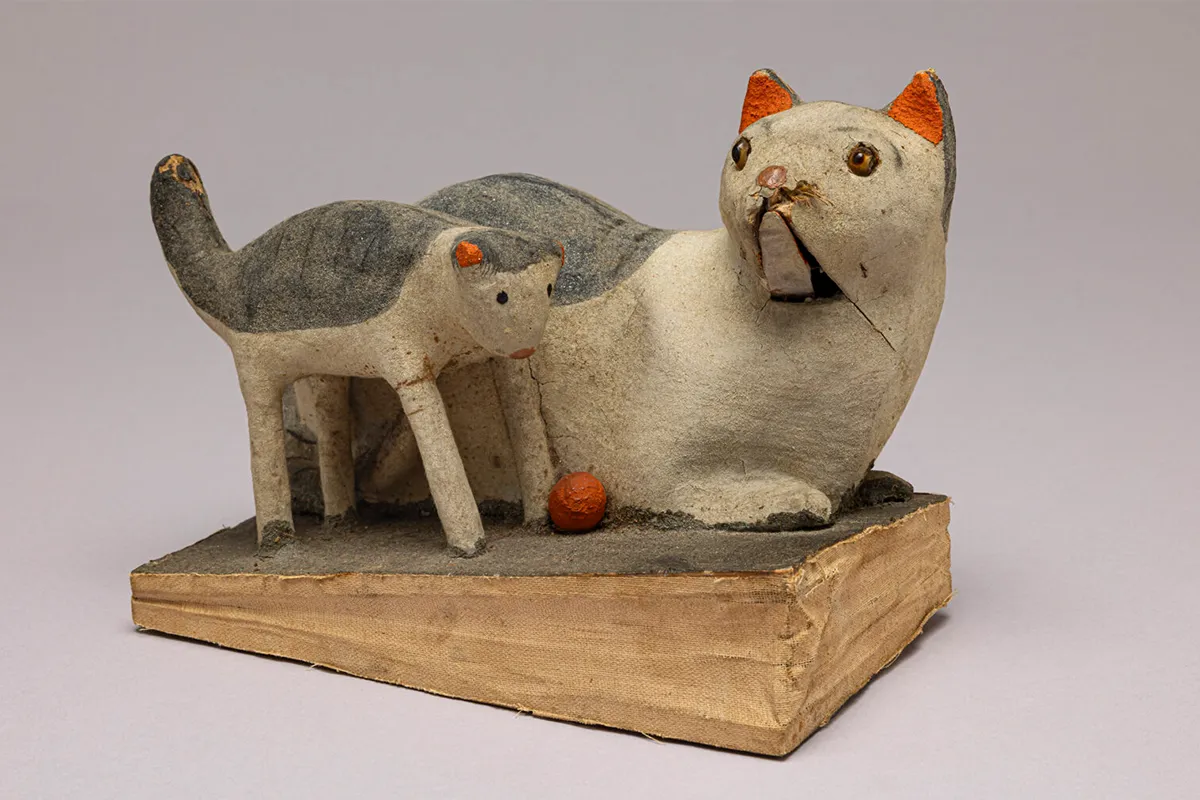
Hamburg residents contributed cat content to the exhibition – which I adore. What role do everyday cat lovers play in shaping the narrative of cats in culture today, and how does their contribution complement the museum collection?
The overwhelming response to our outreach project, in which we requested Hamburg residents to submit photos or videos of their cats, again demonstrated the great love and fascination for cats. Beyond the various attributes that have been projected onto cats over the course of millennia, they have always been important companion animals, too. Archaeological findings of the last two decades have proven that cats and humans have cooperated and lived together in different ways for a good 10.000 years.
Modern cat culture is often humorous and lighthearted – yet cats have deep symbolic weight in spirituality, femininity, independence and resistance. How do you hope visitors will navigate that duality?
We wanted to offer our visitors an exhibition that honors the cat’s significance in various historical and cultural contexts and still feels very contemporary. To achieve this, we worked together with a fantastic team of designers consisting of Gruppe Praxis and Anna Unterstab from Hamburg.
They proposed a design that works with materialities to underscore the different attributes, ranging from pink plush (cute), leopard print (in-dependent) or silver mirror foil (worshipped), among other materialities. The exhibition also offers several interactive stations that allow visitors to get creative or delve deeper into certain aspects of the human-cat relationship. Through this design approach and the various formats inviting visitors to contribute, we believe we have found a playful and yet dignified way to present historical collections together with examples from popular culture and contemporary art.
If you had to choose one object that captures the essence of the exhibition – the soul of cats in human imagination – which would it be and why?
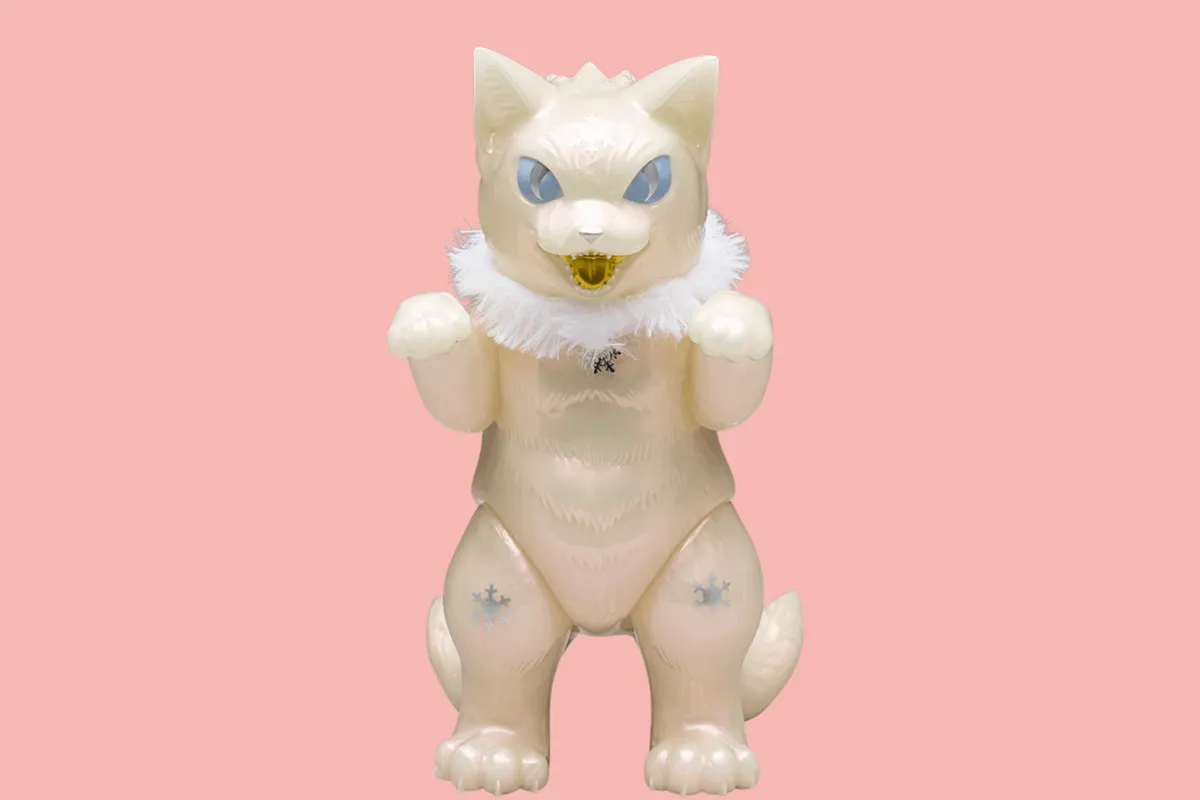
That is a very tricky question, because there is no single object that can capture the complex and often ambivalent projections associated with the cat. But one object that we enjoy a lot is a contemporary artwork by Korean artist Taewon Ahn titled Hiro is Everywhere (2023). Ahn grew up as a child of the 1990s in Seoul, Korea, and witnessed the transition from a primarily analogue to the digital world we all inhabit today.
For him, his real-life cat Hiro became a sort of anchor-point, that provides relief from the overstimulation and disinformation of the digital world in the material world. In his artistic practice, he digitally distorts images of his cat and then transitions them back into the analogue via sculptures created from resin and painted with acrylic paint, to play with this tension.
Cats became icons of internet culture before we even fully understood virality. Why do you think cats, more than any other animal, dominate digital expression and meme culture today?
Cats are perceived as cute and cat content is easily consumable. But while cat imagery can appear innocent and its consumption might be interpreted as escapist, cat footage has also been appropriated for different and even opposing agendas on the political spectrum.
In her contribution to our exhibition catalogue, art historian Elena Korowin analyzes how cats are simultaneously co-opted as symbols of a peaceful domesticity in footage produced as part of the retrograde trad wife movement, while Queer culture also appropriates the velvet-pawed cat with its potentially sharp claws as a token of resistance and independence from these normative constructs. The meanings associated with cats at a given time or place can be understood as indicative of the political climate.
The exhibition spans nearly a full year. Will the program evolve, for example with new community submissions, workshops, or seasonal events?
We are currently not planning new community submissions, but we do have an exciting cat-related program with a rich diversity of formats planned over the course of the exhibition run, including film screenings, panels, lectures and creative formats aimed at kids.
Finally – and the cats of the world need to know – are there any themes or feline personalities you wish you could include but couldn’t? A lost story waiting for its moment?
That’s a very good question, one that we also direct at our audience in the exhibition. We have set up an interactive station that invites visitors to submit cat stories or aspects that they find lacking in the show. Cat content is ubiquitous, so it was impossible to include everything.
For example, there is a lot to say about cats in film and television, which we only touch on briefly. The tale between mice and cats in Western cultural history is very old and interesting because the mouse is superior to the cat and outsmarts it – a story many people know from Tom & Jerry. The significance of the cat in Nollywood productions also remains to be explored further. So, the cat will continue to offer many stories in the future.
What the Exhibition Reveals About Cats (According to the Curators)
Across world cultures, cats consistently appear at the crossroads of femininity, fertility, independence, and mystery. From Bastet and Freya to the Japanese bakeneko, they move between protection and danger, blessing and taboo.
To make sense of these contrasts, the curators structured the exhibition around five recurring feline archetypes found worldwide: cute, useful, worshipped, strong, and (in)dependent.
Several discoveries surprised even them – especially how precolonial Andean cultures linked wildcats to water, rivers, rainbows, and seasonal change. Another delight: a 7th-century Irish legal text valuing a good, purring cat at three cattle, proving humans have always known the therapeutic power of a purr.
Community submissions from Hamburg locals add the final layer, reminding us that humans and cats have lived together for 10,000 years, shaping each other’s stories all along.
My Own Two Cat Projects You Shouldn’t Miss
The Opera Air Inara Giveaway
If you want to join the fun, I’m also hosting a tiny cat-themed giveaway where you can win two 3D-printed Inara figurines through my Opera Air collaboration – all explained in my article Win Inara: The Tiny Mindful Cat Who Lives in Your Browser on Cats Magazine.
New to Opera Air?
If you’re curious why a browser has a meditating cat inside it, I wrote a full story about it in My New Favorite Browser Has a Cat – And It’s Purr-fectly Mindful, where I explain how Opera Air became my daily tool and a tiny moment of calm.
And One More Thing… Help Cat Science!
And because culture and science often walk paw-in-paw, I also wanted to highlight an important project from University of Glasgow PhD candidate Rachel Lumbis, who’s researching how caregivers make nutritional decisions for both children and pets. Her anonymous study explores trust, sources of advice, and the everyday choices we make at the dinner bowl – a rare look at how human and animal well-being intertwine in real life.
This helps researchers shape better, more realistic feeding recommendations.
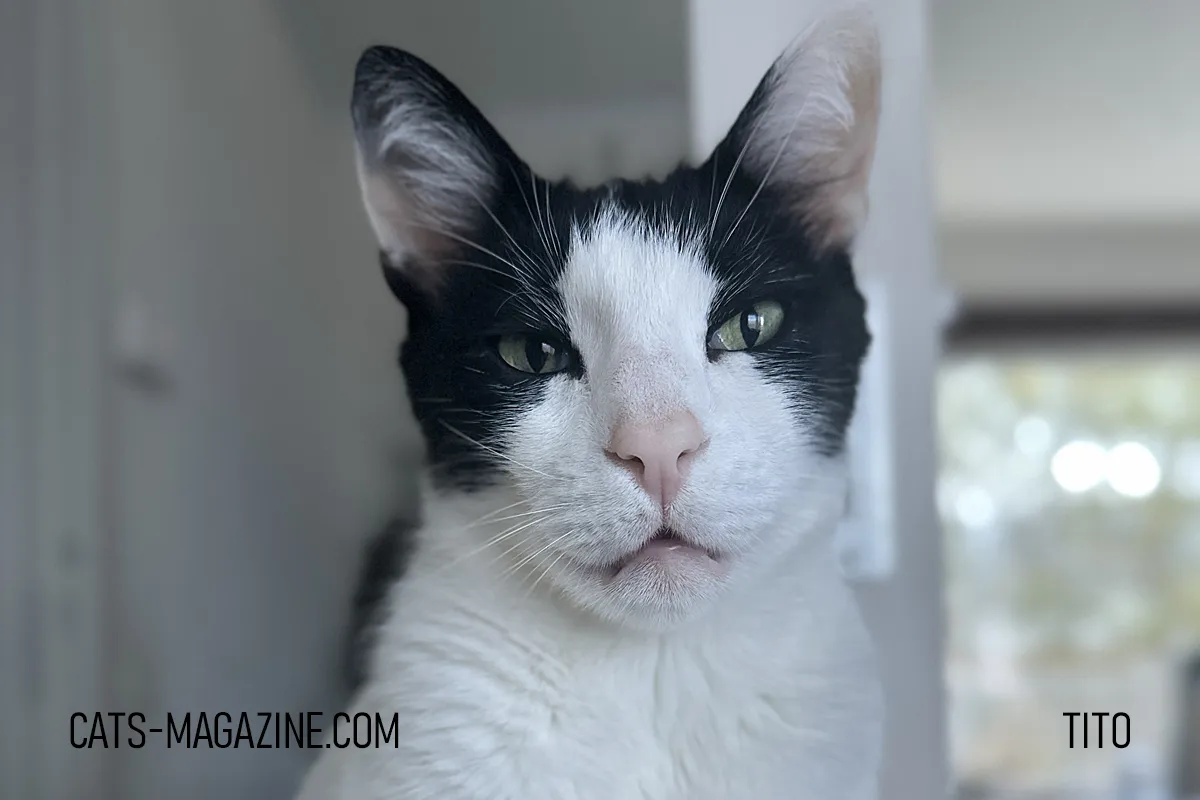
I filled it in already. Tito supervised.
Wrapping Up Before Hamburg
The MARKK Hamburg cat exhibition is not just an event – it’s a rare, beautifully designed moment where global culture, mythology, politics, humor, and cat devotion all meet in one place.
I can’t wait to experience it.
Tito can’t wait for my suitcase to be open so he can sleep in it.
Pierre probably won’t notice I’m gone.
Myratz will pretend he doesn’t care – until I return.