
Table of Contents
Can AI Really Understand Cats?
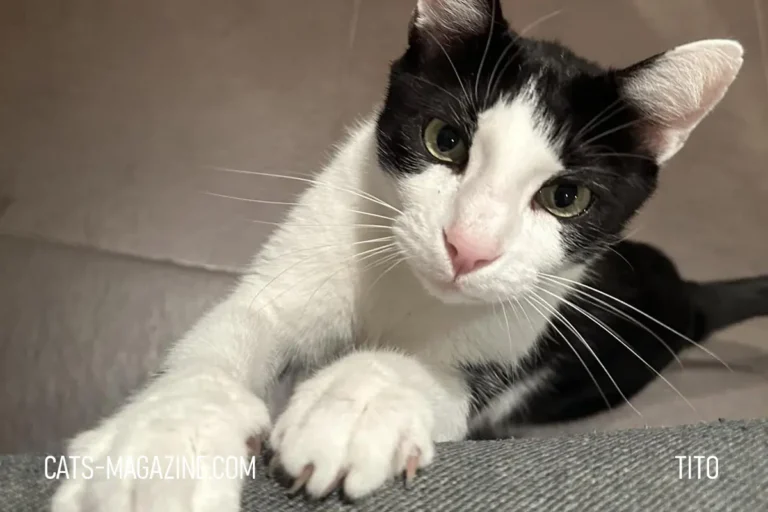
Let’s start with something honest: I talk to my cats and they talk back. Maybe not in English, but communication happens every day – through eyes, tail swishes, and emotional blackmail (mainly from Tito).
The idea of humans talking to animals has always existed in myths and fairytales. Yet here we are in 2025, and artificial intelligence – the same thing people use to write love songs about soup – is now trying to understand cats.
And surprisingly…it might work.
The MeowTalk Incident (We Don’t Speak of It)
If you’ve been reading Cats Magazine for a while, you might remember when I tested that “AI cat translator” app MeowTalk. It was supposed to translate cat meows into English. Instead, it translated Tito’s hunger screams into nonsense like:
MeowTalk: “Your cat is saying: I am in love.”
Tito at that exact moment: yelling around the food cabinet and asking for food (as usual). Romance was not involved.
So yes, I was skeptical. If AI couldn’t even understand something as obvious as “I WANT SNACKS NOW,” how could it ever decode real cat behavior – stress, confusion, happiness, love?
But things have changed.
The Science Behind AI Cat Communication
AI used to be a fancy calculator. Now it listens to whales, reads protein structures, and creates Viking heavy metal cats wearing capes (don’t ask). So what about communication?
Here are real projects working on animal communication with AI:
| Project | Species | Goal |
|---|---|---|
| Earth Species Project | Many animals | AI to decode animal signals |
| Project CETI | Sperm whales | Understand whale communication |
| DeepSqueak | Rodents | Detect emotional states |
| Zoolingua | Dogs | Emotional AI |
| AI Cat Facial Expression Study (Scientific Reports) | Cats | Machine learning detects cat emotions from facial signals |
| AI Pain Detection in Cats (Scientific Reports, 2024) | Cats | Deep learning detects pain from video |
AI Doesn’t Translate Words – It Detects Emotion
AI cat communication isn’t about turning meows into English subtitles. Cats don’t speak in sentences – they speak in intent.
A cat says everything without words:
- A slow blink = I trust you
- A raised tail = Hi, I like you
- A quick tail flick = I’m losing patience
- A chirp at the window = Tiny prey detected, must investigate
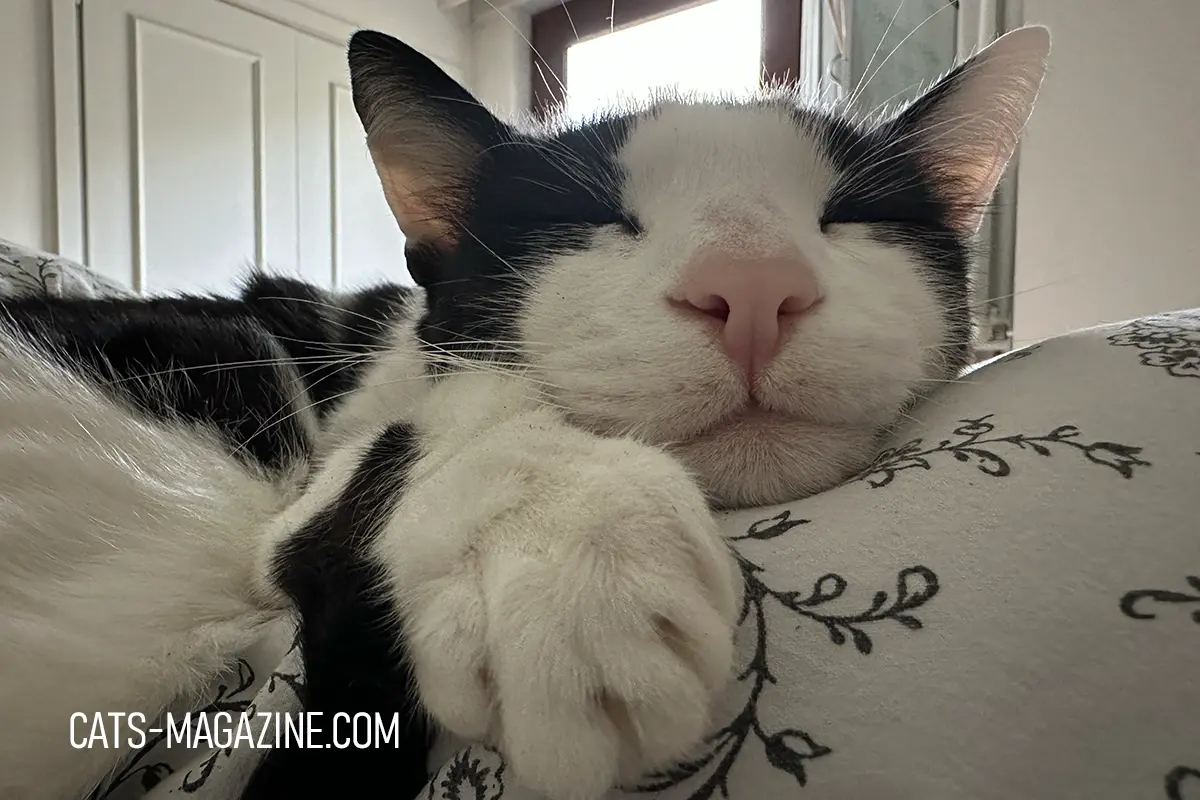
- A loaf pose = Safe. Relaxed. Bread mode activated.
- A long silent stare = You exist for my service, don’t forget
This is what AI is actually trying to understand – not grammar, but patterns of emotion.
Researchers have found that AI can already detect common emotional signals like:
| AI-Detected Emotion/Intent | What It Means |
|---|---|
| Seeking attention | “Human, look at me immediately.” |
| Feeling anxious | Stress due to change or noise |
| Requesting food | Hunger (or dramatic performance) |
| Asking for play | Energy release request |
| Showing affection | Social bonding |
| Feeling pain or discomfort | May hide symptoms |
This isn’t translation. This is understanding. And honestly? That’s far more important. Because once you understand how a cat feels, you finally understand what a cat needs.
Unlike dogs, cats developed meowing mainly for communicating with humans – not other cats. AI researchers believe this is why feline-human communication is actually easier to decode than many people think.
Why AI Cat Communication Matters (Especially for Rescue Cats)
This is not just a cute tech trend for TikTok pet videos. This could save lives.
- AI could detect pain in quiet cats like Pierre, who never complain
- It could identify stress signals in rescue cats during foster care
- It can help vets get behavioral context before exams
- It could help adopters bond faster with shy cats
- Shelter workers could finally interpret fear vs trauma vs illness behaviors
For cats who suffer silently, AI might finally give them a voice.
My Cats and AI Communication
To be clear: I haven’t used any AI cat communication tools on my cats (other than my past MeowTalk disaster). But after reading how AI researchers interpret cat behavior, I started paying closer attention to my own three furry house philosophers – and suddenly, a lot made sense.
- Tito – My loudest and most dramatic cat. He uses full opera vocals to communicate everything: hunger, boredom, existential frustration, political statements. Based on AI cat communication research, Tito would be considered a high-vocal, high-social communicator.
- Myratz – Emotional, gentle, and deeply attached. He still believes that being in the bathroom alone is a human rights violation. Through the AI communication lens, that translates to bonding behavior + social reassurance requests.
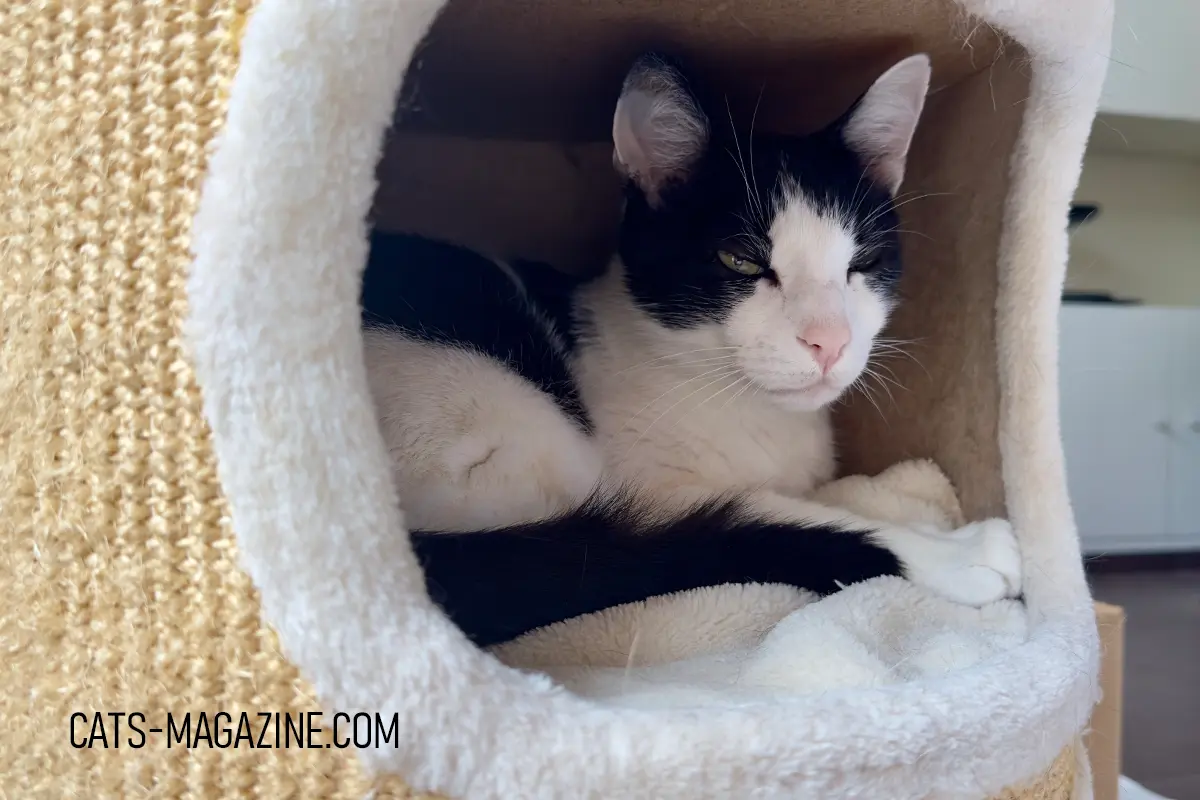
- Pierre – The silent watcher. He rarely meows, but expresses everything through slow blinks, tail flicks, or energy. AI research calls this low-vocal communication with emotional restraint – I call it **Zen Mode”.
AI didn’t tell me anything magical – it just reminded me to notice what my cats already say every day.
A study from the University of Tokyo found cats can distinguish their human’s voice from others – but they often choose to ignore it anyway. AI can detect these subtle ear twitches even when cats pretend not to hear you.
What AI Cat Communication Still Can’t Do
Let’s clear some nonsense:
- It can’t understand sarcasm
- It can’t explain why cats sit on laptops
- It definitely cannot translate silent judgment
- It has no idea why cats stare at walls at 3AM
- And it will NEVER solve the mystery of “Why did you run across the house after using the litter box?”
But that’s fine. Because the goal isn’t to humanize cats – it’s to understand them better.
Final Thoughts
Tito will still yell at me for being 3 seconds late to breakfast.
Myratz will still follow me to the bathroom.
Pierre will still sit like a floating zen potato under a sunbeam.
But AI cat communication reminded me of something:
Cats are always communicating.
We are just slow listeners.
If AI helps humans become better companions to cats – more patient, more aware, more loving – then yes, I’m all for it.
And one last thing:
If AI really gives cats a voice?
They will use it.
Against us.
Mostly to demand fresher snacks.
What do you think?
Would you use AI to understand your cat better – or do you already know exactly what they’re thinking?
If you think AI cat communication is wild, wait until you meet Opera Air – the web browser with an actual cat personality.
Prefer stylish weirdness? You might enjoy the day AI decided to reinvent furniture – and created cat-shaped sofas.
And if you’re still in a curious mood, my Cats vs AI by David W. Falls continues the adventure.