
This guide is for informational purposes only and does not replace professional veterinary advice.
Updated for 2026 to reflect current feline nutrition standards.
Table of Contents
Start Here (Recommended Reading)
- If you want recipes: Simple Homemade Cat Food Recipes: 10 Easy & Nutritious Meals
- If your cat has tummy trouble: Homemade Cat Food for Sensitive Stomachs – Tito’s Tummy Tale
- If you’re building a complete DIY routine: Best Supplements for Homemade Cat Food
- If your cat is picky: Picky Cat Eating Solutions – What Really Works
As someone who has cooked more meals for my cats than for myself some weeks (true story), I know how confusing DIY cat food can be. You want to do the best for your whiskered friend, but with so many opinions online, what’s the real deal?
I gathered what people are really asking. I’ve answered 25 of the most commonly searched questions about DIY cat food – the kinds of things people really wonder about, like whether cats can eat tuna or how to make a balanced homemade feline meal. And I’m answering them based on my experience, what my vets told me, and what Tito, Myratz, and Pierre will actually eat (which says a lot).
Let’s go!
Questions About DIY Cat Food in General
1. What is a good DIY cat food?
A good DIY cat food is a nutritionally balanced homemade meal built primarily around animal protein and supplemented with essential nutrients like taurine and calcium.
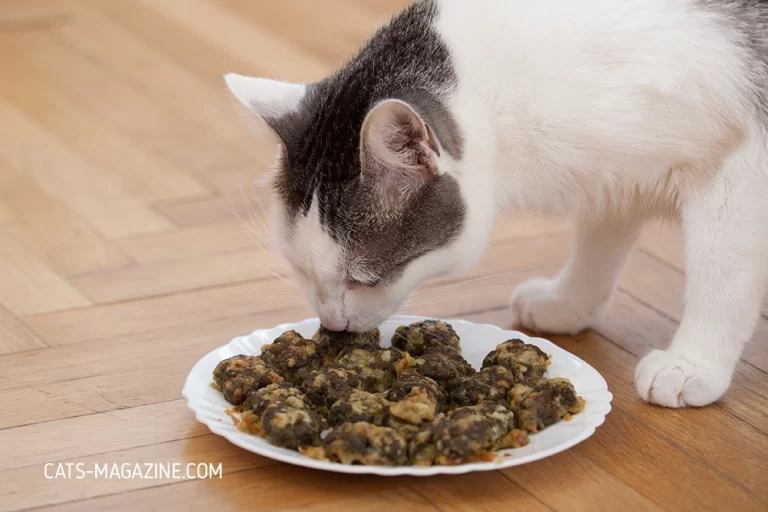
It starts with high-quality animal protein — that’s the heart of any feline-friendly recipe. Cooked lean meats like chicken, turkey, or even rabbit are excellent choices. I personally avoid raw meat because of potential bacteria risks, so everything goes through the pan in my kitchen (except the cats – although Tito has tried).
To that protein base, I add a small amount of vegetables like pumpkin, carrots, or zucchini. Not because cats need veggies the way we do, but because they add fiber, texture, and a touch of extra nutrients. Think of it as garnish with benefits.
But here’s the most important part of any DIY cat food recipe: supplements. Cats have very specific nutritional needs – like taurine (a must for heart and eye health), omega-3 fatty acids (from fish oil), and a mix of B vitamins. Without these, even the tastiest homemade cat food can end up unbalanced. I always use vet-approved supplements to make sure my trio – Tito, Myratz, and Pierre – get everything they need.
So, a good DIY cat food is more than just chicken and a wish. It’s a thoughtful mix of cooked meat, gentle veggies, and the right nutrients, made with love and feline judgment hovering nearby.
And, if your cat loves bold, nutrient-rich flavors, my Chicken Liver Pâté is a must-try. It’s packed with vitamins and feline-approved richness.

2. Can I feed my cat DIY cat food every day?
Yes, you can feed your cat DIY cat food every day — but only if the recipe is properly balanced and includes essential supplements.
Feeding your cat DIY cat food every day is a bit like deciding to bake all your own bread instead of buying it. It can be healthier, fresher, and made with love… but it also takes planning, precision, and more than one enthusiastic Google search at midnight.
Cats aren’t like us. They’re obligate carnivores, which means their bodies are fine-tuned for meat, not guesswork. If you’re feeding homemade meals daily, you’ll need to make sure they get enough protein, fat, and essential nutrients – especially taurine, calcium, and certain vitamins. Otherwise, you could accidentally cause long-term health issues even with the best intentions.
When I started making DIY cat food every day, I relied on recipes from vet-approved sources and double-checked everything with my veterinarian. I also rotate ingredients to keep things interesting and nutritionally diverse. For example, I’ll alternate between chicken and salmon, and throw in a dash of pumpkin or fish oil when Myratz decides to be fussy (again).
So yes, daily DIY cat food is absolutely possible. But it’s not just about cooking meat and calling it a day – it’s about consistency, nutritional balance, and making sure your cat is thriving, not just surviving. If your cat looks at the bowl like it’s a Michelin-star dish? You’re doing it right.
3. Do vets recommend DIY cat food?
Some vets do, and some are more skeptical – and honestly, I get both sides. DIY cat food can be fantastic when it’s done right, but it’s also easy to get wrong if you’re just winging it with what’s in the fridge.
Many vets worry about nutritional imbalances, especially if the diet lacks essentials like taurine, calcium, or vitamin A. These aren’t optional extras for cats – they’re vital for keeping your feline friend’s heart, vision, bones, and overall health in check. A DIY cat food recipe without proper supplements could lead to serious deficiencies over time.
That said, I’ve also met vets who are 100% on board with homemade food, especially when the cat has allergies (Pierre’s allergies taught us a lot about ingredients – especially the itchy kind), a sensitive stomach, or specific dietary needs. In my case, I started making DIY cat food after Myratz had recurring digestive issues – and with a little guidance from my vet and a few trusted recipes, things improved dramatically.
If you’re thinking about switching to homemade, the best route is to talk to a vet who understands feline nutrition or even a pet nutritionist. Bring your recipe ideas, ask questions, and be ready to adjust. It’s not about getting a gold star for effort – it’s about making sure your cat gets what they need, in the right amounts, every day.
And yes, if you find a vet who loves your homemade salmon and pumpkin combo as much as your cat does? Hold onto them like a rare Pokémon.
Cats can’t make taurine on their own – it must come from their food. Without it, they risk heart disease and vision problems. That’s why taurine supplements are non-negotiable in any DIY cat food recipe.

4. Is it worth making your own cat food?
It can be – if you’re doing it for the right reasons. Making DIY cat food gives you full control over the ingredients, which is especially helpful if your cat has allergies, sensitivities, or you simply want to avoid additives and fillers. It can also align with your values – maybe you prefer ethical sourcing or want to reduce packaging waste. Been there, doing that.
But here’s the honest truth: it’s not always cheaper, and it’s not always easier. The upfront effort – cooking, measuring, supplementing, storing – adds up. You’ll also need to invest in high-quality supplements to ensure your recipes meet feline nutritional needs. Without those? Even the fanciest salmon medallions are just fishy fluff.
According to the Clinical Nutrition Service at Tufts University’s Cummings Veterinary Medical Center, many homemade pet diets found online or in books are lacking in key nutrients. Their advice? If you’re going to do it, follow recipes formulated by board-certified veterinary nutritionists. That’s the difference between “cute idea” and “cat health plan.”
For me, it’s worth it because I enjoy cooking, my cats are healthier for it, and I sleep better knowing exactly what’s in their food. But I also keep backup wet food in the pantry for busy days – because even feline chefs need a night off.
5. Why are vets against raw diets for cats?
Many vets are cautious about raw diets for cats due to bacterial risks and the potential for nutrient deficiencies if recipes are not carefully formulated. It’s not that all vets are waving pitchforks at raw food, but many do raise red flags – and for good reason. The biggest concerns around raw DIY cat food come down to bacteria and balance.
Raw meat can harbor harmful pathogens like Salmonella, Listeria, or E. coli. While cats have more acidic stomachs than humans and can handle some bacteria, they’re not immune – and neither are the humans scooping it out of the bowl. If you’re living with small kids, elderly family, or immunocompromised folks, the risk becomes more serious.
Then there’s the question of nutritional balance. Raw diets often skip essential components like taurine, calcium, and vitamin A – especially when people avoid bones or organs. A raw chicken breast alone is about as complete a diet for a cat as popcorn is for us.
The American Veterinary Medical Association (AVMA) and many vet schools advise caution with raw diets, particularly those that aren’t formulated by a board-certified veterinary nutritionist. It’s not a categorical “no,” but it’s definitely a “do your homework.”
Personally, I’ve dabbled in raw but always come back to cooked DIY cat food for peace of mind. Myratz has a stomach like a diva – very picky about bacteria. I’d rather not take the risk (or clean up the aftermath).
6. Can I make my own raw cat food?
Yes, you can – but should you? That’s the whisker-wiggling question.
Making raw DIY cat food isn’t like tossing your cat a steak tartare and calling it gourmet. It’s a highly specific science. You need to get the ratios of meat, organs, bone (or calcium substitute), and supplements just right – and I mean really right, not just “I eyeballed it and Pierre licked the bowl.”
A proper raw cat food recipe includes muscle meat, liver, and another secreting organ (like kidney), plus calcium from ground bone or an exact replacement (like eggshell powder or a supplement). And don’t forget taurine, omega-3s, vitamin E, and B-complex – all vital for feline health.
If that sounds like a lot, that’s because it is.
I highly recommend using recipes from trusted sources like Balance IT or a vet nutritionist. One slip in calcium-phosphorus balance can cause skeletal issues, especially in kittens or older cats. And don’t even think about skipping taurine – without it, cats can go blind or develop heart problems.
When I experimented with raw DIY cat food, I froze small portions, used food-safe gloves, and had a serious chat with my vet first. It’s doable – but it’s not a casual Sunday recipe. Think of it like making sushi: you can do it at home, but you need to know what you’re doing.

7. Can I cook for my cat instead of using commercial cat food?
Absolutely. Cooking for your cat can be a great option – if you’re doing it right. In fact, for many feline foodies (and picky eaters like Myratz), homemade meals can be healthier, tastier, and easier to digest than some mass-produced commercial options.
That said, making DIY cat food isn’t just about throwing some chicken in a pan and hoping for the best. Cats need a very specific nutritional profile – including things like taurine, vitamin A, calcium, and omega-3s. Without these essentials, your lovingly prepared dish could come up short in the health department.
The biggest mistake people make? Thinking they can just cook “healthy human food” and share it with their cat. Nope. Garlic? Toxic. Onions? Worse. Salt? Unnecessary. Butter? You might as well serve regret with a side of diarrhea.
But when done right – with cooked protein like chicken or turkey, a splash of olive oil, a spoonful of pumpkin, and the right supplements – cooking your own DIY cat food can be incredibly rewarding. I love knowing exactly what’s going into my cats’ bowls, and I swear Pierre’s coat looks shinier when I’m in kitchen mode.
To stay on the safe side, I use vet-approved recipes and stick to batch cooking. I make several portions at once, freeze them, and defrost as needed – it’s like meal-prepping for three very spoiled housemates.
A spoonful of pumpkin (plain, cooked, no sugar or spices) can work wonders for a cat’s digestion. It adds fiber, helps with hairballs, and keeps things… ahem, moving. Myratz approves – but only if it’s served with flair.
8. Is it cheaper to make DIY cat food?
Ah, the age-old question: will cooking for my cat save money… or just burn a hole in my grocery budget? The answer? It depends.
Some ingredients for DIY cat food are wonderfully affordable – think chicken thighs, liver, eggs, rice, pumpkin. If you’re already shopping smart or buying in bulk, you might be able to keep costs low. But then come the supplements: taurine, calcium, fish oil, vitamin E, and sometimes B-complex. These aren’t optional if you want to avoid turning your cat into a deficient fluffball.
And while your time is priceless (unless you start invoicing your cats), prep and cleanup can take longer than opening a can of wet food. I often feel like a personal chef to three clients who don’t tip and occasionally yowl at the kitchen door for quality control.
So, is DIY cat food cheaper? Sometimes yes, especially if your cat has dietary restrictions and you’re comparing against pricey vet-prescribed food. But if you’re buying high-quality ingredients and all the right supplements, the cost can be comparable – or even higher – than premium commercial food.
For me, the value isn’t just in money. It’s in knowing exactly what Tito, Myratz, and Pierre are eating. No weird fillers, no mystery meat. Just food made with love, a little science, and a dash of kitchen chaos.
Looking for a hearty, high-fiber option? Try my Beef and Barley Cat Croquettes – they support digestion and reduce hairballs without skimping on flavor.
9. How to make DIY cat food?
To make DIY cat food, you start with high-quality animal protein and add essential supplements to meet feline nutritional requirements.
Making DIY cat food is kind of like cooking for a very tiny, very opinionated carnivore with strict dietary needs (and zero tolerance for failure). But once you get into the rhythm, it’s pretty straightforward.
Start with a high-quality protein – chicken, turkey, or beef are all great options. I always cook the meat first to reduce any bacterial risks. Then add small portions of cat-safe veggies like pumpkin, carrot, or zucchini. These help with digestion and fiber, especially for fluffballs like Tito who occasionally get, let’s say… clogged pipes.
Once that’s done, the secret sauce is supplements. Cats can’t synthesize taurine, so I add it in powdered form. I also mix in fish oil for omega-3s (Pierre’s coat gleams like a little panther after it), a pinch of B-complex vitamins, and calcium if there are no bones in the recipe.
The texture matters too. Some cats prefer their food pureed like baby food, others like it minced. I batch cook, divide into portions, and freeze – DIY cat food prep day has become a full-on event in my kitchen. It’s not fast, but it’s satisfying.
If you’re unsure where to begin, I recommend using recipes from trusted sources like Balance IT or books by vet nutritionists. That way, you’re not just guessing – you’re cooking with confidence.
If your cat gives your lovingly prepared dish the stink-eye, you’re not alone. Understanding feline fussiness is practically a survival skill. Picky cat eating solutions breaks down the science, the sass, and the solutions behind those turned-up noses – plus how to finally win them over (even Pierre).
Need recipe inspo? I’ve got 10 simple homemade meals your kitty will adore.

10. What should I feed my cat every day?
Cats should be fed a consistent, protein-rich diet that meets established feline nutritional standards, whether homemade or commercial.
Cats thrive on consistency, quality, and balanced nutrition – and that goes double when you’re feeding them DIY cat food. So, what goes into the daily menu?
Start with a solid protein base: chicken, turkey, beef, or fish. This should make up the majority of the meal. Cats are obligate carnivores, which means meat isn’t just a treat – it’s a necessity. My trio gets bored quickly, so I rotate proteins to keep things interesting (and to avoid the dreaded tuna-only phase, which ended in protest puking).
Next, add a spoonful of cooked veggies – pumpkin is my favorite. It helps digestion, adds fiber, and Tito thinks it’s dessert. You can also use carrots, zucchini, or green beans (just a little – remember, they’re still cats, not vegans).
Then come the must-haves: supplements. DIY cat food without taurine, calcium, fish oil, and vitamins is like serving spaghetti with no sauce. My mix always includes taurine (critical for heart and eye health), fish oil (for the coat), and a multivitamin blend I found through my vet.
I typically feed twice a day, and I portion each meal based on activity and appetite. Pierre needs fewer calories – he prefers long naps over zoomies – while Tito practically moonwalks for seconds.
Homemade feeding is personal, not one-size-fits-all. But with the right ingredients, it can turn your kitchen into a five-star feline bistro.
11. Can DIY cat food be too rich?
Oh yes – and I’ve learned that lesson the messy way.
Just because something is homemade doesn’t mean it’s automatically healthy. DIY cat food can absolutely be too rich, especially if it’s packed with fatty cuts of meat, too much oil, or calorie-heavy ingredients like cheese or egg yolks (even though they look at you like they deserve it all).
Too-rich food often leads to vomiting, diarrhea, or just a general look of feline betrayal when their stomach starts somersaulting. Myratz once dramatically flopped onto the floor after a heavy meal like he’d been poisoned – he hadn’t, he was just full and offended.
The best approach? Keep it balanced and simple. Use lean proteins (like chicken breast or turkey), add a touch of fat (like olive oil or sardines in water), and always portion properly. I never cook with butter or add too much fish oil – a few drops go a long way.
If you’re just starting with DIY cat food and your cat gets tummy troubles, dial back the fat content and stick to basics until their digestion adjusts. Think of it like easing them into a new lifestyle – not throwing them into a gourmet marathon.
Canned sardines (in water, without added salt) are packed with omega-3 fatty acids that support your cat’s coat and joints. Tito calls them “the crunchy fish snacks without the crunch.”
12. How many spoons of DIY cat food per day?
The amount of DIY cat food a cat needs per day depends on its weight and activity level, but most adult cats require about 200–250 calories daily.
The exact portion depends on your cat’s weight, age, metabolism, and activity level. A heaping tablespoon of homemade food typically contains around 20–30 calories, depending on the ingredients and fat content. Lean chicken mixtures will differ from richer salmon or sardine recipes.
As a starting point, divide the daily portion into two meals. Active, younger cats may need slightly more. Indoor loungers who treat exercise as a philosophical concept may need slightly less.
In my house, meals are carefully observed events.
Tito approaches food like it’s an Olympic sport. He eats around 3–4 heaping tablespoons per meal and would happily audit everyone else’s bowl if given the opportunity.
Myratz eats like a refined Victorian poet — delicate bites, strategic pauses, and occasional dramatic sighs.
Pierre? He follows celestial rhythms. If the moon aligns and the vibe is correct, he eats.
I don’t guess blindly. I monitor body condition, energy, coat quality, and weight. If someone starts looking rounder than ideal, portions are adjusted. If ribs become too noticeable, I increase slightly. A small kitchen scale is my quiet ally in maintaining consistency.
And one important reminder: calories matter more than spoon count. The same volume of food can vary significantly in energy depending on fat content and supplements.
When in doubt, ask your veterinarian to calculate your cat’s ideal daily calorie requirement based on weight and health profile — then adjust your DIY portions accordingly.
Because feeding well isn’t about spoons.
It’s about balance.
And yes — Tito still asks for seconds.

13. Should cats have food available all day?
This one’s controversial, but here’s my take: free-feeding doesn’t work for everyone – or every cat.
Leaving food out 24/7 sounds convenient, but it often leads to overeating, boredom snacking, and the dreaded “chunky kitty” stage. Dry food especially can be a slippery slope – it’s calorie-dense and easy to gobble down like crunchy cat popcorn.
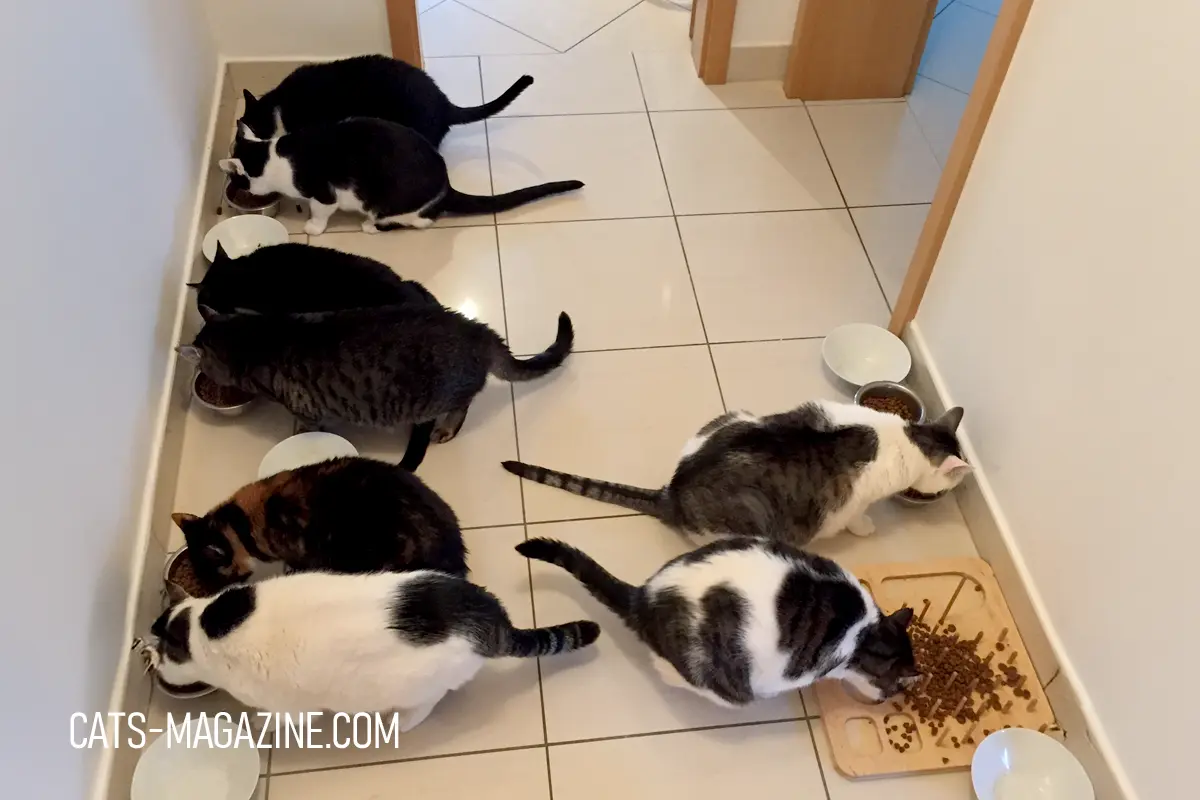
My crew? We stick to mealtimes. It helps with portion control, digestion, and honestly, cat behavior too. Tito used to yowl dramatically at midnight because he knew the buffet was open. Now, with structured meals, he’s calmer (well… for Tito).
Feeding DIY cat food works better on a schedule. It’s fresh, it doesn’t sit out too long, and you get to monitor exactly how much each cat eats. That’s especially helpful when someone’s off their food – like when Pierre goes on his moody little hunger strikes.
Structured feeding also mimics how cats eat in the wild – hunt, eat, rest – not graze like goats. Unless your cat’s a grazer by nature and you’re monitoring their intake closely, I say skip the buffet.
Ingredient-Specific DIY Cat Food Questions
14. What should the first 3 ingredients in DIY cat food be?
Protein, protein, and more protein. Ideally: chicken, turkey, beef, or fish. Avoid fillers like corn or wheat.
15. Is rice okay for cats?
In small amounts, yes. It helps with digestion and adds bulk to meals. But don’t overdo it – cats are obligate carnivores.
16. Are eggs good for cats?
Yes! Cooked eggs are a great source of protein and B vitamins. Scrambled or boiled is best – no butter or salt.
17. Is potato good for cats?
Cooked potatoes in small amounts are okay, but they offer little nutrition. Avoid raw or green potatoes, which are toxic.
18. Can cats eat canned sardines?
Yes, and they usually love them. Choose sardines in water without added salt or flavoring. They’re a great source of omega-3s, but feed in moderation to avoid too much sodium or fat.
19. Can cats have cheese?
In tiny amounts, yes. But many cats are lactose intolerant. If your cat handles dairy well and you’re in the mood for a no-cook treat, try these Cheese Cat Treats – a homemade cat food recipe that’s quick, simple, and Tito-approved.
20. Can cats eat canned tuna?
Occasionally. It’s high in mercury and lacks taurine. I use it as a treat or flavor booster, not a staple.
21. Can cats eat yogurt?
Unsweetened, plain yogurt in small amounts can help with digestion. But skip it if your cat reacts badly to dairy.
22. Can cats eat bananas?
Not toxic, but not recommended. Cats don’t really need fruit, and many will turn their nose up. Want to know how my cats feel about fruit? I let Tito sample watermelon, and let’s just say… it didn’t go as planned. Read the full fruity tale here.
23. Can cats eat olive oil?
Yes! A little olive oil can help with digestion and coat shine. I add a few drops when Myratz gets picky.
24. Can cats have honey?
Technically yes, but it’s sugar. No real benefit. Better to skip it unless your vet suggests it for something specific.
25. Can cats have bread?
In small amounts, plain bread isn’t toxic to cats, but it doesn’t offer any real nutritional benefit. My cats mostly look at it like it just betrayed their species. Avoid anything with garlic, onions, or raisins.
Not sure how much protein, fat, or moisture your cat really needs? Check out my full guide on how to feed your cat the right way – it explains portion sizes, ideal meat choices, taurine tips, and everything your carnivore needs to thrive.
If you’re exploring homemade diets, don’t miss this full guide to indoor cat care and food planning.
Let’s Wrap This Up (With a Whisker-Twitch!)
Feeding your cat DIY cat food can be incredibly rewarding – for both of you. Just remember: variety, balance, and expert guidance are key. And if your cat is anything like mine, they’ll be judging you with every bite.
Want some easy, vet-reviewed DIY, homemade cat food recipes, you can find them here! And if you want more ideas to keep your cat healthy and happy at mealtime? Check out Feeding Cats – Tips, Tricks, and Fun Ideas to Keep Your Cats Healthy and Entertained for enrichment-based feeding strategies, portion control tips, and boredom-busting tricks your cat will love.
Nutrition is just one part of raising a healthy, happy cat. If you’re looking for the bigger picture, from behavior to wellness routines, you’ll find it in my Ultimate Guide to Raising a Cat.
Don’t forget to subscribe to the Cats Magazine newsletter to get more feline-friendly meals delivered to your inbox.

PS: Always consult your vet before switching diets. Tito insists I tell you this.
Veterinary Sources & Evidence-Based References
Homemade feline diets must meet established nutrient profiles to ensure long-term health and prevent deficiencies. This article follows established feline nutrition standards and guidance from:
- FEDIAF – Nutritional Guidelines for Complete & Complementary Pet Food for Cats and Dogs
- AAFCO – Cat Food Nutrient Profiles
- AAFP – Feline Nutrition Guidelines
- Cornell Feline Health Center – Nutrition Resources
- Merck Veterinary Manual – Nutritional Requirements of Cats
- VCA Animal Hospitals – Homemade Diet Risks & Considerations
- Journal of Feline Medicine and Surgery (JFMS)
These sources represent widely accepted veterinary nutrition principles used in professional clinical practice. All homemade feeding decisions should be discussed with a qualified veterinarian.
Amazon Affiliate Disclaimer
Please note that links from Cats-Magazine.Com to Amazon.Com are affiliate links. This means that if you click on the link and make a purchase, we may receive a small commission at no extra cost to you. This helps support our work and allows us to continue providing valuable content. Thank you for your support!