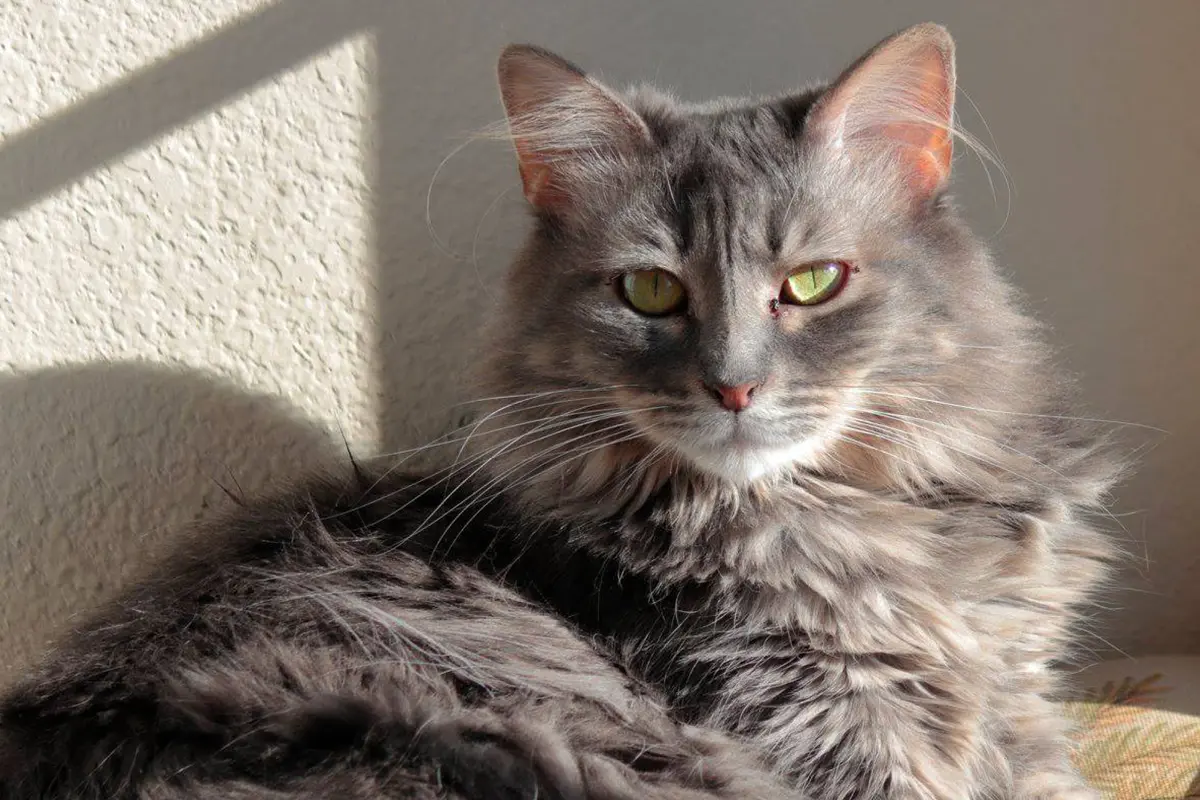
Meet Ziva, the real Maine Coon who inspired Cindy J. Vanous’s children’s picture book, Ziva the Great.
Ziva the Great: The Real Maine Coon Behind the Picture Book
Ziva loves her family, keeps visitors on their toes and inspired a children’s picture book with a big heart. Meet the real Maine Coon behind Ziva the Great as author Cindy J. Vanous shares what this memorable cat has taught her about patience, belonging, and letting trust grow.
Children’s author Cindy J. Vanous doesn’t have to look far for inspiration. Her own dogs, Asher and Belle, have already found their way into her picture books, including Asher’s Christmas Wish and Brave Belle Saves the Day. Based in Dallas, Cindy writes stories about kindness, courage and finding a place to belong. With Ziva the Great, a very different personality steps into the picture: a Maine Coon with strong feelings about visitors.
The real Ziva lives with Cindy’s in-laws, Karen and Steve Freedman, who affectionately call her the “Sheriff of Dover Drive.” She loves her family, enjoys belly rubs, and keeps a close eye on anyone arriving at the door. Even drinking water involves a rather elaborate routine. This is a cat worth getting to know, at her own pace, naturally.
Illustrated by Rebeckah Gerstner, Ziva the Great brings that distinctive personality into a fictional story about a cat and a little girl named Elsie who gradually find comfort in each other’s company. Cindy recommends the children’s picture book for ages 5–12, but tells us that many adults are buying it for themselves, too.
In our conversation, Cindy introduces the cat behind the character, shares the unexpectedly personal roots of Elsie’s story, and considers something many cat lovers will recognize: the feeling that a cat has chosen you.
Meet the Real Ziva: An Interview with Cindy J. Vanous
Could you introduce us to the real Ziva? How old is she now, how long has she lived with your in-laws, and how would you describe her place within the family?
Ziva’s reported birthday is July 6, 2015, so she is eleven years old now. She came to live with Karen and Steve Freedman on April 7, 2016, after being adopted through Lost Paws Rescue of Texas. She was fostered with another cat named Mia, and Karen and Steve adopted them together. They have been companions ever since.
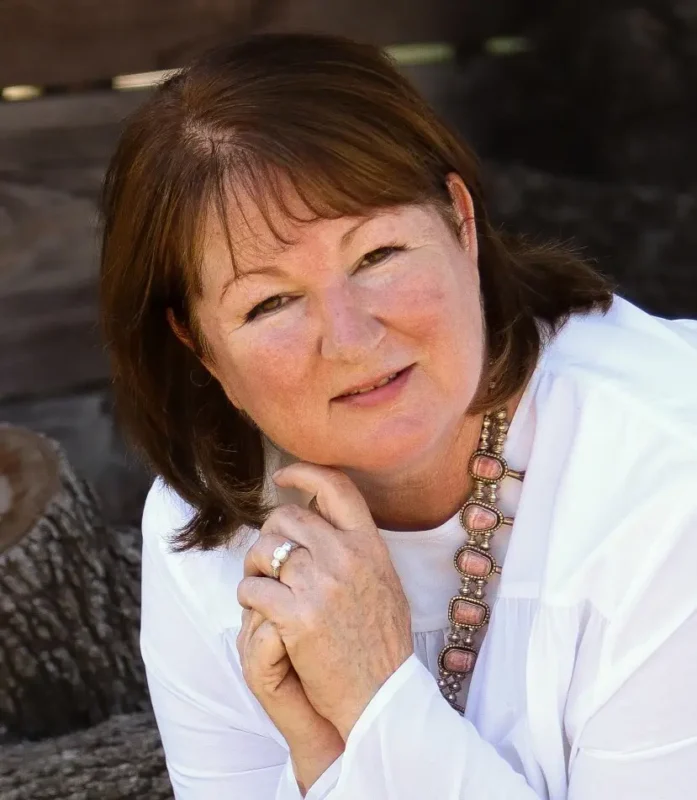
Cindy J. Vanous finds inspiration for her children’s picture books in real animals, family experiences, and everyday moments.
Ziva has a big personality, and she made that known almost immediately. Karen told me that when Ziva first arrived, they had put up a barricade to keep her upstairs with Mia. Within minutes, Ziva had broken through it and made it clear that if this was going to be her home, she intended to explore all of it. Karen said all they could do was laugh and wonder what they had gotten themselves into with this cat.
Ten years later, I think it’s safe to say Ziva has made the house her own. She’s affectionate and loving with her family and enjoys being petted, having her belly rubbed, and even grooming her humans. But she also takes her role as what Karen and Steve call the “Sheriff of Dover Drive” very seriously. If someone comes to the door, Ziva is going to investigate and make her opinion known.
She also has some funny little habits that are completely Ziva. Even drinking water has to be done her way. She approaches her water bowl from the opposite side, paws the ground on either side as if making absolutely certain she won’t fall in and the bowl isn’t going anywhere, and then stretches her neck across the water to drink from the far rim. She usually ends up with her big Maine Coon ruff and muzzle soaking wet. Apparently, simply walking up to the near side of the bowl would be much too ordinary for Ziva.
She is independent, opinionated, loving, and completely devoted to her family. She knows exactly who she is, and I think that’s part of what makes Ziva so wonderfully Ziva.
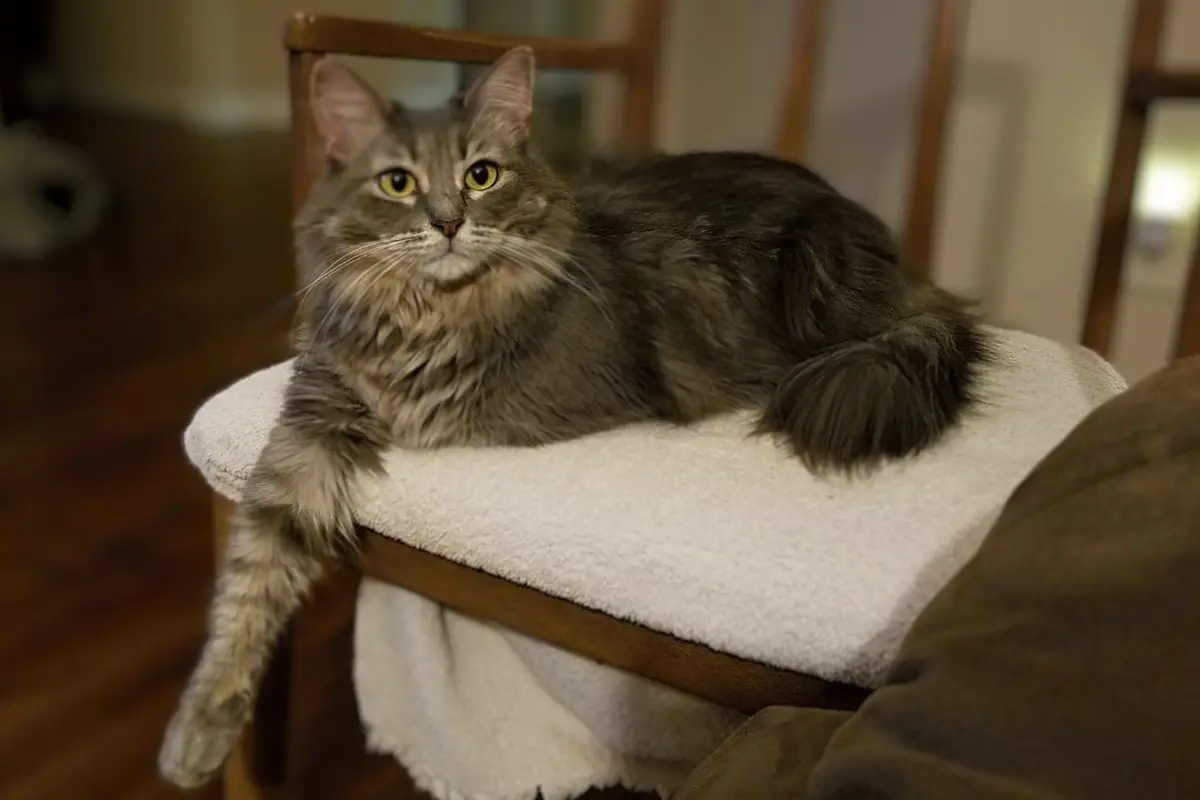
Ziva, looking thoroughly at home and making full use of a comfortable chair.
Many cat lovers, myself included, have experienced the feeling that sometimes a cat chooses their person. Do you feel that Ziva chose her family, and, in the story, Elsie, in her own way?
I do believe cats choose their people. From what Karen and Steve have told me, Ziva made herself at home with them very quickly. Over the years, she has developed her own loving relationship with both of them.
From what I have observed, though, Ziva seems to have a special connection with Steve. When I visit, she is usually somewhere near him, and I see the way he loves her. That’s not to say she doesn’t love Karen, because she absolutely does, and Karen is incredibly devoted to Ziva. But there is something between Steve and Ziva that is different. There is a kind of love and trust between the two of them that I don’t see either of them give quite the same way to anyone else.
I think Ziva chose Elsie in the story, too, but for a different reason. There was something about Elsie that Ziva seemed to recognize. That first night, Ziva chose to go into Elsie’s room and sleep near her. When Elsie woke the next morning and gently said, “Hello, Kitty,” Ziva purred for the first time with a stranger.
I think sometimes animals recognize something in us before we recognize it ourselves.
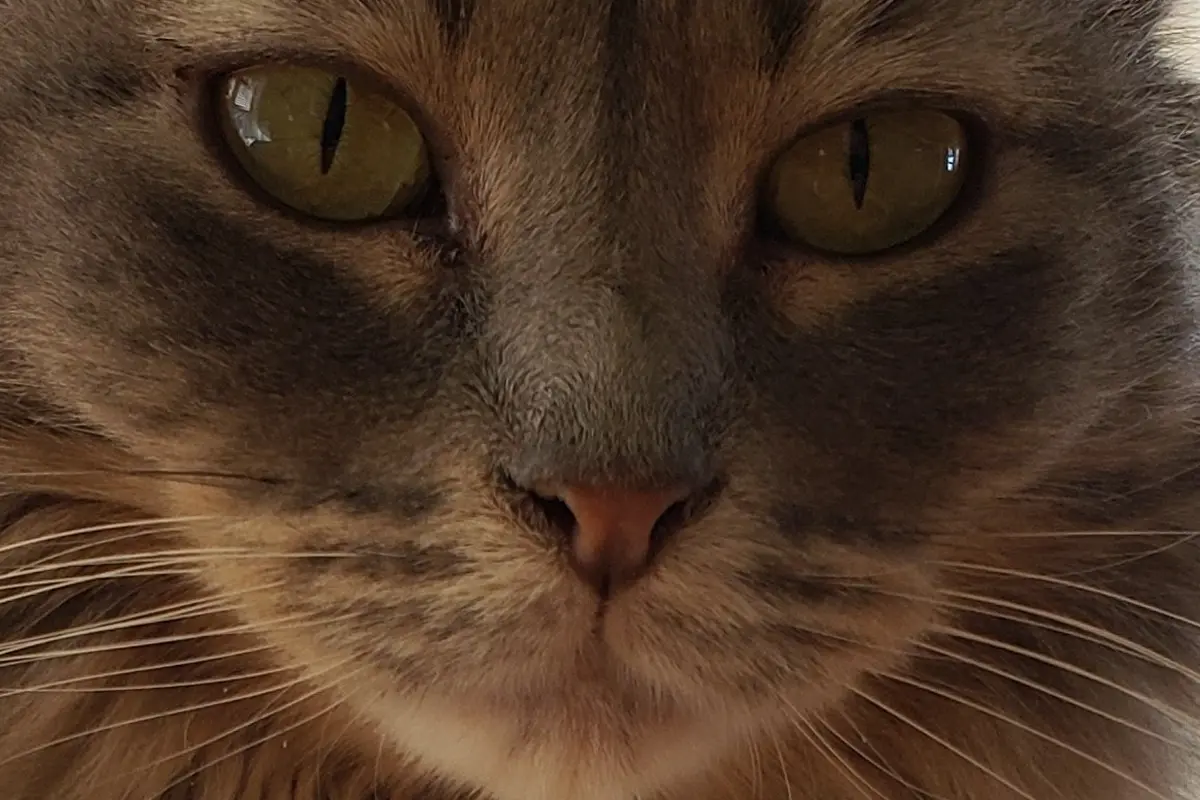
Getting to know Ziva means looking beyond first impressions.
Was there a particular moment or experience that made you realize Ziva could inspire a children’s picture book?
After I published my first children’s book, at every family get-together Steve would tell me, “You need to write a story about Ziva.” I would humor him and say, “Yes, I should do that,” while thinking, How in the world do I turn Ziva’s story into a picture book? At that point, I just couldn’t see the story.
Whenever we went to Karen and Steve’s house, Ziva would usually stand near the entryway, hiss, and sometimes come after you with her claws out as you made your way to the living room. Everyone knew to move quickly and hope you made it to the gathering area without receiving a battle scar along the way!
But once everyone was settled and visiting with each other, I would watch her. Not out of fear, but out of compassion. I think we all have triggers that can make us angry, sad, or unhappy when something sets them in motion. I began wondering why Ziva reacted the way she did whenever people came into the house and what might be behind that behavior.
Then one day, while I was doing something completely ordinary—sweeping—the story started playing in my mind. I stopped what I was doing, sat down, and the words just flowed. The first line was, “No one knew what Ziva’s life had been like before she came to the Freedmans’ home.” Once I had that sentence, I could see the story. And suddenly I knew that was the story I wanted to tell.
Is Elsie inspired by a real child or a real relationship in Ziva’s life, or was she created as a fictional character?
Elsie was created as a fictional character. At least, that’s what I believed when I wrote her into the story.
When I sent the manuscript to my illustrator, Rebeckah Gerstner, she called me after she read it and said, “This story sounds personal. It sounds real.” I remember thinking about what she had said, and that’s when I realized Elsie was real. She had lived in my family several times.
There have been children in my family, across different generations, who were displaced from their homes and suddenly found themselves living with other family members. One was my grandmother. She was only three years old in the 1920s when her father died and her mother had to leave to find work. She was placed with family, and I still have the little bisque doll she was given by the family who took her in. She treasured that doll throughout her life, and now I treasure it for a different reason.
I didn’t think about my grandmother or any of those other children when I created Elsie. I simply wrote this little girl who arrived at the Freedmans’ house carrying a suitcase, frightened and unsure of where she belonged.
Sometimes we write from hidden places in our hearts that have been protected for so long that we forget about them until it’s time to tell their story. I think that’s where Elsie came from.
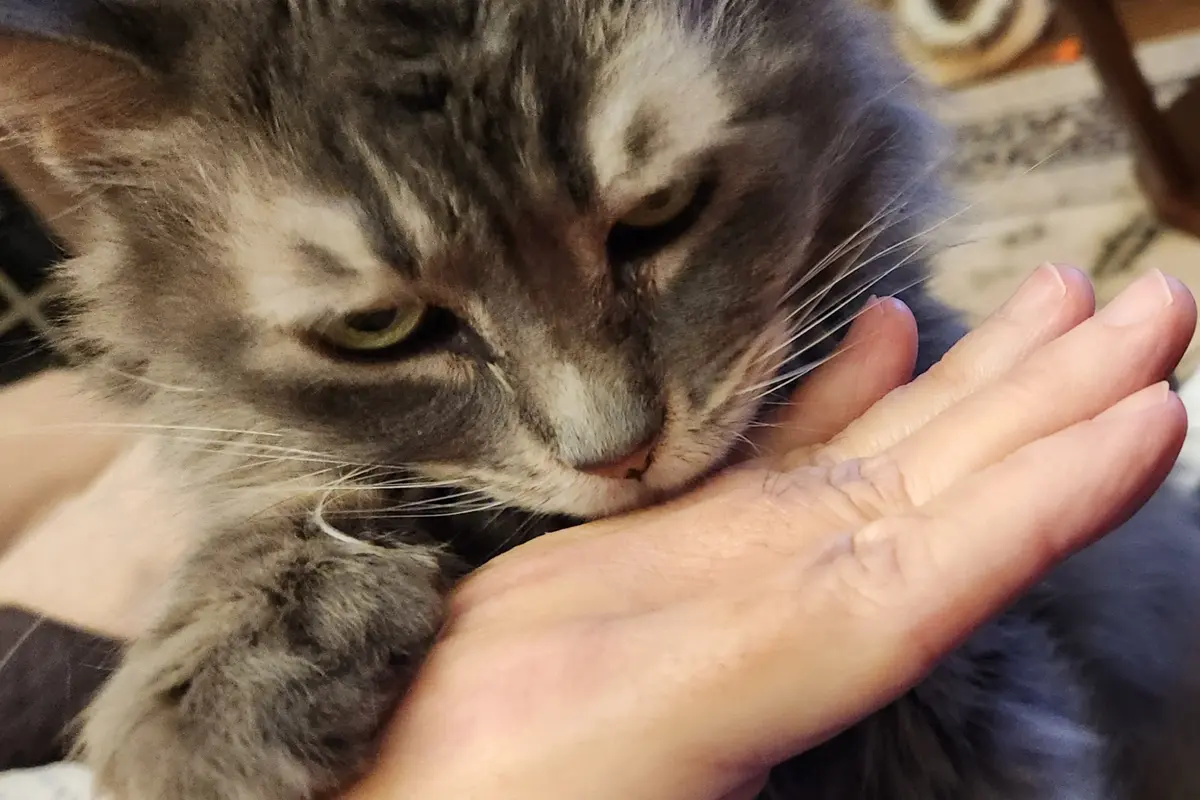
A gentle moment with Ziva, whose story reminds readers to let trust develop at its own pace.
The story shows that a cat who hisses, hides, or reacts defensively is not necessarily “wild” or bad. What would you like children and adults to understand about fearful or cautious cats?
Almost everyone who comes to my in-laws’ house has the same concern: how do I get past Ziva without getting hurt? She can be pretty frightening when you first walk through the door, and over the years people have called her wild, crazy, and a few other things because of the way she reacts.
But I’ve never really looked at Ziva that way. I’ve always wondered what she was feeling that made her believe she needed to protect herself from the people coming into the house.
Once everyone is settled in the living room, I watch a completely different side of her. Ziva will go over to Steve and love on him, and I always notice that contrast. The cat loving on Steve is the same cat who was hissing at us a few minutes earlier. Neither one is any less Ziva.
I think that’s what I want children and adults to understand. Sometimes we’re so quick to react to a behavior that we don’t stop and wonder what might be behind it. We may never know what happened in Ziva’s past, but we don’t have to know in order to have compassion for her.
What has knowing Ziva taught you about earning a cat’s trust and respecting an animal’s boundaries?
I’ve been around cats and dogs most of my life, and I think cats can be a little more complicated emotionally to navigate. They can be independent and aloof one minute and incredibly loving the next. I’ve also cared for feral cats around our home for about twenty years, and I’ve learned that you can’t force a cat to trust you.
I observe from a distance and let them decide when they’re ready. I’ll sit quietly nearby, talk softly, sometimes hum or read a book, but I don’t force myself into their space. With the feral cats, I also feed them consistently, so they learn that I’m going to keep showing up and that I’m not a threat.
Over time, I’ve watched cats who once ran from me or hissed at me begin to stay nearby, then come closer, and eventually allow me to touch and even pick them up. But I’ve also learned to recognize when a cat is telling me, not yet, and respect that.
I think that’s what Ziva has reinforced for me. You don’t earn an animal’s trust by deciding when they should be ready for you. You earn it by being patient and consistent, respecting the boundaries they’re giving you, and letting them decide when they’re ready to take that next step.
What is the main message you hope children and their families will take away fromZiva the Great?
I hope readers come away from Ziva the Great understanding that we don’t always know what someone else is carrying with them. We see how people or animals behave, but we don’t necessarily know what happened before we entered their story.
That’s why I intentionally never explain what happened to Ziva or Elsie. I wanted children to be able to bring their own experiences to the story and understand that you don’t have to know someone’s entire past to recognize when they’re frightened, hurting, or need a little compassion.
Ziva and Elsie don’t fix each other. They simply recognize something in one another and, little by little, they begin to feel safe together. I think sometimes being understood can be the beginning of healing.
If a child closes the book and thinks a little differently the next time they encounter someone who is frightened, quiet, angry, or simply different from what they expected, then Ziva and Elsie have done exactly what I hoped they would do.
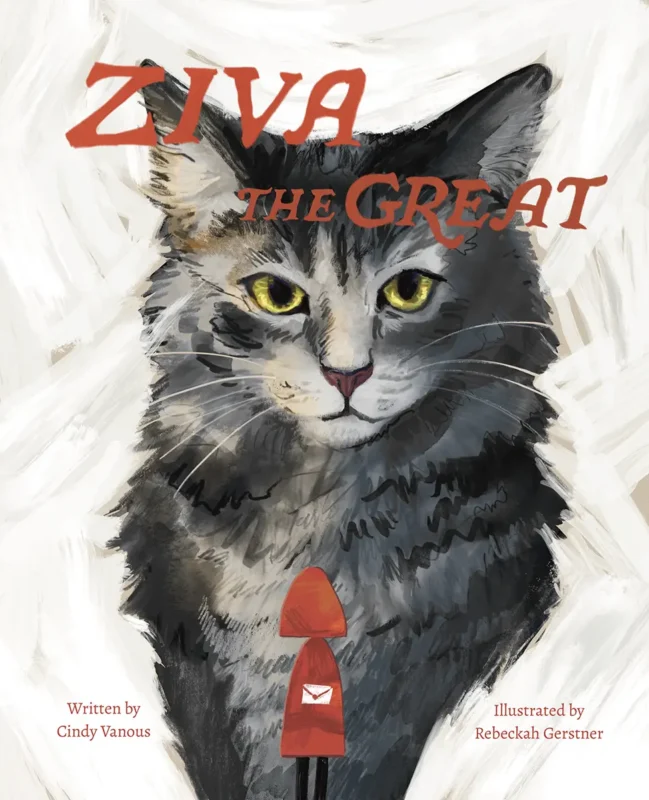
Ziva the Great, written by Cindy J. Vanous and illustrated by Rebeckah Gerstner.
How did you work with illustrator Rebeckah Gerstner to turn the real Ziva into the illustrated character?
I always give my illustrators the story first and let them spend some time with it. When they’re ready, they contact me and we start talking about what they saw in the story.
Steve sent Rebeckah photographs of Ziva so she could capture the essence of the real cat, but beyond that, I gave Rebeckah a lot of creative freedom. She asked me how I wanted the story to be illustrated, and I told her I wanted to see what she saw. I believe an illustrator needs to bring their own viewpoint to a story. If I tell an artist exactly what to draw on every page, then I’m micromanaging their art, and I never want to do that.
To me, a picture book really has two storytellers. I tell part of the story with words, and the illustrator tells another part through the art. When those two things work together, the illustrations don’t simply show what the words already say. They add something to them.
Rebeckah and I also discovered early on that we share a love of L. M. Montgomery and beautiful storytelling, and she quietly brought a little of that into Ziva the Great. The carpetbag Elsie carries and the scene with the large window are little nods to that world. Those weren’t things I put into the manuscript. They came from Rebeckah and became part of the visual story she was telling alongside mine.
What responses have you received from children, parents, teachers, or cat lovers since the children’s picture book was published? Has any reaction been especially meaningful to you?
The cover of Ziva the Great seems to capture cat lovers at almost every event I attend. Many times, before they even open the book, they start telling me about the cats in their own lives. Sometimes it’s a cat they have now, and sometimes it’s one they loved deeply who has passed. I understand those conversations because I have cats in my life now, and I also have cats I still miss very much.
There have also been a few moments with this book that I don’t think I will ever forget. At the book launch, a woman came to me with Ziva the Great in her hands and tears in her eyes. She quietly told me she had been a displaced child. The story had taken her back to some of those emotions, and she thanked me for writing it. She understood that we all have things in our past that other people may never know about because we learn to hide our pain.
At another event, a social worker read the book and then looked at me and said, “This story belongs at our place.” She works with children who come to them carrying all kinds of emotions and behaviors because of traumatic experiences in their lives. She saw Ziva and Elsie as two characters who needed compassion and trust before healing could begin. We talked about how people can be misjudged because of their behavior and how this story could help open a conversation about taking the time to understand what someone else may be going through.
And then there was the Texas Library Association Annual Conference. I had chosen Ziva the Great for my 30-minute book giveaway. Librarians had a catalog of the books being offered and could decide which ones they wanted to stand in line for. More than 100 librarians stood in line waiting for Ziva. Several told me they had looked through the catalog ahead of time and had specifically chosen my book. There were traditionally published books being given away at the same time too, so seeing these librarians choose my little cat’s story was a moment I was very proud of.
Your next children’s picture book,The Ghost Who Collected Dreams, is scheduled for 2027. After that, do you plan to create more stories inspired by cats or other real animals?
Absolutely. I’ve always loved the way Beatrix Potter observed the animals around her and then found stories in what she saw. I think I do something very similar. Belle and Asher are my real dogs, and parts of their stories come from things they have actually done. Ziva, of course, came from watching a real cat and wondering what might be behind the behavior everyone else was seeing.
There are many animals in my life, and I think there are still many stories waiting to be told. In fact, my next cat story is already written. It’s called A Home for Patches, and Rebeckah Gerstner and I have already met to talk about her illustrating it. Patches is a real cat who came into my life after losing the person she loved, and the story follows her as she searches for a place that feels like home. Rebeckah connected with the story immediately, and we’re looking forward to beginning the illustrations early next year.
And Patches isn’t the only cat I’ve been watching. I have another cat who is normally very quiet and reserved, but one day it snowed and I saw a joy and happiness in him that I had never seen before. Of course, that made me wonder if there might be a story there too.
So yes, I think animals will continue finding their way into my books. I don’t necessarily go looking for their stories. Most of the time, I watch them long enough, and eventually they show me the story I am meant to tell about their lives.
But no matter what character finds their way into one of my stories, whether it’s a cat, a dog, a ghost, or something completely unexpected, the heart of my storytelling is much the same. I write about belonging, kindness, understanding, compassion, and finding our way through the things we carry with us. The characters may change, but I think I’m always trying to tell stories that help us understand each other a little better.
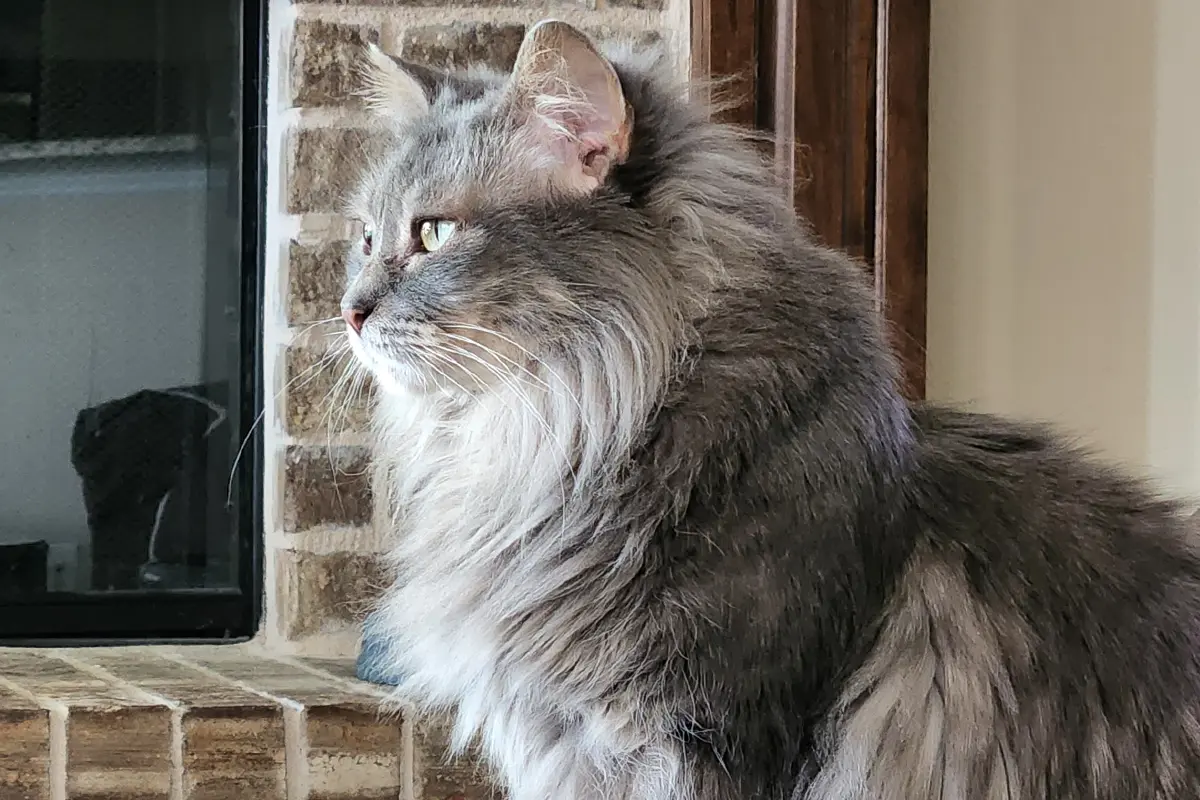
Affectionate with her family and guarded around visitors, Ziva inspired Cindy to look beyond first impressions.
Discover Ziva the Great and Cindy’s Other Picture Books
To explore Ziva the Great and more of Cindy’s children’s picture books, visit Cindy Vanous Books.
More Cat-Inspired Picture Books to Explore
A cat who needs time to trust and a square cat finding her place in a round world have something in common: both invite readers to see beyond first impressions. For another story about friendship and acceptance, read our interview with Elizabeth Schoonmaker, creator of Eula the Square Cat, and discover how her own cat inspired a wonderfully unconventional picture book character.
Has a cat ever chosen you? Whether that connection happened immediately or grew through months of patient companionship, we’d love to hear your story.
Image credits: Photographs and book cover supplied by Cindy J. Vanous and published with permission. Cover artwork and illustrations by Rebeckah Gerstner.
Silvia
Silvia is a cat rescuer with nearly two decades of hands-on experience and a former Vice President of the registered rescue organization SOS Cat. She has fostered dozens of cats and kittens, participated in rescue missions, organized charity fundraisers, and provided intensive neonatal care for vulnerable newborns.
Her writing is grounded in real-life experience - real cats, real challenges - and supported by careful research. When covering feline health or nutrition topics, she consults licensed veterinarians to ensure the information shared is responsible and evidence-based.
She currently lives with her three feline co-editors - Tito, Myratz, and Pierre - who enthusiastically “review” every recipe and cat-related insight published on Cats Magazine.
This site uses cookies to improve your experience. You can accept, refuse, or customize your preferences at any time. We and our selected ad partners can store and/or access information on your device, such as cookies, unique identifiers and browsing data. You can always choose the specific purposes related to profiling by accessing the advertising preferences panel , and you can withdraw your consent at any time by clicking on "Manage consent" at the bottom of the page.
Google Analytics is a web analytics service provided by Google Ireland Limited ("Google"). Google uses the collected personal data to track and examine the usage of this website, compile reports on its activities, and share them with other Google services. Google may use your personal data to contextualize and personalize the ads of its advertising network. This integration of Google Analytics anonymizes your IP address. The data sent is collected for the purposes of personalizing the experience and statistical tracking. You can find more information on the "More information on Google's handling of personal information" page.
Google AdSense is an advertising service provided by Google Ireland Limited. which uses the "Doubleclick" cookie to track the use of this website and the behaviour of the User in relation to the advertisements, products and services offered.