Let’s talk automatic cat water fountains – because honestly, watching my cats drink running water is more satisfying than half the movies I’ve seen lately.
Table of Contents
Years ago, I had my first cat fountain. It was basic, no filters, just a simple trickle of water. But here’s the twist – I hacked it. I connected it to a light sensor so it only worked when my cats approached. So the pump ran only on demand. Efficient, eco-friendly, and Myratz-approved. Just look at it 🙂

Since then, automatic cat water fountain technology has gone wild. Every week, a new design claims to be smarter, quieter, and cleaner – and some actually are. I’ve had a few – the plastic ones (which I now regret, they’re not healthy or eco-friendly), and later I switched to stainless steel. Much better. Easier to clean, more hygienic, and the water tastes better (yes, I checked).
Now, hydration isn’t just about convenience – it’s health. Cats are notorious for drinking too little water, and that can lead to urinary and kidney issues. Fountains encourage them to drink more because cats are naturally drawn to moving water. It’s instinct. So yes – it’s an investment, but it’s also one of the most effective ways to keep them healthy.
Still, some of these prices?
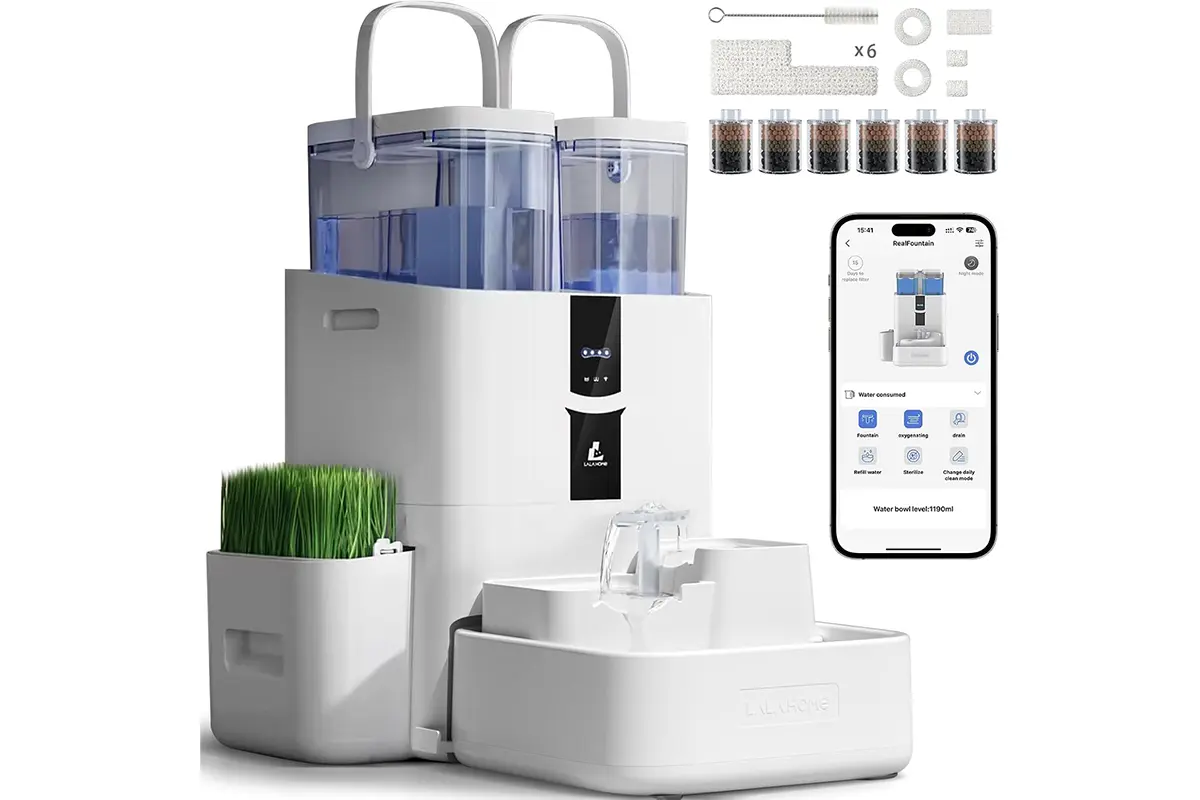
Take this futuristic beauty I found the other day:
Automatic Cat Water Fountain 10L/338oz Self-Filling and Cleaning Smart Bowl by LALAHOME – $299.99 (down from $399.99!). It connects to Wi-Fi, self-cleans, oxygenates water, and even has a cat salad bar feature for growing fresh grass using wastewater.
I mean, come on – that’s basically a spa for cats.
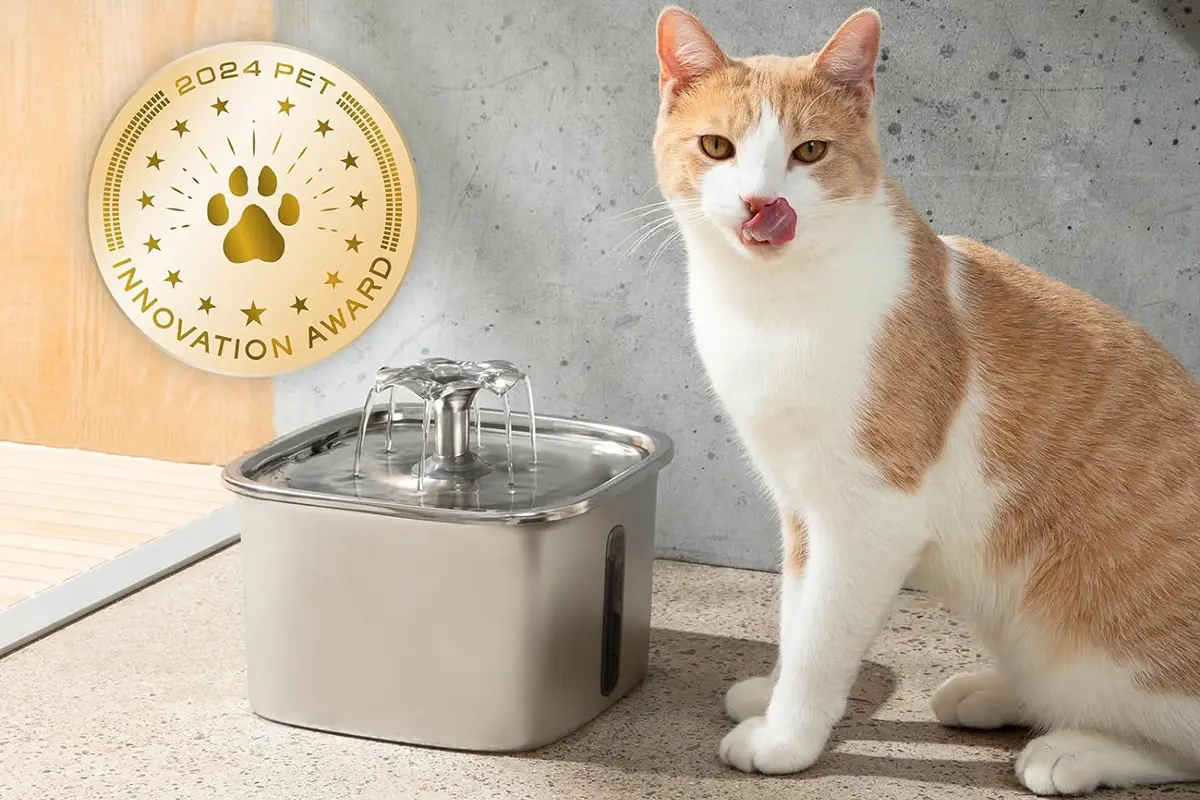
Then there’s the Veken Stainless Steel Fountain, my favorite affordable option. Award-winning, sleek, stainless steel, quiet, and right now – 29% off on Prime Big Deal Days.
And because technology never stops showing off – we now have filterless automatic cat water fountains!
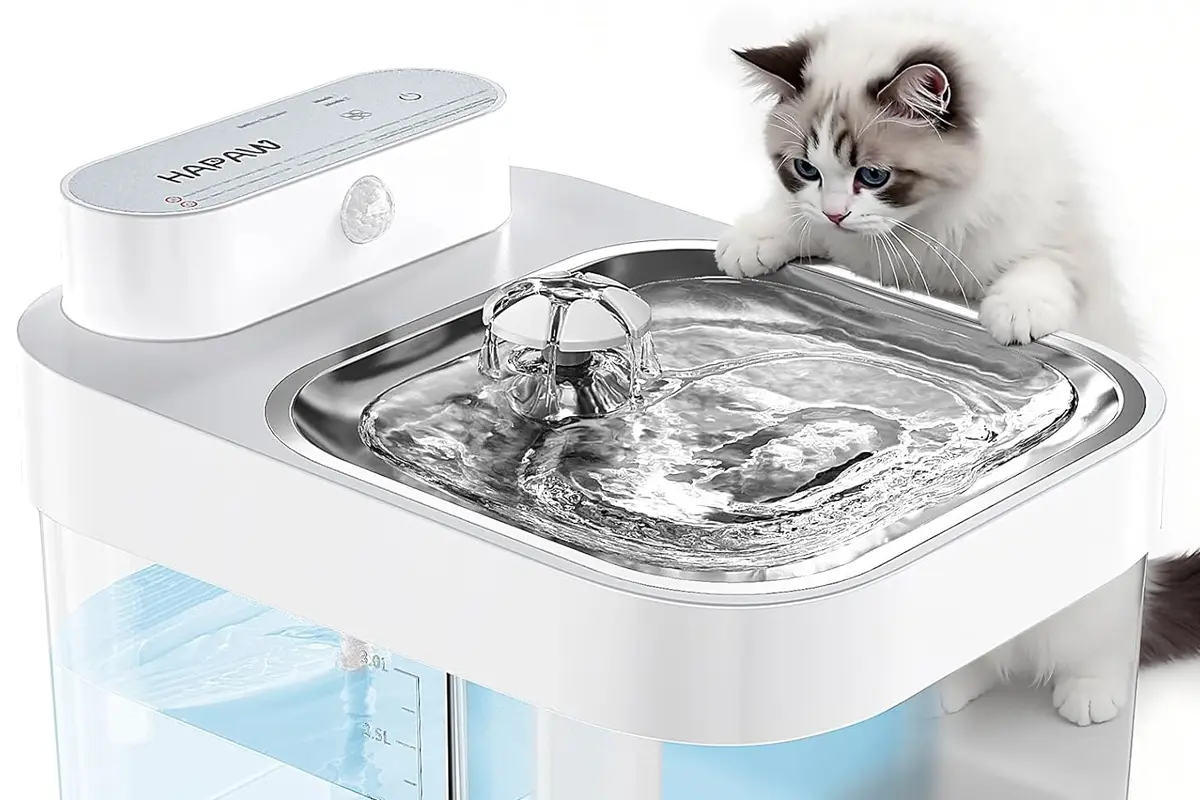
These clever two-tank systems separate clean and used water, cutting maintenance costs and making life easier for both cats and humans. Like this FEELNEEDY wireless fountain, which runs for 6 months on a single charge – or the HAPAW Wi-Fi fountain with app monitoring and smart-sensing mode.
These are small engineering masterpieces for our fluffy overlords.
But me? My cats still drink from the bathroom sink, where I installed a faucet extender (it is available on Amazon if you need one) made for toddlers. Because – priorities.
Why an Automatic Cat Water Fountain Can Improve Your Cat’s Health
Cats are mysterious creatures – they’ll ignore a bowl of perfectly clean water and instead lick droplets off your shower curtain like it’s a fine vintage. But there’s a reason behind it: cats are hardwired to prefer running water. In the wild, still water often means bacteria or contamination, so their instincts push them toward movement and sound.
That’s why automatic cat water fountains are more than just fancy gadgets – they’re health tools. The gentle flow entices cats to drink more, which helps prevent urinary issues and kidney problems. Proper hydration supports digestion, flushes out toxins, and even keeps their coats shinier.
I’ve seen it with my own trio – Tito drinks far more from his fountain than he ever did from a bowl. Myratz loves the movement, and Pierre… well, he treats it like a luxury spa feature.
The difference shows, especially as cats age. A good fountain isn’t just convenient for us – it’s a daily investment in their health.
What Features Really Matter (and Which Are Hype)
When you’re reading specs and marketing copy, here are the features that actually tend to make a difference – I’ve tested many so I know where the traps lie:
- Material matters – Stainless steel or ceramic bowls are more hygienic and resist bacteria better than plastic. (Plastic tends to get micro-scratches and harbor slime as noted by Cat Nanny Jess)
- Quiet pump & smooth flow – Cats are easily spooked by hums or splashes. Look for fountains with “silent” or “sub-30 dB” claims, but also read user reviews.
- Ease of cleaning / disassembly – If parts are hard to take apart, you’ll dread maintenance.
- Good filtration – Multi-stage filters (prefilter, carbon, etc.) help remove hair, debris, odors. But filtration only works if water is flowing and filters are changed: petassure.com
- Backup water supply / overflow safety – In case of pump failure or power outage, some fountains fail safe (e.g. still allow basic drinking) or have a fallback reservoir design.
- Smart features (optional but fun) – App notifications, water-level sensors, drinking logs. These are nice extras, but don’t substitute for basic good design.
- Cost of maintenance – Filters, replacement parts, electricity. A cheap fountain with expensive filters is a trap.
My Comparative Take (Based on Real Use)
From my DIY sensor upgrade days to testing modern designs, here’s how I weigh them:
- Best long-term balance: A stainless fountain with good filtration and a quiet pump. Unless the smart features are rock-solid, I don’t mind doing the filter change.
- For multi-cat homes: Wide bowls, multiple flow paths, larger reservoirs.
- For busy lives: Smart fountains or sensor-activated ones reduce “did I refill it?” anxiety.
- Beware cheap traps: Many come cheap but with weak pumps, plastic that degrades, or filters you’ll pay dearly for. I learned that the hard way.
- Back to basics is smart: Your light-sensor upgrade design was brilliant – combining “only run when needed” with low noise. Modern fountains that adopt that kind of logic are worth extra thought.
Real Cat Stories & My DIY Sensor Experiment
When I first upgraded my old fountain with a light sensor, I didn’t expect it to work that well. I just wanted to stop hearing the pump buzzing at 3 a.m. while I was editing photos.
But then something fascinating happened.
My cats – clever little engineers in fur coats – figured it out immediately. Tito realized that approaching the fountain triggered the water, and he began testing how close he needed to get. Myratz took it as a personal challenge. And Pierre? He preferred waiting until Tito did the “activation work,” then swooping in like a fluffy opportunist.
That’s when I realized something: cats aren’t just drinking more because the water moves – they’re interacting with it. It becomes part of their environment, like hunting or play. And that’s genuinely healthy stimulation.
Even a simple automatic cat water fountain can turn into enrichment. Movement, sound, cause and effect – it all taps into their instinctive curiosity. So, yes, I may have accidentally invented my own feline behavioral experiment, complete with splashes and triumphant meows.
Why Stainless Steel Wins (and Plastic Should Retire)
Let’s be honest – plastic fountains are cheap, but they’re also sneaky troublemakers. They scratch, trap bacteria, and over time develop a biofilm that even hot water and vinegar struggle to remove. I learned that lesson when Pierre developed chin acne. The culprit? A plastic bowl.
Stainless steel, on the other hand, is the unsung hero. It’s clean, durable, and far more eco-friendly. Many newer models, like the Veken Stainless Steel Automatic Fountain, are BPA-free and quiet – perfect for homes with sensitive cats (and humans).
If you’re upgrading, skip the plastic ones altogether. Your cats – and their kidneys – will thank you. And since your cat is getting older (they all are, aren’t they?), even more so! Senior cats are more prone to dehydration and kidney issues, so investing in a stainless steel or ceramic fountain isn’t just a style choice – it’s preventative care disguised as good taste.
What I Learned After Testing So Many Fountains
After years of feline field research (and countless splashes on my bathroom floor), here’s my honest conclusion:
- Automatic fountains really do improve cat health.
Hydrated cats have fewer urinary issues and shinier coats. - Smart doesn’t always mean better.
Wi-Fi and app alerts are nice, but a simple, well-built stainless model often lasts longer and performs more reliably. - Filterless systems are the future.
Two-tank designs – separating clean and wastewater – reduce slime and maintenance, and they’re surprisingly eco-friendly. - DIY ideas still have merit.
My light-sensor trick? Still unbeatable in simplicity and charm.
Whether you go for a basic or a smart model, choosing the right automatic cat water fountain is one of the simplest ways to keep your feline family healthy and hydrated year-round.
Final Thoughts (and a Tiny Rant)
If you’re ready to invest in your cat’s health, get an automatic water fountain. Whether it’s a $30 classic or a $300 luxury model with an app, it’s one of the few pet gadgets that truly makes a difference.
And if, like me, you sometimes find yourself frustrated with the big tech platforms, here’s my closing thought:
I pour my time, energy, and heart into creating original stories, real photos, and helpful cat content – I mean, I even have original T-shirts for cat lovers, sewn by my friend! Yet somehow, Google’s algorithm prefers scraped AI spam over genuine passion. So, cheers to the small creators, the dreamers, and the ones still typing with a cat on their keyboard.
So yes – an automatic cat water fountain isn’t just a luxury; it’s one of the smartest, most practical gifts you can give your cat.
And at least our cats don’t care about SEO – as long as the water flows.
Does your cat prefer a bowl, a fountain, or the bathroom tap?
Tell me in the comments – I’d love to know who’s running the hydration department in your home.
Amazon Affiliate Disclaimer
Please note that links from Cats-Magazine.Com to Amazon.Com are affiliate links. This means that if you click on the link and make a purchase, we may receive a small commission at no extra cost to you. This helps support our work and allows us to continue providing valuable content. Thank you for your support!