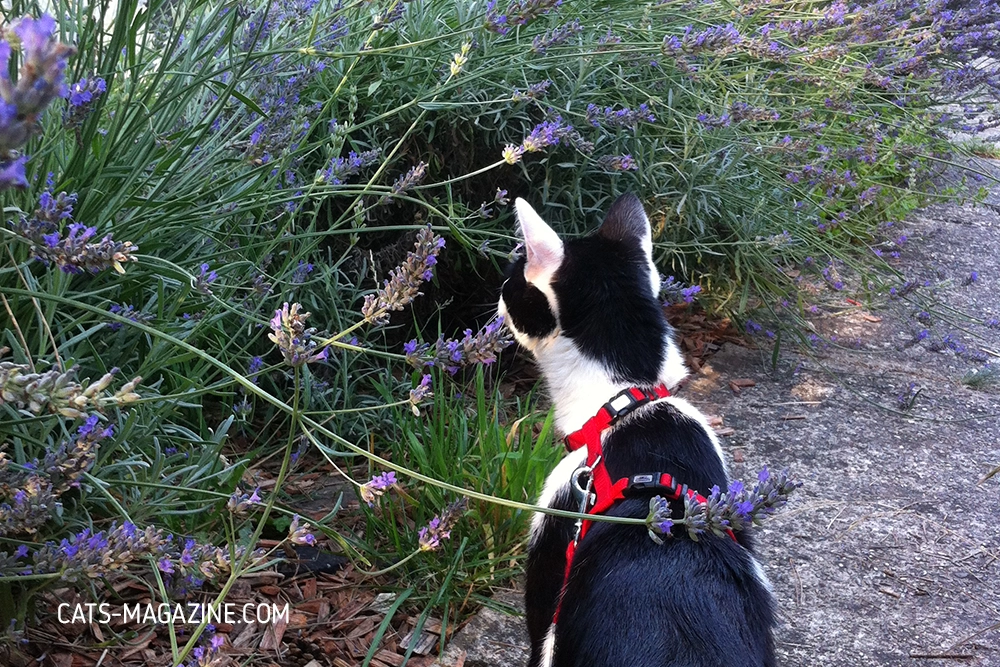

Walking your cat on a leash is possible – and incredibly rewarding! In this guide, I’ll show you how to train your cat safely, pick the right harness, and avoid common pitfalls. Plus, meet my cat Tito, a black-and-white explorer who insists on his daily outdoor stroll (on schedule, of course).
Table of Contents
The Great Outdoors – Not Just for Dogs
Who says dogs get to have all the outdoor fun? Cats are born explorers – curious, agile, and infinitely fascinated by every rustling leaf. Sure, they may act like couch philosophers indoors, but deep down, they’re wild little adventurers waiting to conquer the garden jungle.
However, walking your cat on a leash isn’t as simple as clipping a lead and heading out the door. Cats are sensitive to sound, texture, and territory. To make their outdoor escapades safe and enjoyable, you’ll need the right gear, some clever training, and heaps of patience.
My cat Tito, for instance, walks proudly in his pink cat harness with a sunny yellow leash. And yes – he knows he looks fabulous.

The Right Gear: Why a Harness Beats a Collar Every Time
Walking your cat on a leash with only a collar? Rookie mistake. Cats are feline Houdinis – one startled jump, and poof, they’re free. Worse, collars can strain the neck and cause injury if your cat bolts suddenly.
A good cat harness distributes pressure evenly across the shoulders and chest, giving control without discomfort. Think “gentle hug,” not “Victorian corset.”
Pro tip:
Dog harnesses ≠ cat harnesses. Cat bodies are sleeker, more flexible, and, frankly, more cunning. Choose an escape-proof cat harness designed specifically for feline agility – vest-style or H-style options tend to work best.
Before your first outdoor adventure, let your cat wear the harness indoors. Expect drama: flopping, stiff walking, and possibly a theatrical faint. Don’t worry – it’s all part of the feline protest ritual. Bribery with treats helps.

Training Time: How to Get Your Cat Used to a Leash
Step 1: Start Indoors
Keep it calm. Let your cat wear the harness around the house, no leash yet. Reward them with treats and gentle praise. Once they’re comfortable moving in it, attach the leash and let it trail behind. Never pull – just let them explore at their own pace.
Step 2: Practice Gentle Guidance
Gradually take control with light tugs and voice cues. Encourage movement with treats or toys. If your cat freezes, flops, or gives you the “I hate you” glare, stop and try later. Cats are masters of timing – you’re on their schedule now.
Step 3: Respect Personality
Every cat is unique, some cats are natural explorers (Tito); others prefer window-seat safaris (Pierre). If your cat shows consistent stress – growling, flattening ears, refusing to move – don’t push it. Walking your cat on a leash should enhance their life, not stress them out.
Remember: the goal is confidence, not conquest.

Picking the Perfect Outdoor Spot
Quiet, Calm, and Dog-Free
Location is everything. A cat’s first outdoor stroll should feel like a peaceful meditation, not a carnival. Skip crowded parks and opt for a quiet garden, courtyard, or calm street with minimal traffic.
Scout ahead – listen for barking dogs, cars, or children playing. A serene setting builds your cat’s trust and curiosity.
Vet Check Before the Adventure
Make sure your cat’s vaccinations, deworming, and flea/tick protection are up to date. Outdoor grass might look innocent, but it’s a parasite party waiting to happen.
Microchipping adds an extra layer of safety – because even the best-trained cats can Houdini their way into the bushes.

Real-Life Story: Tito, the Leash-Walking Legend
Over the years, we’ve shared our lives with many fabulous felines – each one unique, each one with very strong opinions on the topic of “outside.” Some preferred lounging like royalty on window sills, others were intrigued by the garden but not too keen on venturing beyond it. And then there’s Tito.
Ah, Tito. Our black-and-white little whirlwind of personality, wit, and whiskers. From the very beginning, he showed signs of being more than just a curious indoor explorer. He wanted out. But not in the “open-the-door-I’ll-be-back-whenever” kind of way – he craved supervised, purposeful adventure.
So, we tried something new: walking our cat on a leash.
To our surprise (and slight panic), he took to it like a fish to water – or more accurately, like a panther to a jungle path. There was no dramatic flopping, no “why is this thing on my body” hissy fits. He strutted. He sniffed. He owned the sidewalk.
What began as a few tentative steps outside quickly evolved into a full-blown daily ritual. And I mean daily. Tito is a cat of habit, and his internal clock is sharper than a Swiss watch. Every afternoon, around 5 p.m. sharp, he appears in front of the door, looking up at me with that unmistakable “It’s time, human” gaze. Miss it, and you get the stare. You know the one.
He even has his routine down:
- Step 1: Meow at the door.
- Step 2: Wait (im)patiently while I retrieve the harness from his drawer.
- Step 3: Spin in circles excitedly (yes, like a small dog).
- Step 4: Strut into the sunlight like the neighborhood mayor.
Initially, we started with a basic, no-frills small harness. It did the job, but Tito deserved better. So we upgraded to a padded, escape-proof harness designed specifically for cats. Total game changer. He moves more freely, stays more secure, and looks ten times more stylish. Fashion and function.
And yes, we even have video proof! This clip from eight years ago shows Tito taking his first steps outside – tail high, eyes wide, walking like he was born to do it. It’s adorable, funny, and slightly embarrassing how proud I sound in the background commentary.
Tito has become our ambassador for walking your cat on a leash. Friends, neighbors, even random passersby have stopped to watch him in awe. “Is that a cat… on a leash?” they ask. And I just smile, nod, and say, “Yup. And he’s the boss of this block.”
To Walk or Not to Walk
Walking your cat on a leash can be one of the most delightful bonding experiences you’ll ever share with your feline friend. It’s a chance to explore, enrich, and maybe even rediscover the world – one paw step at a time. But like anything involving cats, it needs to be done on their terms. Respect their boundaries, honor their quirks, and always put safety first.
So, what do you think? Are you ready to grab that harness, take a deep breath, and step into the unknown side-by-side with your curious cat? You never know – your cat might just surprise you and start leading the way like a four-legged trail guide.
Share Your Cat-Walking Adventures with Us!
Have you tried walking your cat on a leash? Is your kitty a backyard explorer or a master of sidewalk strolls? We want to hear your stories – and see those adorable pics!
Join the conversation and share your cat-leashing triumphs (and hilarious fails) on the Cats Magazine Facebook page!
Follow Cats Magazine here and become part of a purr-fectly fun community of cat lovers who totally get it.
Let’s celebrate all the bold, brave, leash-walking kitties out there – one paw at a time.